
Clouds: The Original Drama Queens
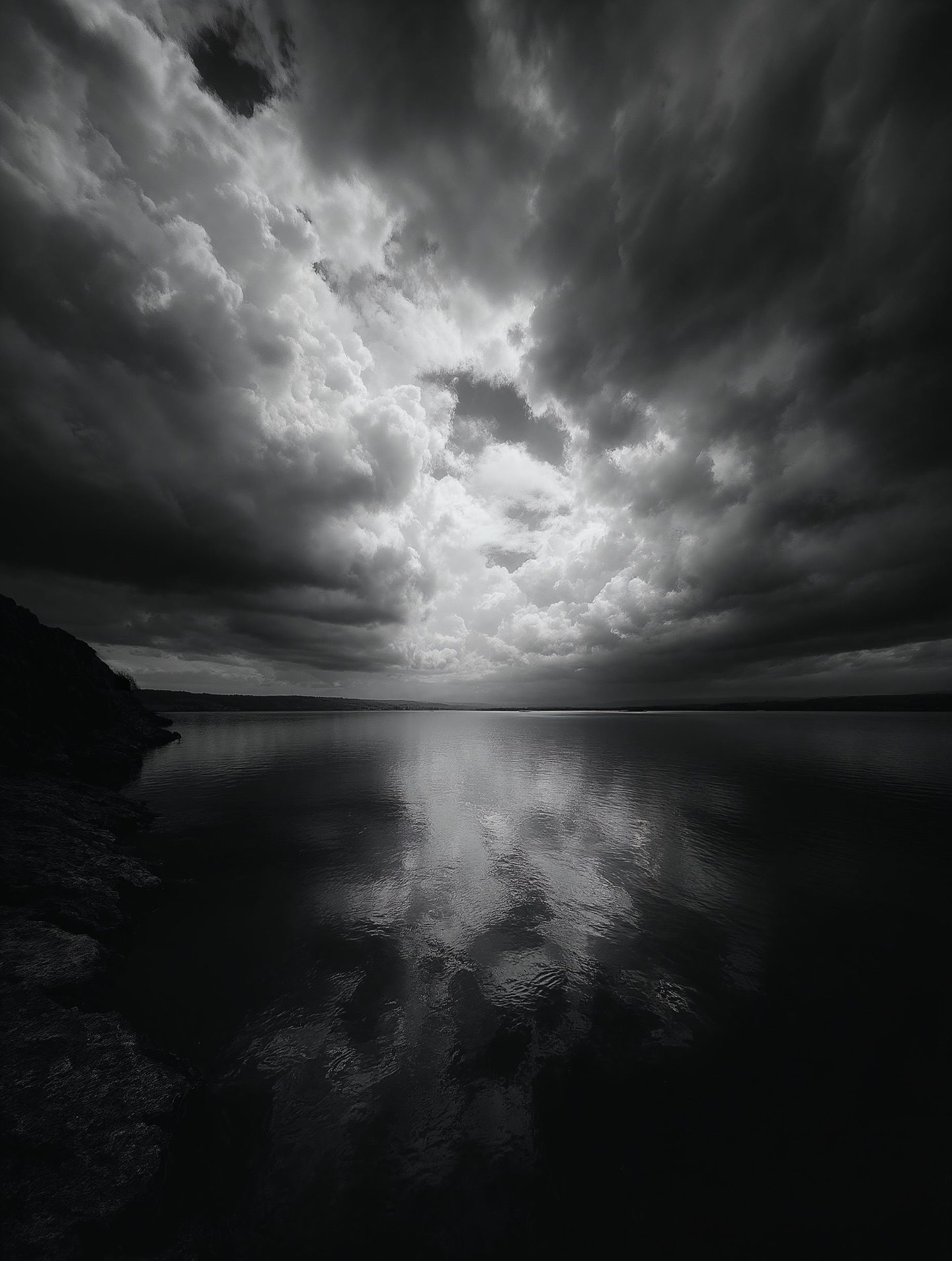
This image isn’t just moody—it’s practically Shakespearean. What you’re seeing is an example dynamic range, that magical tension between light and dark that makes a photo feel like it’s alive and humming with emotion.
What’s Dynamic Range Anyway?
In photography, it’s the span between the brightest bright and the deepest shadow. Too little range = flat and boring. Too much = hello, blown-out skies and ink-black shadows. Just right? That’s where the magic lives.
Now, About Your Eyes:
* The human eye can detect about 20 stops of dynamic range, which is wild.
* But in any one glance? We process around 10–14 stops—meaning we’re adjusting on the fly, constantly.
* Our pupils do this faster than the newest iPhone’s HDR mode. Seriously, your eyes are basically biological light meters.
Artists Knew This Before Photoshop:
From Caravaggio to Ansel Adams, artists have played with shadow and light to tell stories. That soft glow on a face? Or the pitch-black corner of a room? That’s dynamic range doing the heavy emotional lifting.
Why This Image Works:
It stretches the full spectrum—from jet-black water to clouds lit like a heavenly stage. Your eye dives in, then swims around, trying to figure out where the light ends and the drama begins.
Bonus Nerd-Out:
* Your eye is better than most digital cameras (yes, even the fancy ones).
* In bright sunlight, a camera might capture ~12–14 stops.
* The Zone System (invented by Ansel Adams) was all about managing dynamic range before Lightroom made it cool.
Related works

Available as a museum-quality print.
Request this print