
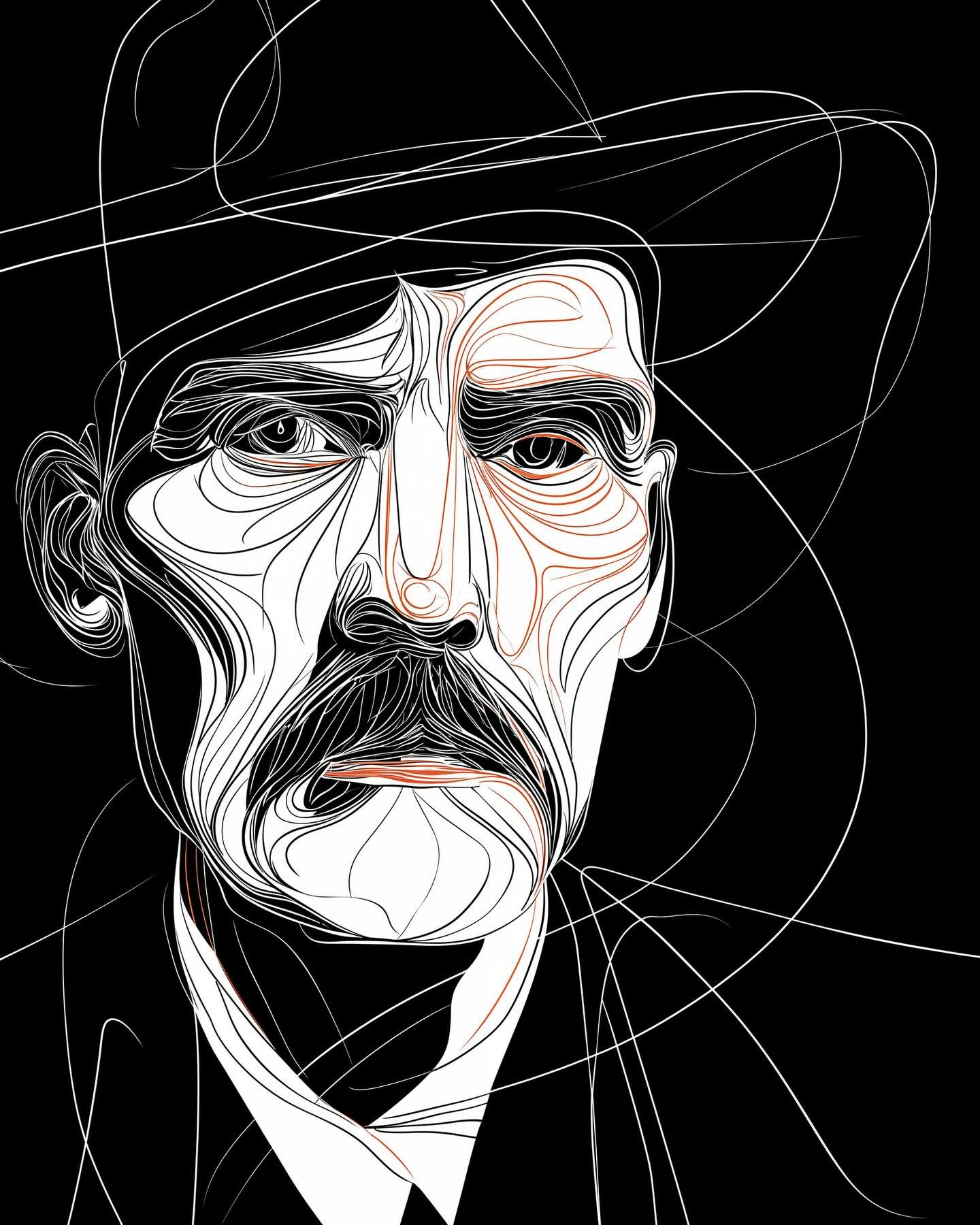
Consigliere of Lines
If a face could deliver a monologue with one raised eyebrow, it’d be this one.
Look close: a midnight-black stage, a storm of white continuous lines, and that calm, unsmiling stare—like he’s weighing your choices… and already knows the ending. The warm rust accents feel like little sparks of memory under the skin. The hat and that mustache? Pure Duvall: part courtroom, part cattle drive, all gravitas.
Today’s post is for Robert Duvall, who just left the room—and somehow made it quieter. After we honored Brando, it only felt right to tip the hat to the man who played Tom Hagen in The Godfather with such controlled precision you could hear the restraint. And then he’d turn around and be someone else entirely—Gus McCrae, a preacher, a pilot, a broken poet of a man—always human, never loud about it.
Style notes: this is modern continuous-line / contour portraiture—think Picasso’s economy of line, Matisse-level confidence, with a little Saul Steinberg wit in the way the lines wander like thoughts.
Mini art lesson (quick + useful): Contour drawing isn’t “outlining.” It’s sculpting with line. When the line thickens, it adds weight and shadow. When it thins, it turns into light and air. And when the artist leaves space untouched, your brain finishes the job—negative space becomes the loudest part of the portrait.
Dinner-party fun fact: Duvall won Best Actor for Tender Mercies—and famously didn’t return for Godfather Part III after a salary dispute. Even his “no” had standards.
Related works
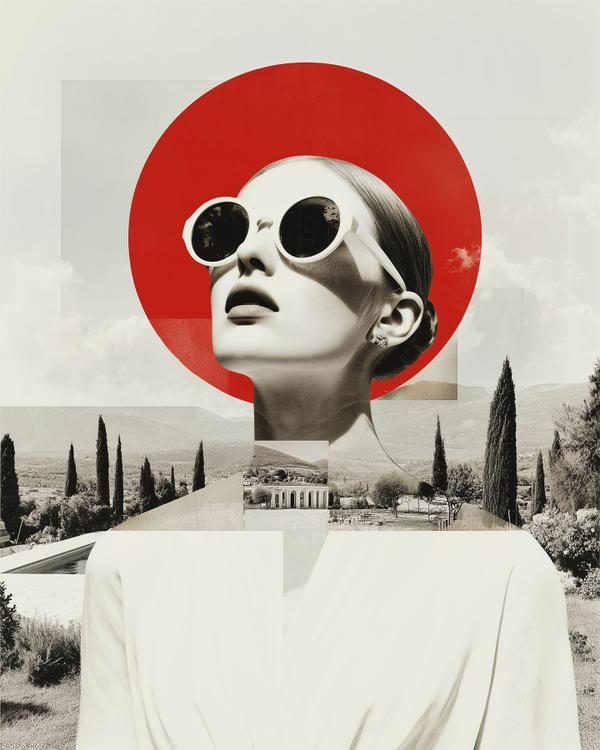
Dada Meets Dolce Vita
This surreal sun-soaked siren is what happens when Dada takes a Roman holiday.
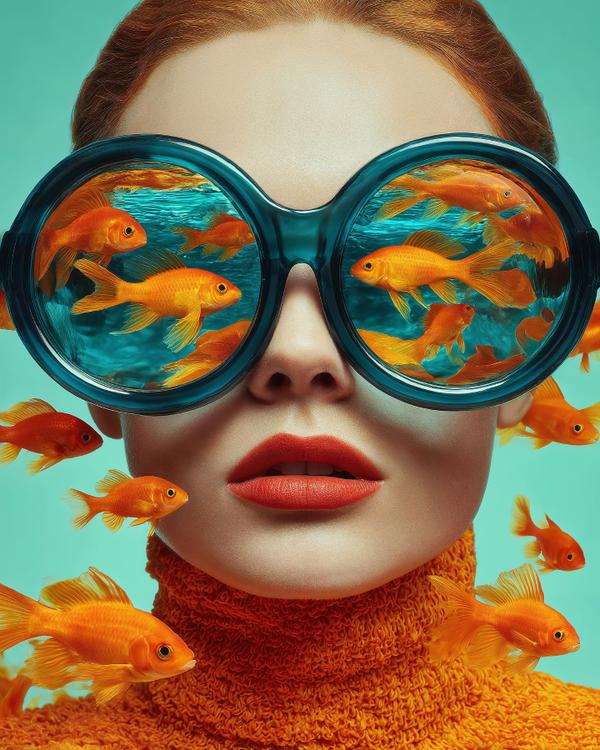
Deep Thoughts, Shallow End
Inspired by the surreal style of Mirjam Duizendstra, this portrait dives headfirst into whimsy. Bold colors, nature-meets-human mashups, and a face that’s clearly been to the deep end of daydreams. Goldfish for thoughts? Yes. Over-the-top goggles? Obviously. This is what happens when your imagination refuses to stay in the shallow end.
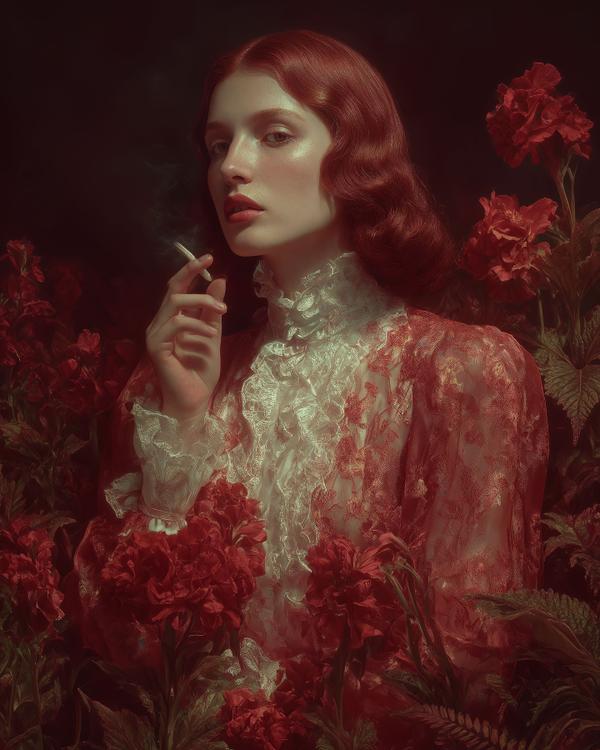
Desire
Step into the lush, seductive tangle of longing. Today’s piece explores the theme of desire through a modern-meets-Baroque visual language — crimson blooms, opulent lace, and a glance that could start a revolution (or at least a scandal). The subject, with 1940s waves and a cigarette poised like punctuation, feels plucked from a fever dream painted by Caravaggio’s goth cousin. Let’s break it down: * Color: Red dominates — a classic symbol of passion, danger, and appetite. It’s not just the flowers that are burning. * Light & Shadow: We get serious chiaroscuro vibes here — the dramatic play of light and darkness heightens emotion and tension (a nod to 17th-century masters like Rembrandt or Artemisia Gentileschi). * Texture: That sheer embroidered lace? It’s tactile temptation. It whispers Victorian restraint while the smoke says otherwise. This isn’t just a portrait — it’s a mood. A craving. A power play wrapped in petals and satin. Art fact: In art history, “desire” was often coded — through fruit, flowers, even lighting. Think Botticelli’s Primavera or Klimt’s golden lovers. This image continues that legacy but with a 21st-century smirk.
Available as a museum-quality print.
Request this print