Eggs, Icons, and Aperitifs
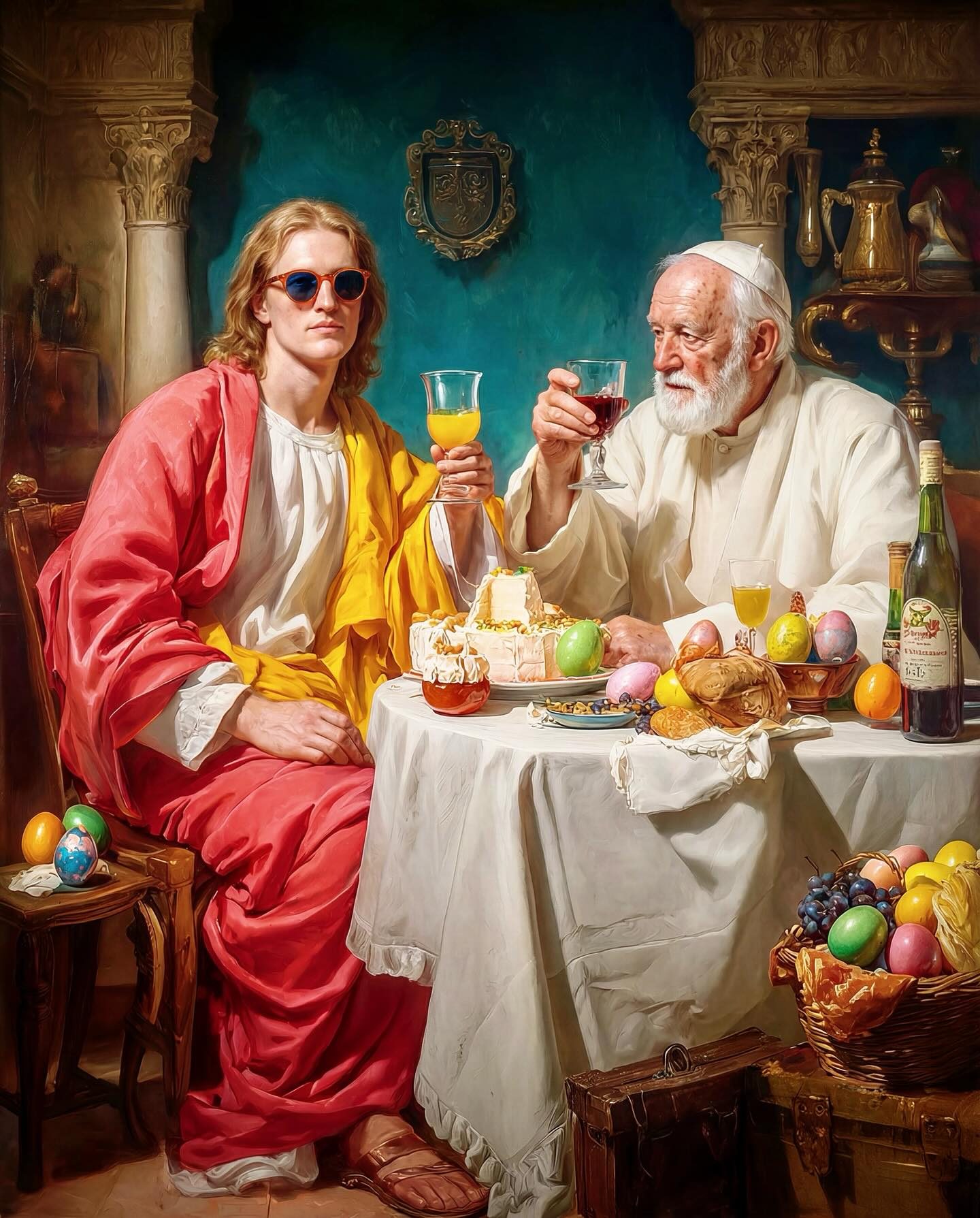
Hot pink robes. Blue-tinted sunglasses. Dyed Easter eggs scattered like confetti after brunch got unexpectedly theological.
This feels like Renaissance painting met Easter Sunday, ordered a mimosa, and decided the resurrection deserved a better playlist. You’ve got the old-master cues: draped robes, solemn architecture, glowing skin, ceremonial goblets, a carefully staged feast. Then—bam—sunglasses. Bright eggs. A table that feels less “Last Supper” and more “holy day, but make it festive.”
That mash-up is exactly why it works. The piece borrows from the grand tradition of religious and court portraiture—Titian in those rich folds, Veronese in the banquet drama, even a little Caravaggio in the weight of the figures against the dark. But it flips the mood. Instead of pure reverence, we get celebration. Easter not as whisper, but as party.
And that’s smart. Easter has always carried two emotional gears at once: reflection and joy. This image leans hard into the joy. The colored eggs, golden drink, cake, bread, wine, and overflowing basket turn the table into a symbol of abundance. Not just survival. Overflow.
Mini art lesson: that’s symbolism. Everyday objects doing extra emotional labor. Here, the feast signals renewal, community, and maybe the fact that somebody’s uncle brought suspiciously good wine.
Fun fact: in medieval and Renaissance art, feast tables were never just about food. They were status, ritual, and storytelling all at once. Bread could mean hospitality. Wine could mean sacrifice or celebration. An egg? New life. Honestly, Easter eggs may be history’s cutest theological mic drop.
Best detail? The shades. They turn the whole thing from sacred painting into sacred flex.
Related works
Resurrection, With Ears
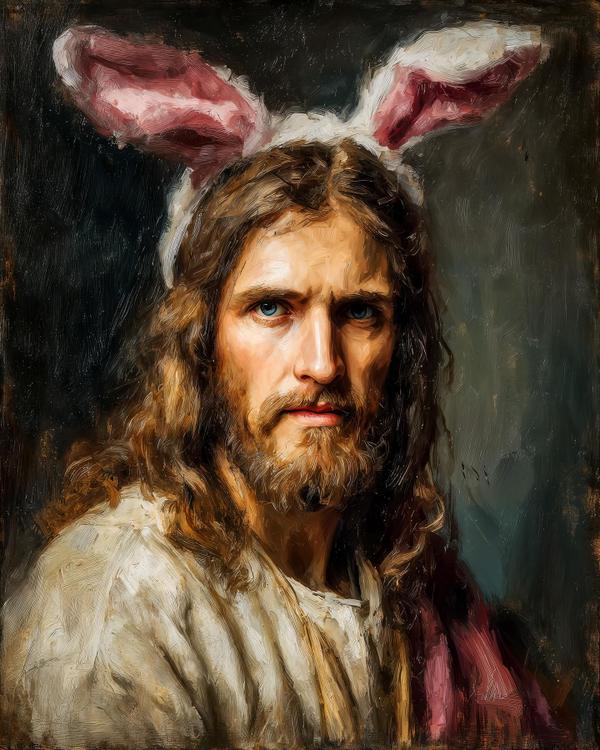
Quick question: how did we get from the resurrection of Jesus Christ… to a rabbit hiding pastel eggs like a tiny suburban criminal?
Someone Left the Halo On
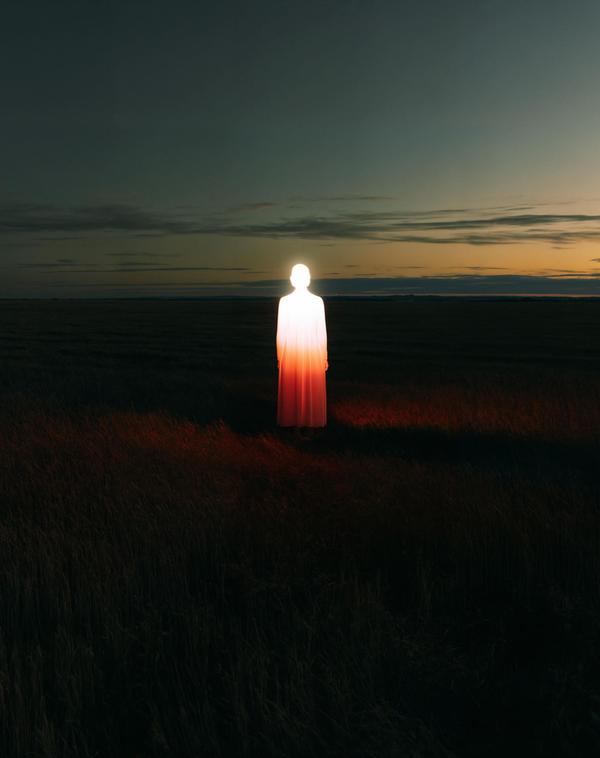
Well. That’s one way to make an entrance.
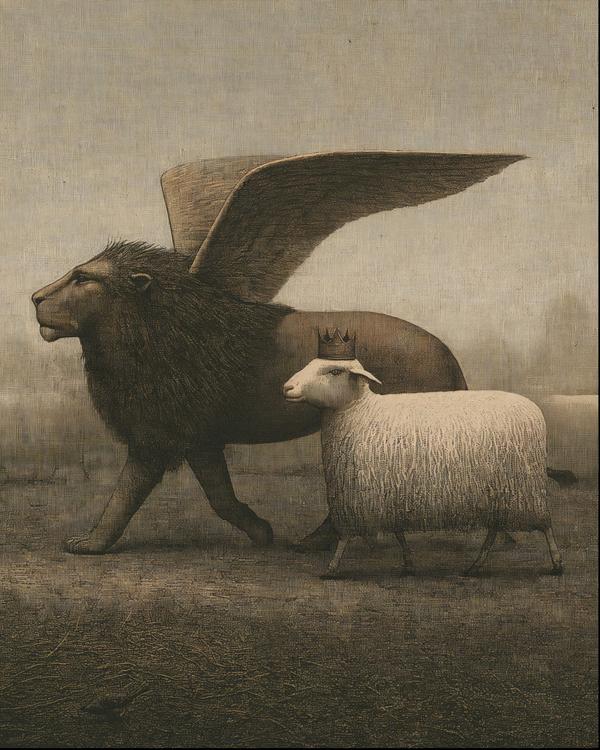
The Lion, the Lamb, and the Strange Little Crown
This looks like a fable wandered into a dream and forgot how to leave.
Available as a museum-quality print.
Request this print