
Follow the Line, Find the Magic
Ever feel like life’s pulling you somewhere, but you’re not sure where? That’s a leading line talking—and in art, it’s kind of like the universe whispering, “This way, friend.”
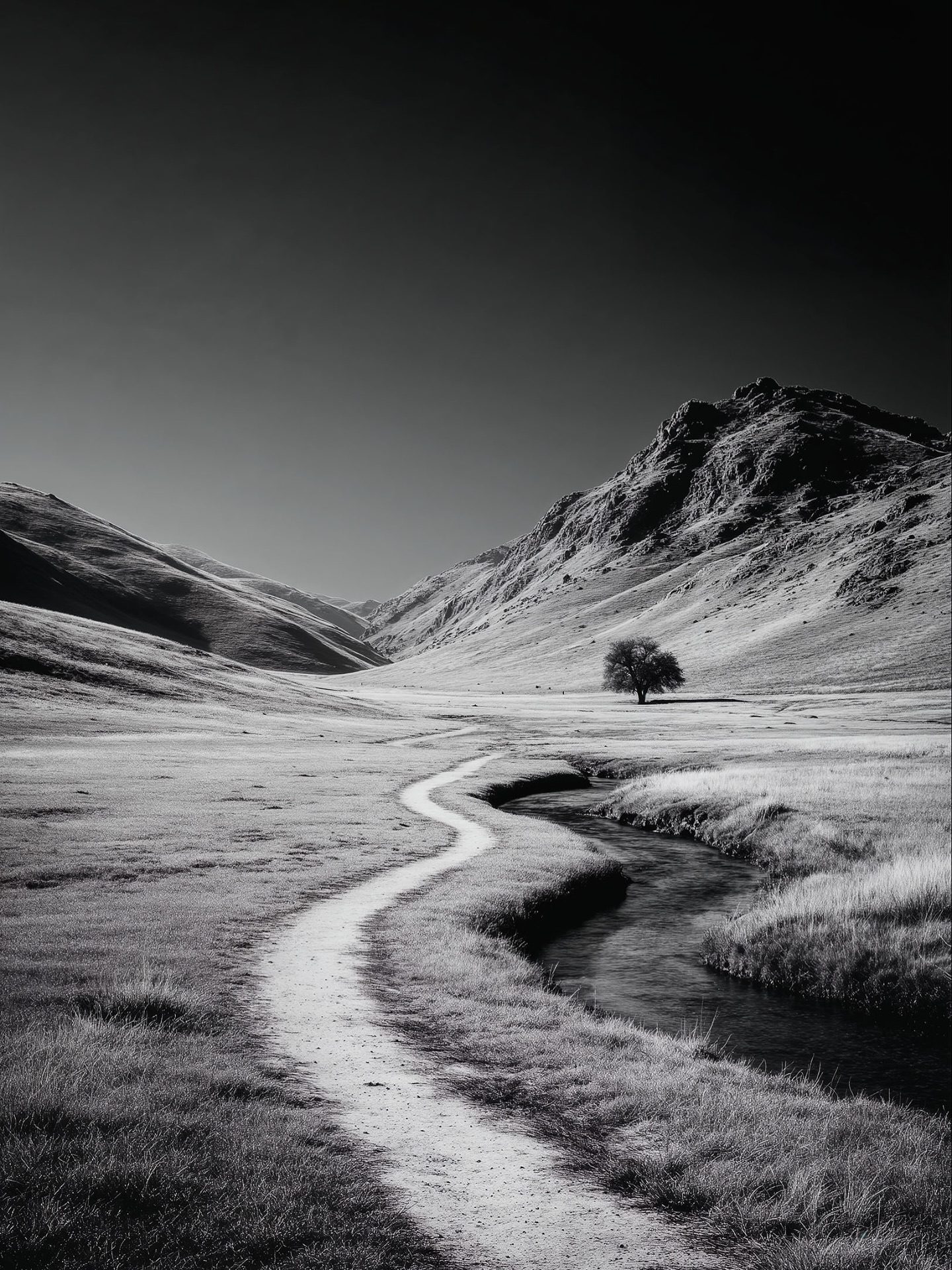
In today’s black-and-white wander-dream, a winding path curls alongside a stream like it’s narrating its own story. Your eye can’t help but follow it—from foreground to distant tree, like a visual road trip without gas money. This is the power of leading lines—one of the oldest tricks in the artist’s playbook to guide your attention exactly where they want it. It’s like visual GPS... but without the annoying “recalculating.”
What’s a Leading Line?
It’s any natural or created line—roads, rivers, fences, shadows—that directs your eye through an image. Artists use them to create depth, drama, and focus. Basically: it’s visual persuasion dressed as scenery.
Fun Facts to Drop Casually Like You’re a Gallery Guide:
1. Da Vinci was a fan. The guy didn’t just paint smiles—he used subtle leading lines to draw your eye to Mona Lisa’s gaze before you even know you’re looking.
2. Black-and-white images make lines pop. Without color to distract, your brain zones in on texture and shape. That’s why this piece feels like a quiet poem in pixels.
3. Your eyes love a journey. Studies show viewers spend more time with art that has strong directional elements. It’s visual storytelling at its finest.
So next time you’re out walking a path like this, just know—it’s not just a trail. It’s a masterclass in composition, brought to you by dirt, water, and one very persuasive curve.
Related works



Available as a museum-quality print.
Request this print