
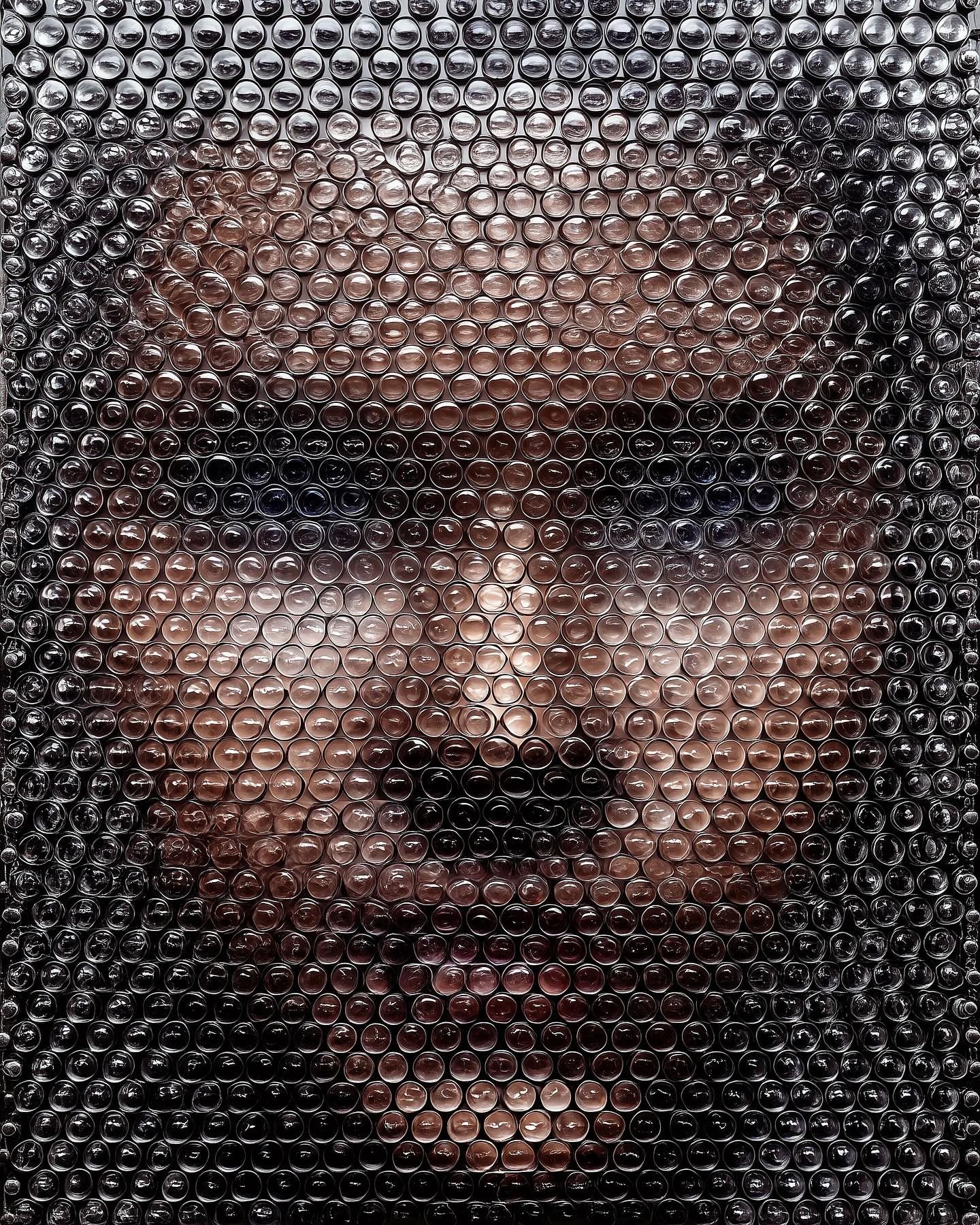
Handle with care: fragile human inside
A face pressed under bubble wrap—half selfie, half shipping label. From two feet away it reads as a moody portrait; step closer and the skin tones dissolve into hundreds of glossy domes catching light like a field of tiny moons. It’s pointillism for the Amazon era.
Influences? Chuck Close’s grid-built heads, Vik Muniz’s portraits from odd materials, and Magritte’s veiled lovers—surrealism’s old trick of hiding the familiar in plain sight. There’s a wink to Pop art’s Ben-Day dots (hi, Lichtenstein), except the “dots” are industrial cushioning. Photorealism meets readymade: the object isn’t just in the picture; it is the picture.
The message stings: bubble wrap protects but also muffles, fogs, and steals your breath if pulled tight. That paradox is modern life—our filters, packaging, and personas keep us “safe” yet isolate us. The face becomes a product: labeled, sealed, and ready to ship; identity as something we package for the world to unbox—carefully, but never guaranteed.
Art snack: optical mixing. Your brain blends the tiny highlights and shadows in each bubble into believable skin tones, just like Seurat’s pointillism or a newspaper halftone. From far away: portrait. Up close: a matrix of plastic lenses. Your eye does the blending; the artist does the mischief.
Fun fact: Bubble wrap wasn’t born for packing. In 1957 two engineers tried making textured wallpaper by sealing shower curtains together. The décor flopped, but shippers loved the bubbles. There’s even a Bubble Wrap Appreciation Day (last Monday of January). Yes, people celebrate by popping.
Bottom line: A portrait you can’t touch that makes you want to—and maybe rethink what we’re protecting, what we’re hiding, and what needs to finally go pop.
Related works
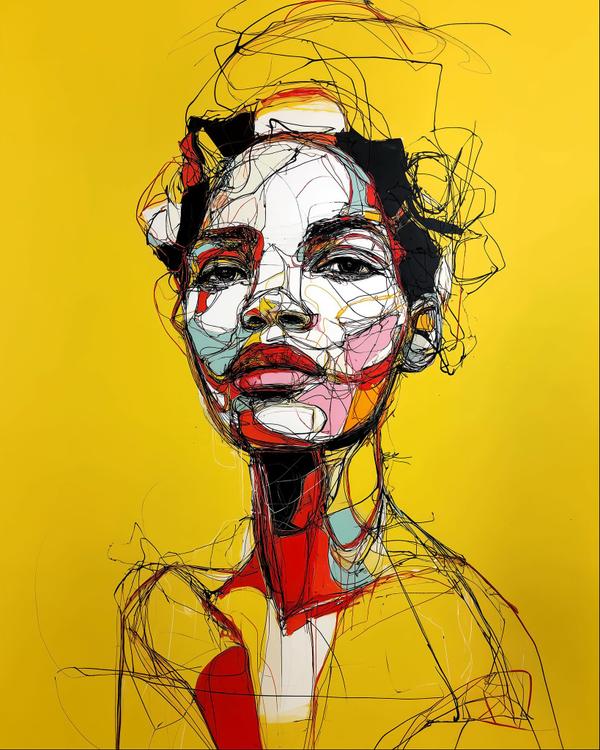


Available as a museum-quality print.
Request this print