
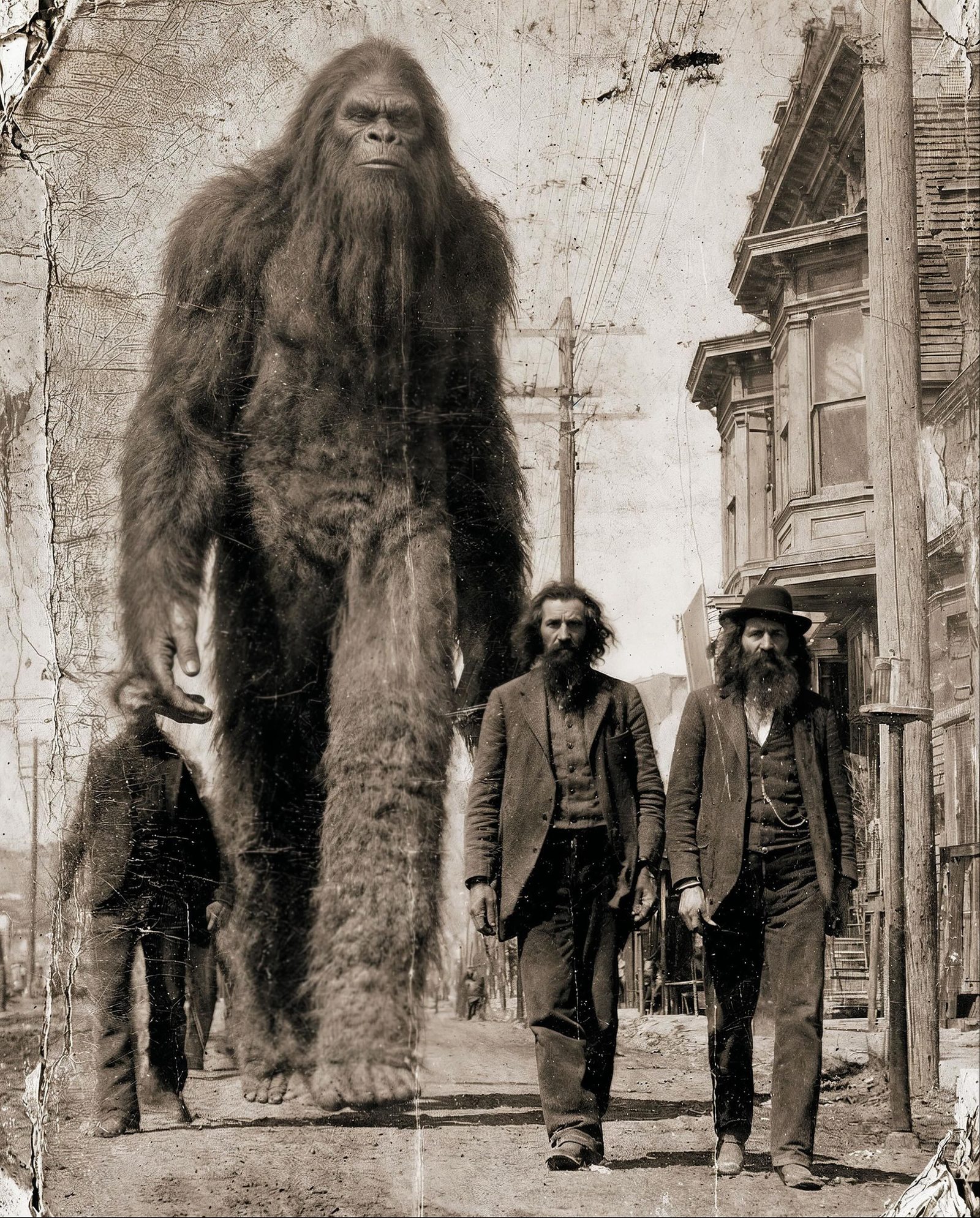
In 1894, the children of Millvale sang about the man in the trees
Not a nursery rhyme. A warning.
Don’t go past Miller’s Run. Don’t go where the black pines lean. Don’t whistle after supper.
Adults dismissed it. Then the bell began.
Every morning at 5:43, as first light touched the steeple, the church bell rang once. One clean strike.
The sexton swore the doors were locked. The pastor swore no one could reach the rope. The sheriff blamed boys, then whiskey, then wind.
On the seventh morning, three men waited inside with rifles.
At 5:43, the bell rang.
From the street.
They rushed out and found him beneath the gas lamp — taller than the chapel door, covered in hair and coal dust, one hand around the rope threaded through the tower slats.
He did not run.
He pointed at the hill behind town. Then he walked.
The sheriff, the pastor, and the Price brothers followed him across Miller’s Run and into the black pines. He stopped whenever they fell behind. Two miles up, they smelled old coal air.
The collapsed shaft held three boys who had vanished days before — alive in a pocket of air, beside chestnuts and creek water someone had left in the dark.
After that, Millvale fed him, watched him, feared him. Someone took his photograph.
Then one morning he was gone. No blood. No broken fence. Just footprints toward the pines — and beside them, three smaller sets.
The boys were found at Miller’s Run, wrapped in his coat. He had led them to the creek, turned them toward town, and waited in the fog until he heard their parents’ voices.
Then he walked back into the trees.
The bell never rang at 5:43 again.
Related works
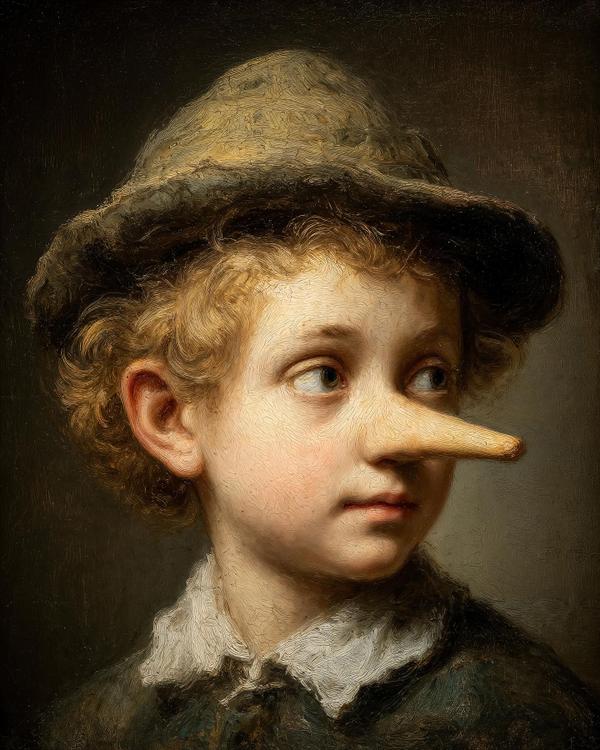
Once Upon a Candlelight
If Rembrandt ever moonlighted as Disney’s concept artist, this is probably what his portfolio would’ve looked like—fairy tales dipped in candlelight and moral ambiguity.

House Under Observation
Even the cloud looks like it knows something.

The Tree That Stayed
This looks like a landscape after the world exhaled.
Available as a museum-quality print.
Request this print