
Minutes, Then Eternity
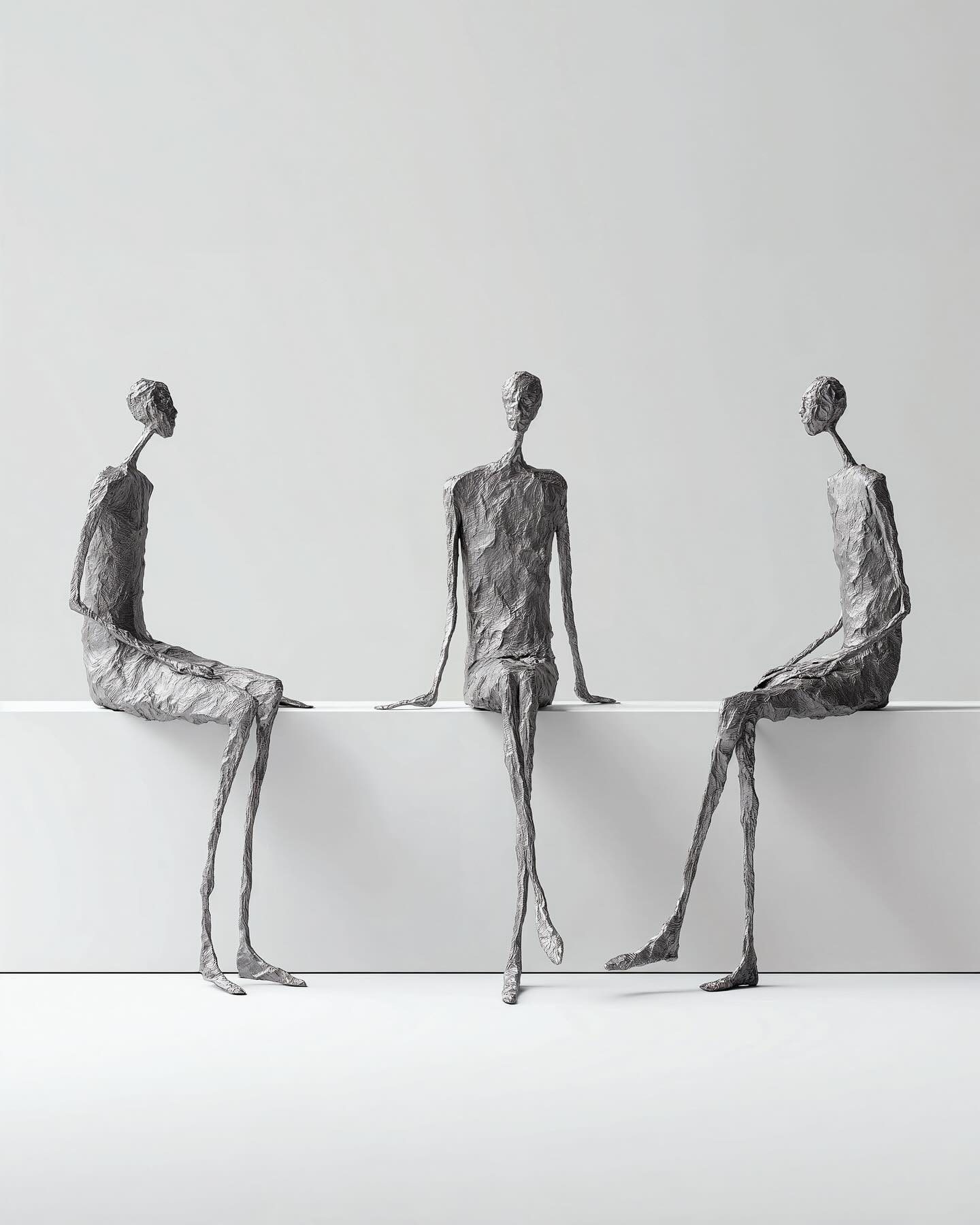
Three thin bronze figures. Legs like commas dangling off a stark white ledge. Faces reduced to quiet lumps of texture, like they’ve been weathered by thought.
They’re “in a room” but it feels like a void. A boardroom with the sound turned off. One leans away. One sits dead-center, posture pretending to be confident. The third looks like they’re listening while already rehearsing their exit.
This is Giacometti territory, straight up. That scraped, rough skin. Those stretched proportions that make humans look like ideas of humans. Also a little Existentialist theater: Beckett vibes, but with better furniture.
Mini art lesson: proportion is emotion.
When you elongate the body and starve the form, you don’t just change the look. You change the psychology. Thin becomes fragile. Tall becomes lonely. Space becomes pressure. Here, the empty background isn’t “nothing,” it’s the thing squeezing them.
Fun fact to drop at dinner: Giacometti started making tiny, matchstick-sized figures during and after WWII, obsessed with how far away a person can be and still feel real. He’d shrink them, then stretch them, chasing the same question: what’s the minimum amount of “human” needed for your brain to recognize a soul?
Related works
Tale of the Sea
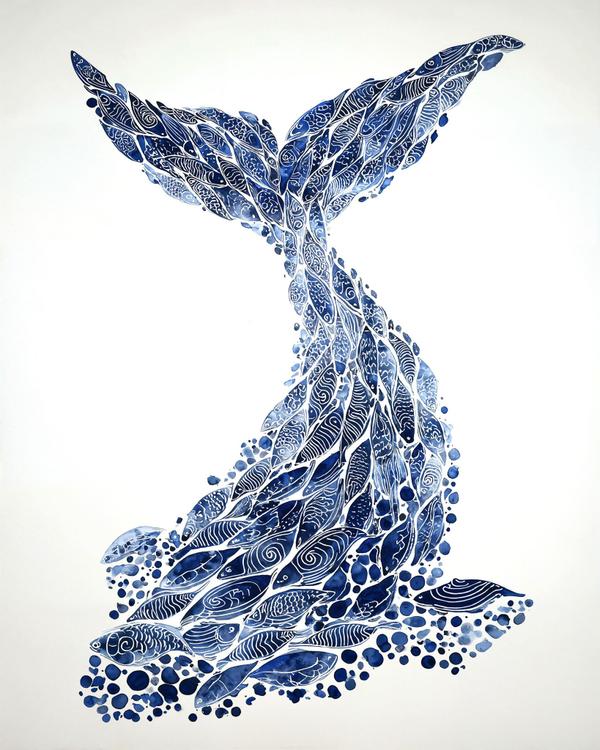
This is what happens when a whale hires a tattoo artist with a marine biology minor.
Roadside Daydream
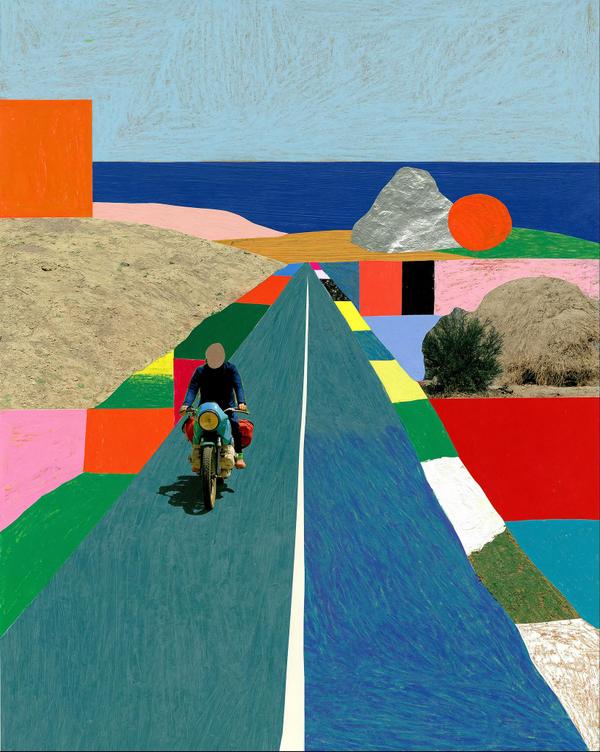
A faceless biker, a silver boulder, and a giant orange slab by the sea. Already a better vacation than most group texts.
Quiet Spiral
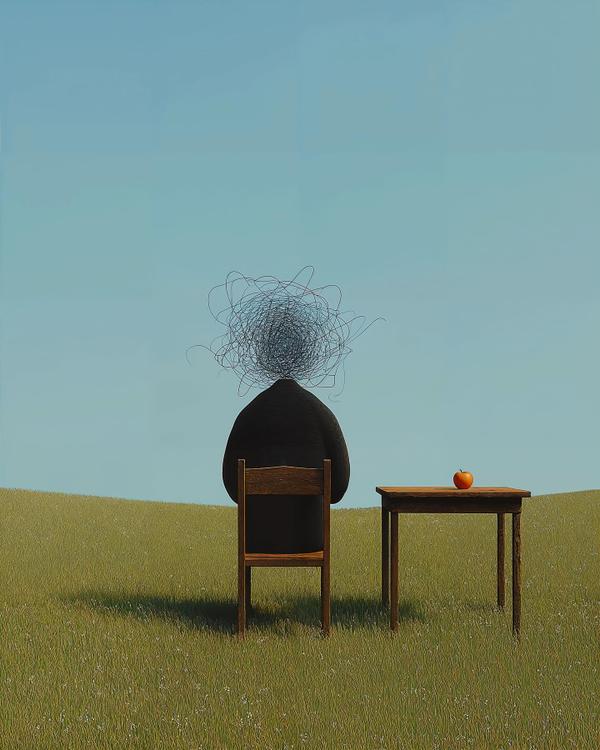
This one is funny for about two seconds, and then it starts feeling a little personal. A lone figure sits in an open field, back turned, posture calm, while their head has become a frantic ball of scribbled pencil lines—part storm cloud, part doodle, part “nothing to worry about” from someone clearly worrying about everything. Next to them, on a plain wooden table, sits a single red apple, doing its best despite being hilariously underqualified.
Available as a museum-quality print.
Request this print