
Pencil or Camera?
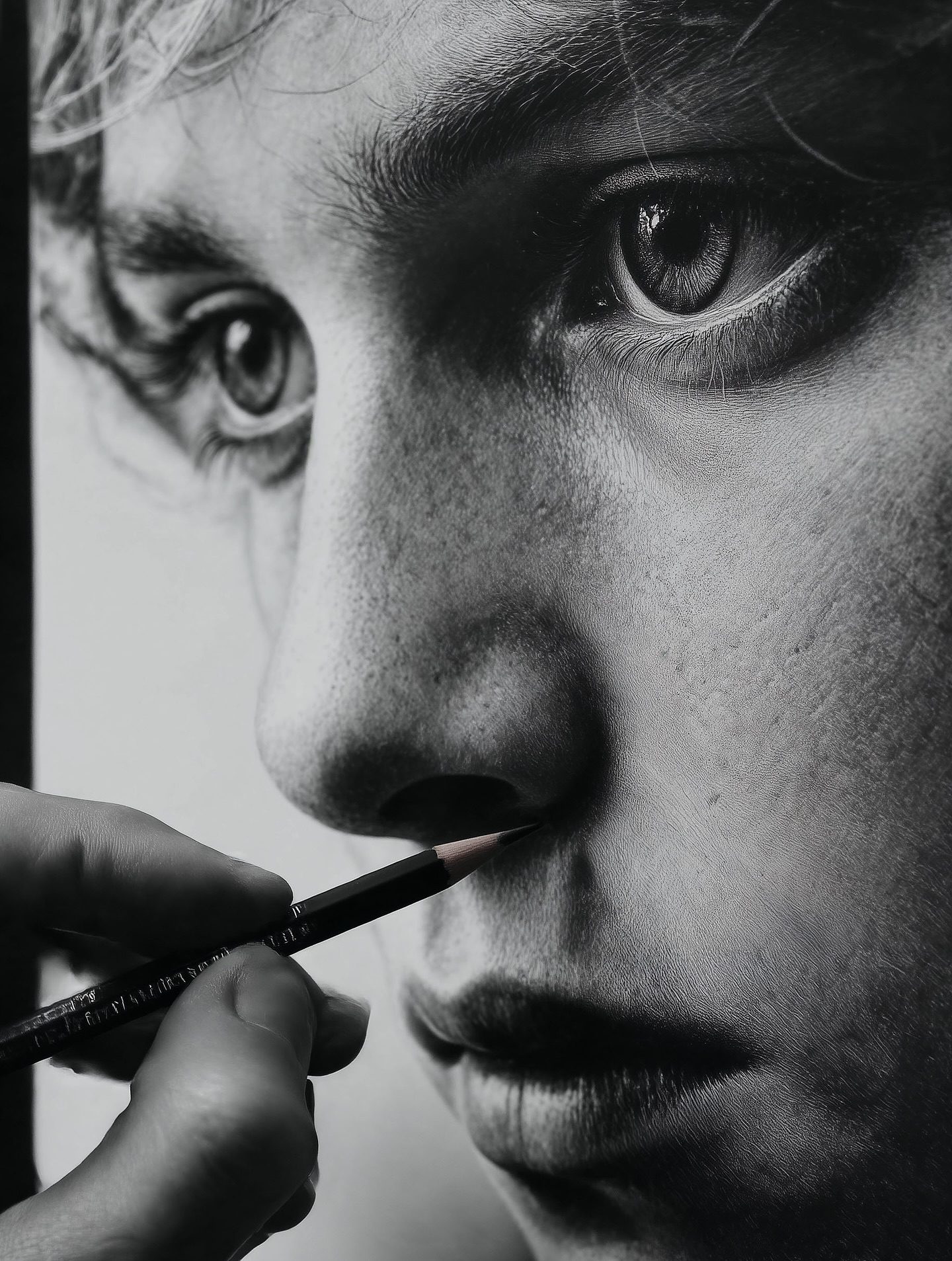
Okay, let’s just admit it: this face looks more HD than half the selfies on your phone. Every pore, every eyelash, every glint in the eye—it’s so real you half expect the drawing to blink and ask you for Wi-Fi. But plot twist: that’s not a photograph, that’s graphite. Welcome to hyper-realism, the art form that makes reality look like it needs an upgrade.
Hyper-realism takes its roots from photorealism of the 1960s (think Richard Estes or Chuck Close), but then it said, “Cool, but what if we crank up the emotional drama to 11?” Instead of just copying a photo, hyper-realists exaggerate the textures and the mood. The skin looks too alive, the eyes too intense—like reality plus a little existential seasoning.
Here’s your fun flex for trivia night: some hyper-realistic portraits take over 500 hours to finish. (Yes, that’s five hundred hours. Meanwhile, you gave up on a 1000-piece puzzle after day two.) And get this: the world’s largest hyper-realistic painting is a 66-foot-wide wave so convincing that surfers literally showed up with boards.
What’s wild about this piece is how the artist nails micro-textures—the soft grain of skin, the wet sheen in the eye, even the faint chaos of hair strands. It’s intimate, almost uncomfortably so. Like zooming in too far on FaceTime, but instead of cringe, you get goosebumps.
So next time you think “eh, it’s just a drawing,” remember: hyper-realism isn’t competing with photos. It’s competing with your sense of reality. And honestly? Reality should be nervous.
Related works
Available as a museum-quality print.
Request this print