
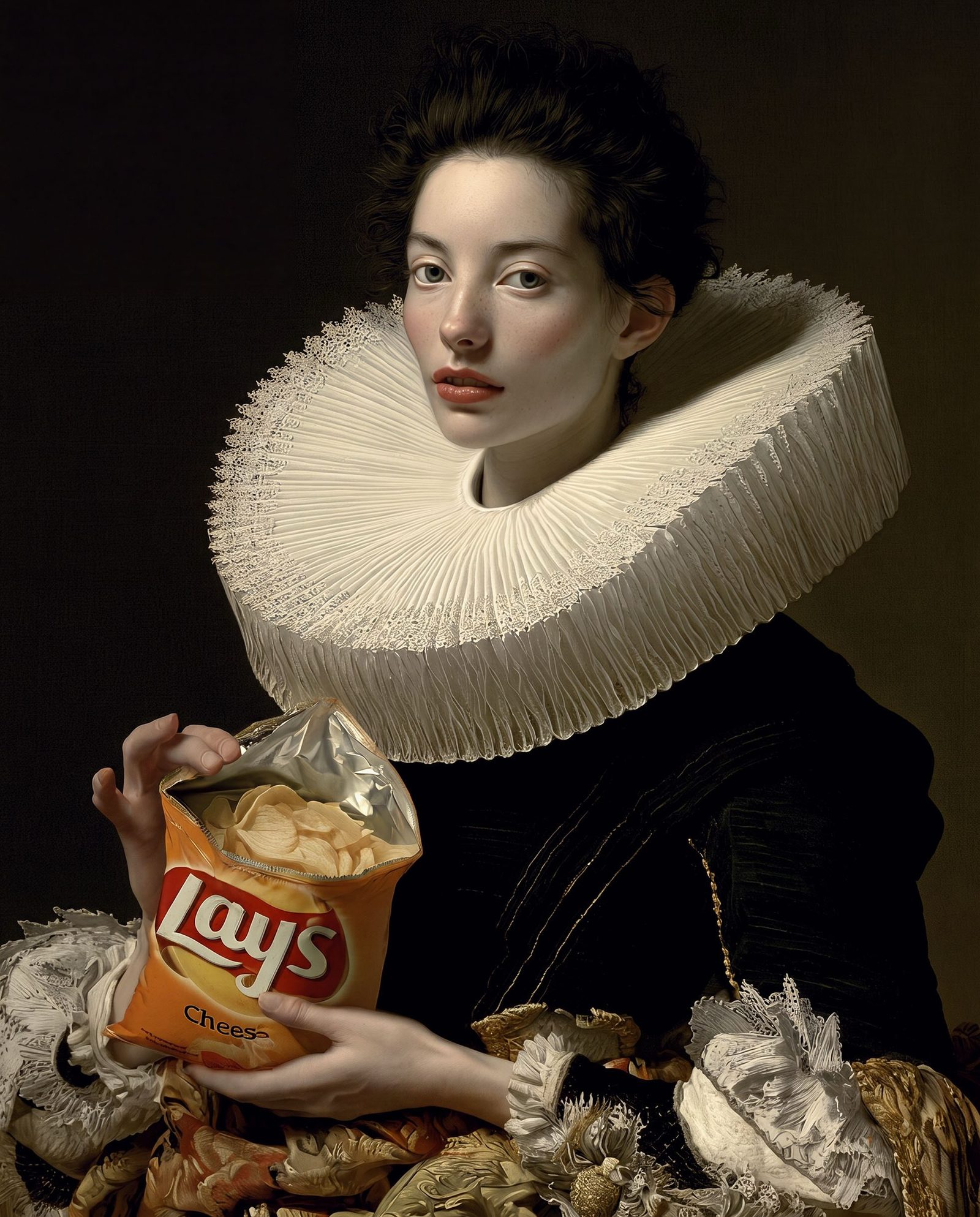
Portrait of a Woman Who Brought Her Own Snacks
Nothing ruins aristocratic mystery like the unmistakable crinkle of a chip bag.
Everything about the portrait insists on dignity: pale skin against darkness, velvet sleeves, a monumental ruff collar and the cool composure of an Old Master sitter. Then the snack bag arrives and quietly wrecks the time period.
The visual language draws from Bronzino’s polished court portraits, Rembrandt’s dramatic light and the psychological directness of Dutch portraiture. The modern interruption turns all that seriousness into a joke.
Art historians call this anachronism—putting something in a period where it clearly does not belong. The collision works because both halves are instantly recognizable. She may look like she inherited three estates. She still wants the cheese ones.
FUN FACT
By the late 1500s, fashionable ruff collars could become so elaborate that they required wire supports, heavy starch and professional laundering.
Related works
Available as a museum-quality print.
Request this print