
Rings, No Stadium
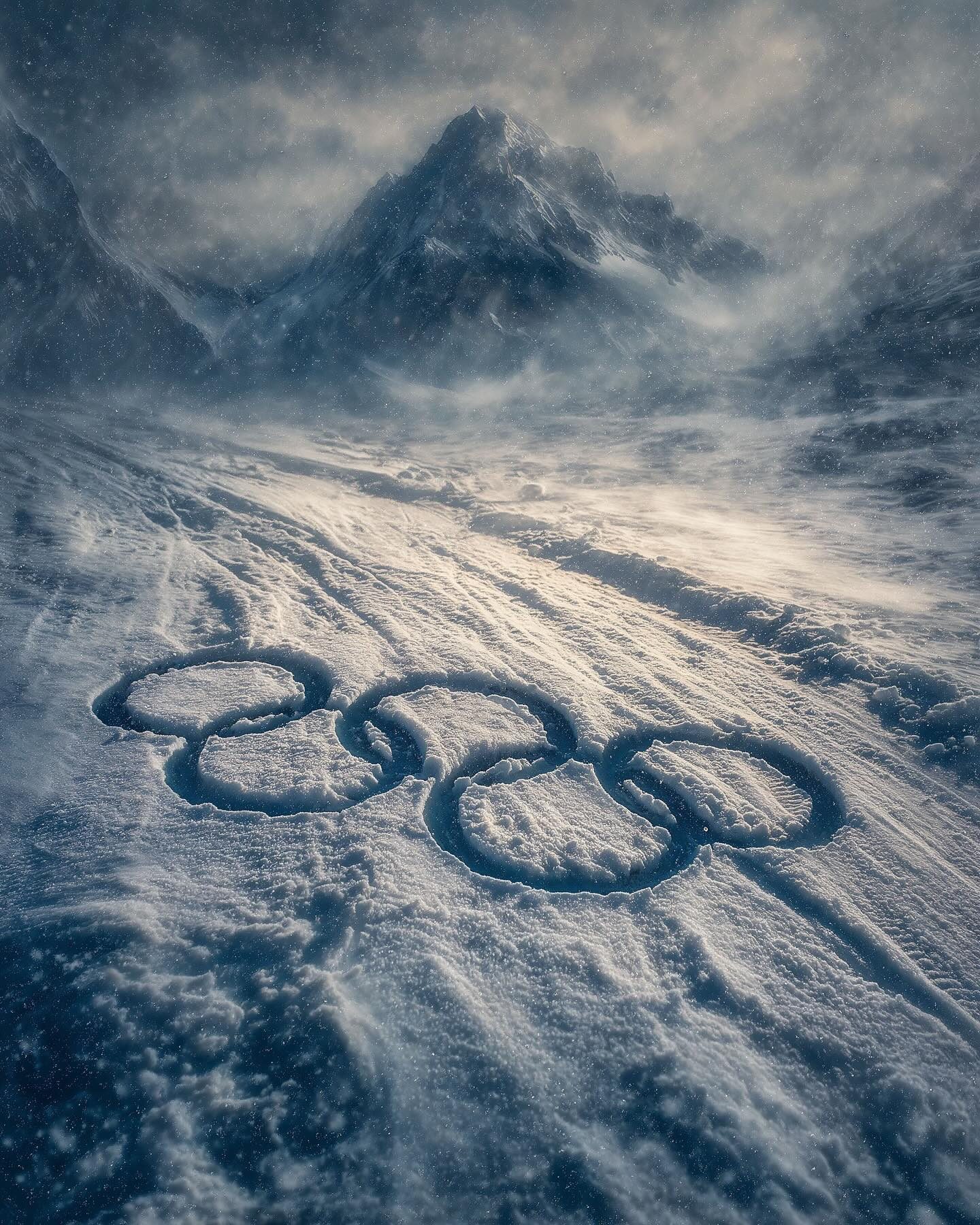
Blue-gray mountains swallowing the horizon. A blizzard of white specks like TV static. And five Olympic rings carved straight into the snow, crisp as a signature.
This is the opening ceremony, minus the fireworks. Nature’s doing the choreography. The wind is the orchestra. And those rings feel less like a logo and more like a dare: can you keep a symbol alive when the world tries to erase it?
It’s got the moody, lone-witness drama of Caspar David Friedrich, where the landscape isn’t background, it’s the main character. And it nods to Andy Goldsworthy-style land art: temporary, handmade, and brave enough to vanish.
Mini art lesson: scale is a magic trick. Put something familiar (the rings) in an enormous scene and your brain instantly measures the world around it. That’s why these five circles hit so hard. They make the mountain feel bigger, the storm feel louder, and the silence feel… earned.
Fun fact: the Olympic rings were designed in 1913 by Pierre de Coubertin, and they first appeared at the 1920 Games in Antwerp. Another good dinner-line: the ring colors weren’t picked for “continent matching.” They were chosen because, along with the white background, at least one of those colors shows up in every national flag at the time.
Related works
Nature Strikes a Chord
Nature’s Biggest Nope
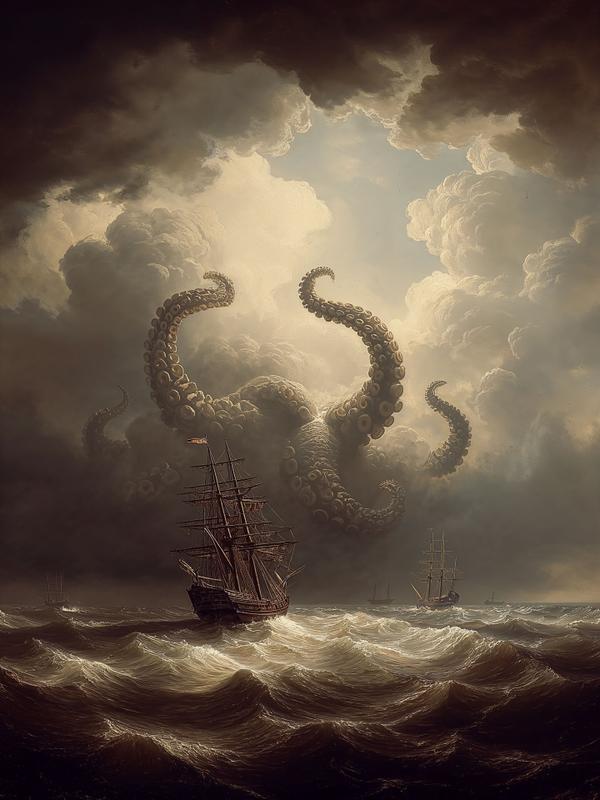
If you’ve ever thought your inbox was overwhelming, imagine sailing into this inbox—eight arms, each the size of a cathedral, answering you all at once. This stormy scene feels like J.M.W. Turner took a painting vacation with Caspar David Friedrich, then let H.P. Lovecraft write the guestbook. The lighting? Pure Romanticism—sunlight punching through clouds like heaven itself wants a better view of the drama. The ships? Classic 18th–19th century merchant vessels, perfect fodder for the ocean’s worst Yelp review: “One star. Got eaten.” The Kraken’s roots? Not just sailor’s gossip. In Norse sagas, this giant sea beast was said to lurk off Norway and Greenland, big enough to be mistaken for an island. Early accounts claimed its tentacles could drag a whole ship under… but the real terror? The whirlpool it created when it dove. (Think: Nature’s blender, set to ‘doom.’) Fun fact you’ll want to drop at a party: In 1782, the Danish bishop Erik Pontoppidan wrote that the Kraken could be “a mile and a half wide.” Another report? An entire Spanish ship vanished without a trace in calm seas—no storm, no distress call, just gone. Cue the monster theories. Why do we love stories like this? Because the ocean is basically space, but wetter—vast, uncharted, and holding secrets we’d rather meet in myth than in person. And honestly, a good sea monster makes reality feel just a little more magical… or at least more exciting than cargo logs.
Oracle Beneath the Moon
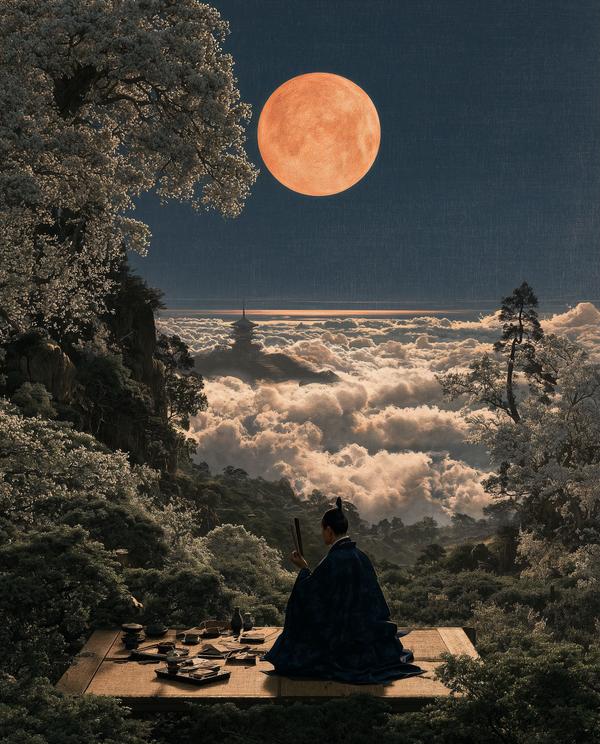
Some meetings could’ve been an email. This one apparently required a moon the size of a small country.
Available as a museum-quality print.
Request this print