Sidewalk Sonata
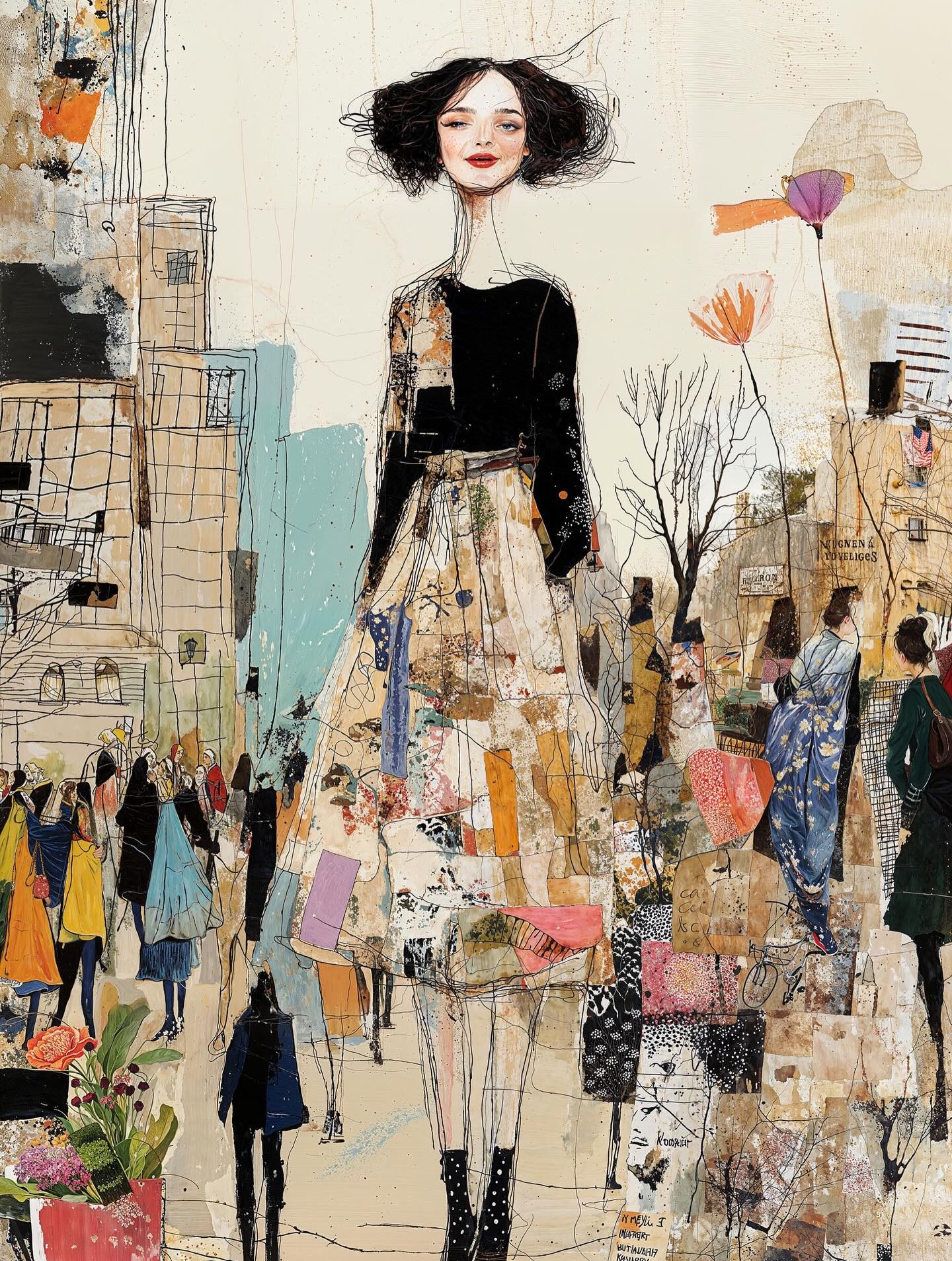
Like if Egon Schiele crashed a fashion editorial, wandered through a flea market, and somehow pulled the whole thing off.
This one has real presence. The figure is stretched almost past logic—long neck, long legs, all nerve—and yet she feels completely composed. Not like she’s walking through the city. More like she’s been assembled from it. Bits of storefront color. Weathered walls. Paper scraps. Ink marks. Tiny jolts of coral and gold. Even the dress feels less designed than collected, like the neighborhood itself had a hand in it.
That’s the sweet spot here. It’s elegant, but not too clean. Stylish, but not precious. There’s some grit left in it, which is exactly why it holds your attention.
Schiele is definitely in the room with those exaggerated proportions and that slightly tense grace. There’s a little Modigliani too in the long vertical rhythm. Then the surface starts to open up into something more layered, broken, almost collage-like. A bit of Klimt in the decorative richness. A bit of Dubuffet in the rougher texture. Fashionable, yes. But lived-in too.
Quick art lesson: distortion isn’t bad drawing. It’s a tool. Artists stretch, compress, simplify, and skew things because sometimes emotion lands faster that way than realism ever could.
Fun fact for later: collage took off when Picasso and Braque started gluing everyday materials into their work in the early 1900s. Basically, they looked at a painting and thought, this needs receipts.
This one feels like city life dressed up, slightly frayed, and still somehow fabulous.