Too Much Is Never Enough
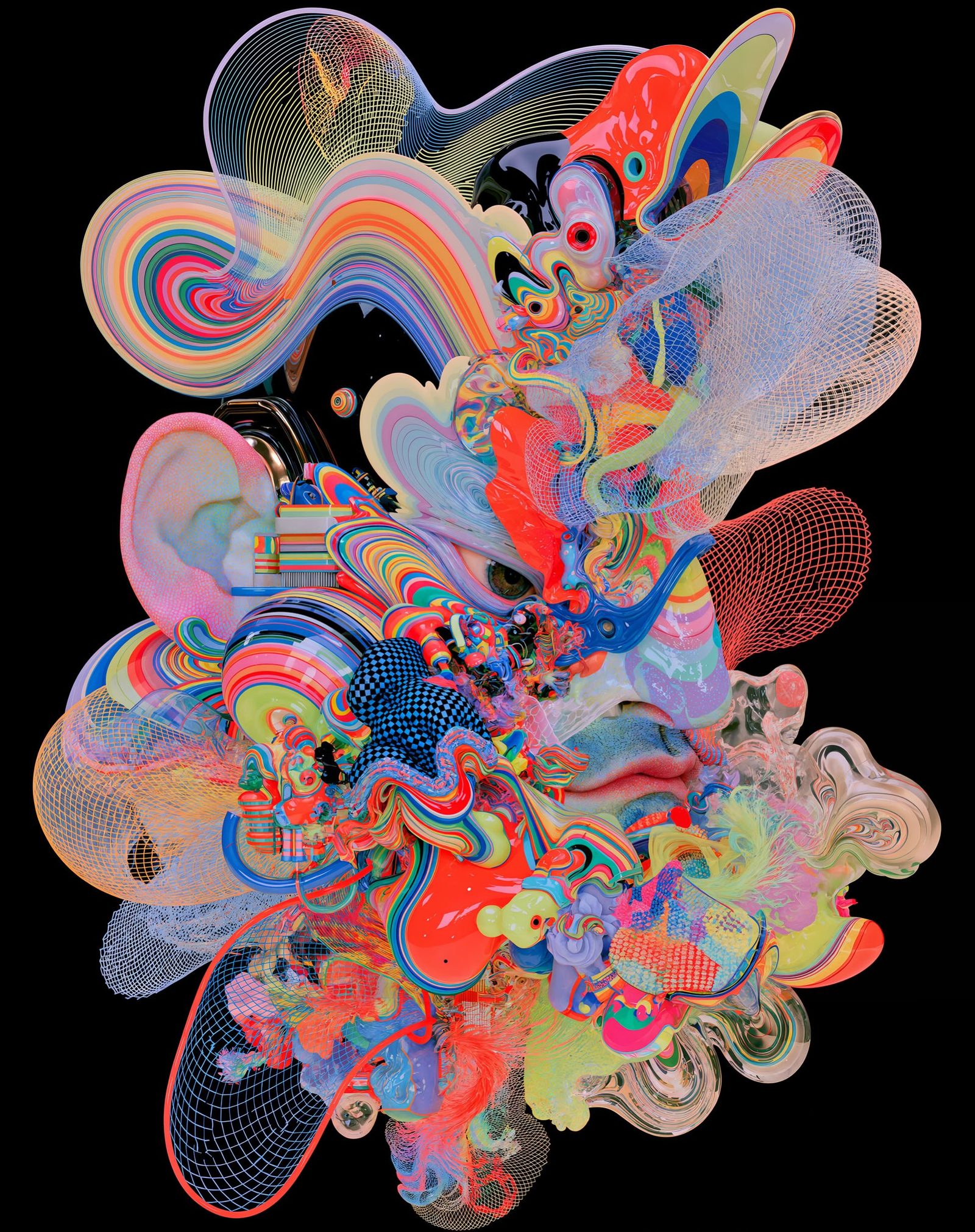
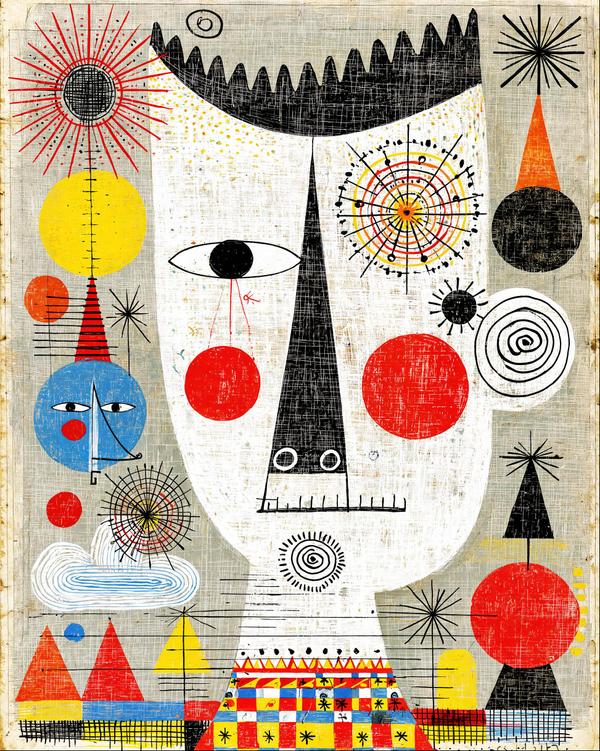
This looks like a piñata exploded inside a supercomputer.
Eyes, ears, lips, checkerboards, candy-colored tubes, rubbery creatures and delicate wireframe nets all tumble together in one gleeful act of visual over-sharing. There is no quiet corner. Even the negative space seems nervous.
The piece belongs to a long tradition of surrealist assemblage, where familiar objects are pulled apart, recombined and pushed into dream logic. Max Ernst’s strange hybrid creatures hover somewhere in the family tree, along with the biomorphic forms of Joan Miró and the hallucinatory detail of Salvador Dalí. The neon palette and cartoon energy also bring to mind Kenny Scharf and Takashi Murakami, while the glossy, digitally sculpted surfaces pull the whole thing firmly into the present.
There is a useful art term for this kind of glorious excess: horror vacui, Latin for “fear of empty space.” Artists using it pack nearly every inch with marks, patterns or objects. Medieval manuscripts did it. Psychedelic posters did it. Your junk drawer is doing it right now.
FUN FACT
the human brain is wired to search for faces, even in random shapes. That tendency is called pareidolia, which explains why this image keeps producing new little characters the longer you stare.
Related works
Available as a museum-quality print.
Request this print