
Under the Surface
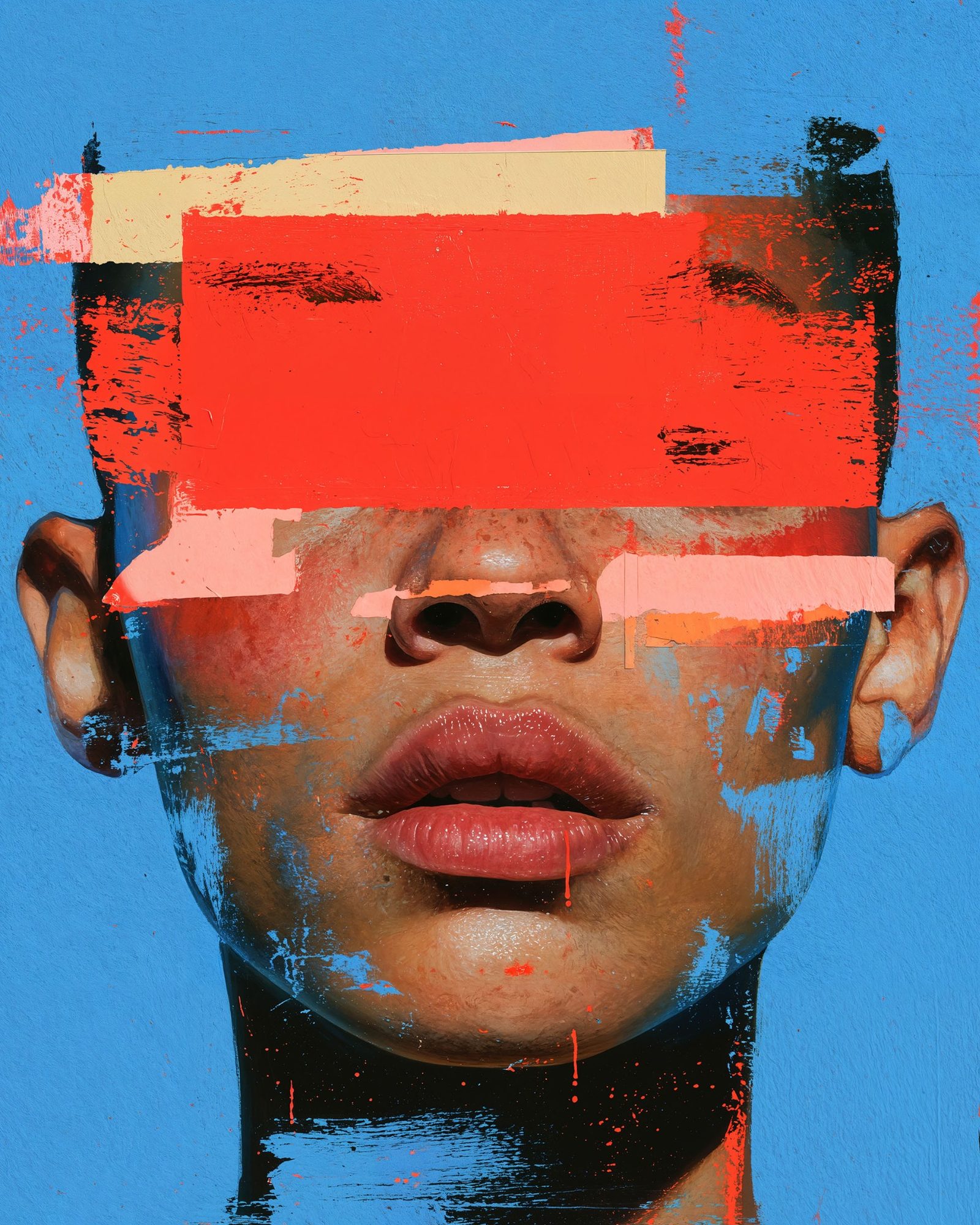
Someone has painted over her eyes, and somehow she's still holding our gaze.
A face stares forward, interrupted by aggressive bands of red, coral, and pale pink. Her eyes have nearly disappeared beneath the paint, while her nose and parted lips remain startlingly lifelike.
The effect is wonderfully unsettling. We're looking at someone we can almost recognize, and the missing information makes us look harder.
Mark Bradford's layered abstractions come to mind, where scraped surfaces and competing fragments suggest histories buried beneath the visible image. Francis Bacon understood how disrupting a face could intensify its psychological presence. And Basquiat brought raw marks, unfinished edges, and visual interruptions into portraits that refused to behave politely.
Notice the color. That electric blue background makes the vermilion paint practically vibrate. In color theory, warm reds advance visually while cooler blues tend to recede, creating an immediate sense of depth.
The horizontal bands function almost like censorship, yet their rough, scraped edges reveal fragments of eyebrows, skin, and facial structure. Each interruption makes the portrait feel increasingly personal.
There's a fascinating tension between exposure and concealment here. Her mouth remains visible, seemingly on the verge of speaking, while her eyes have been swallowed by abstraction.
Perhaps she's protecting something. Perhaps she's been edited by the world around her.
Either way, she deserves the final word.
FUN FACT
Our brains are remarkably skilled at recognizing faces, even when significant features are missing or obscured. This ability helps explain why we instinctively try to reconstruct the expression hidden beneath the paint.
Related works
Points Over Paint
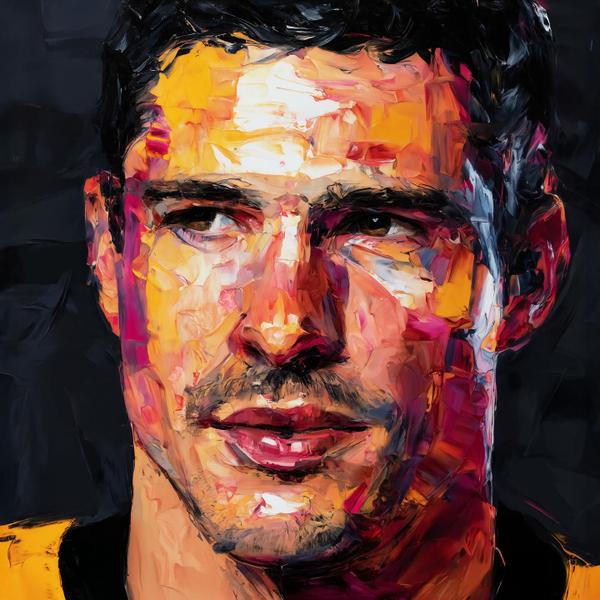
Knife-thick oranges and hot pinks stacked like chipped ice. A black midnight background that makes the face glow. That stare, half calm, half challenge. Twist: this portrait is built from layers, and so is the moment.
Pony Problem
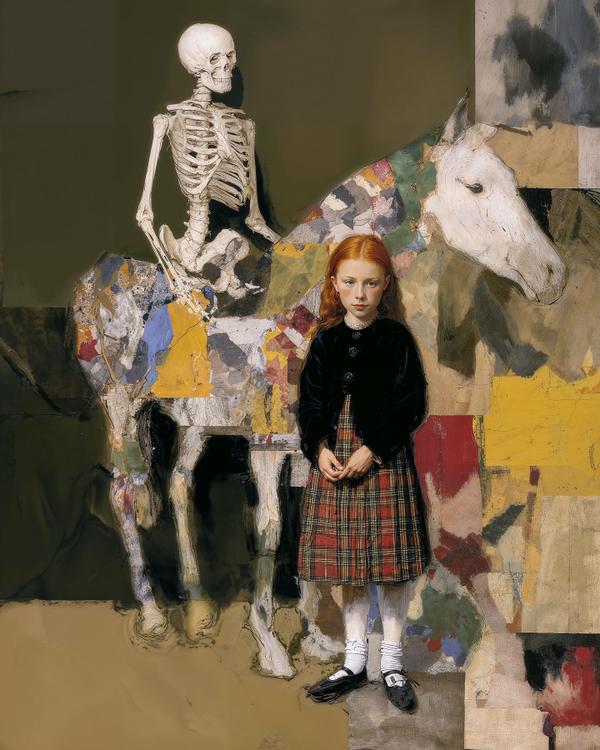
Like if a Victorian portrait got ghosted by reality and decided to make that everyone else’s issue.
Porodina After Midnight
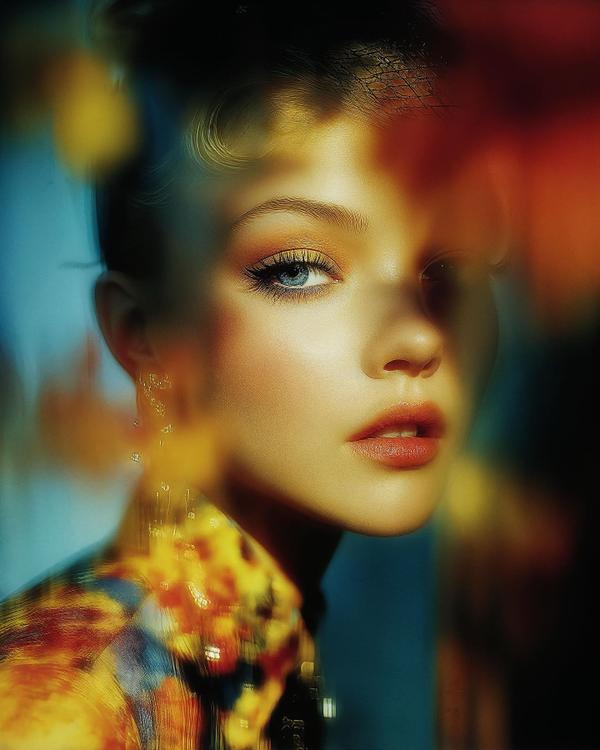
This piece steps into the world of Elizaveta Porodina, the Moscow-born, Munich-based fashion photographer I stumbled upon in the Wall Street Journal. She recently shot Sydney Sweeney, and trust me — if you thought your camera roll was fire, this is Olympus-level divine. Porodina’s signature? Painterly surrealism. Her images look less like glossy fashion spreads and more like oil paintings trapped inside a prism. Notice the blurred doubles, the spectral echoes, the way color bleeds across fabric like molten glass. She bends light the way painters bend pigment — not to capture reality, but to reinvent it. Compare her to Paolo Roversi, the Italian master of fashion photography. Roversi gave us the soft, ethereal, almost ghostly glow of 8x10 Polaroids — every subject a whisper, a memory, a dream. Porodina, meanwhile, is louder. She trades sepia ghosts for jewel tones and iridescent shadows. If Roversi is a candlelit aria, Porodina is a synthwave ballad pulsing in a neon cathedral. Fun fact to impress your next gallery date: Porodina studied psychology before becoming a photographer. Which explains why her portraits don’t just show people — they psychically haunt you. So here’s the takeaway: Porodina isn’t just the future of fashion photography — she’s proof that the line between painting and photography is now a smear of color, blurred beautifully into oblivion.
Available as a museum-quality print.
Request this print