

Vogue Meets Pollock
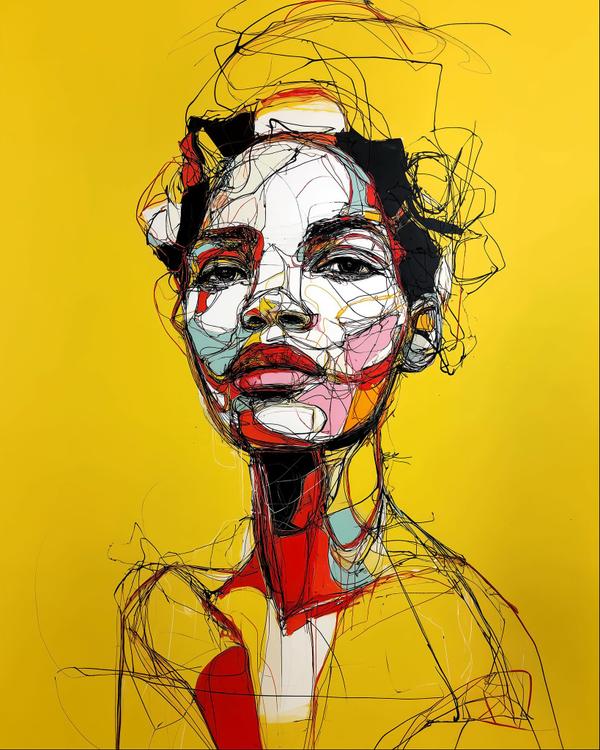
What you’re seeing here is a quartet of portraits that live right on the border between fashion photography and abstract expressionism. The faces are delicate, porcelain-smooth—think John Singer Sargent’s society portraits or 1950s Vogue spreads shot by Irving Penn. But then—bam!—the brushstrokes go rogue, exploding into colorful chaos like Pollock crashing a Jeremy Scott runway or Cecily Brown painting with confetti cannons.
This is a classic example of gestural abstraction meeting figuration: the painter grounds us with recognizable faces, then destabilizes the image with painterly eruptions. That tension—the crispness of the gaze versus the blur of the world—is what makes you stare longer. It’s portraiture that doesn’t just capture a person, but the feeling of being a person in a messy, overstimulated world.
Art term to drop at brunch: “Impasto.” That’s the thick, textured paint you can almost feel here. Fun fact: Van Gogh practically sculpted with impasto so much that conservators today worry about the peaks of his paint cracking like old frosting.
And here’s a fact you’ll definitely want to repeat: in 1913, a critic described the Armory Show’s new modern art as looking like it had been “flung in the face of the public.” Judging by this piece, the tradition is alive and well—except now it feels more like glitter than a punch.
So, next time someone asks why portraits need to look like people, you can say: “Because sometimes they need to look like feelings instead.”
Related works
Available as a museum-quality print.
Request this print