
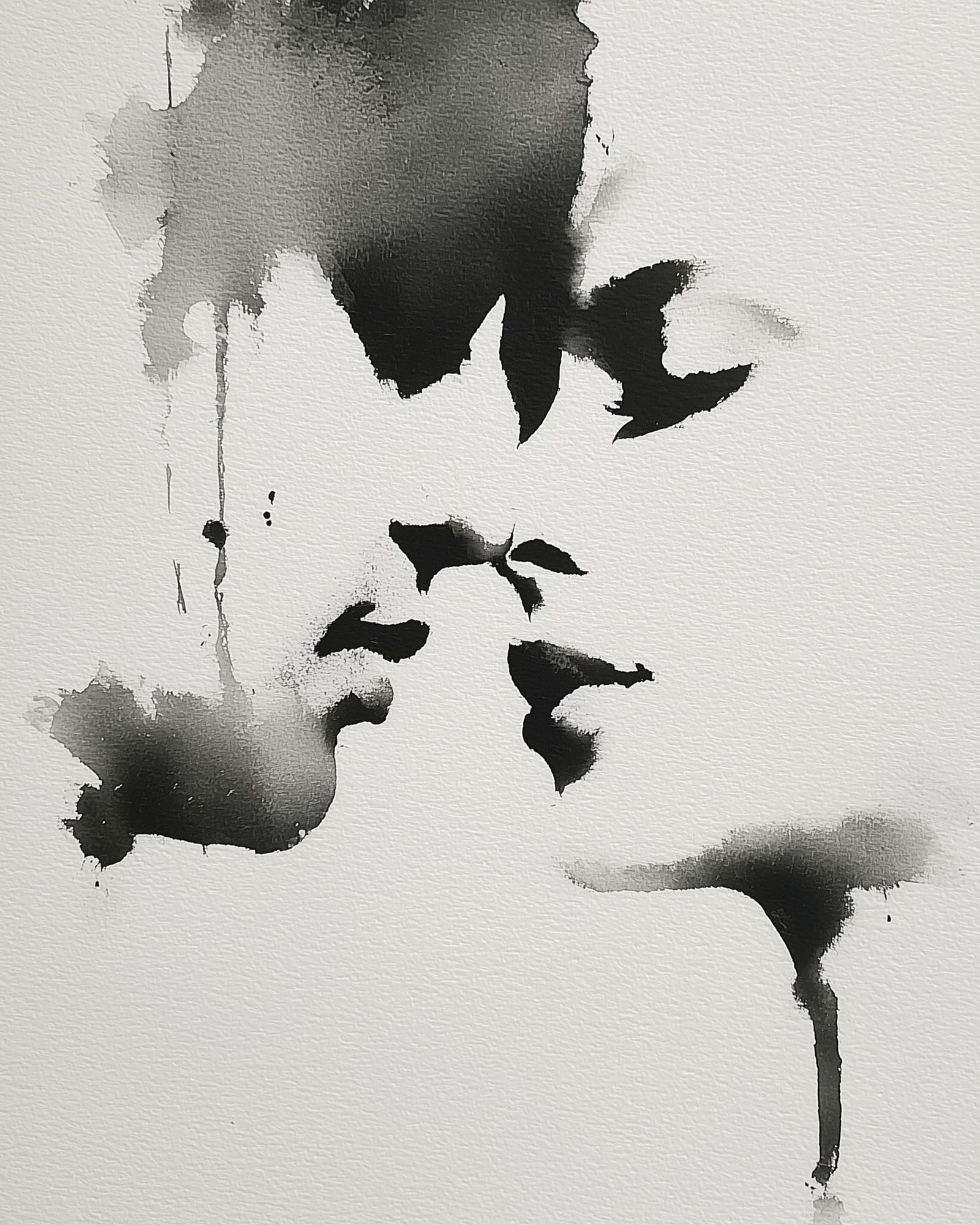
What Love Leaves Behind
A beautiful wedding yesterday left a warm glow behind, and this is what came out: ink, paper grain, soft gray washes, and a few dark shapes drifting through the air like the room was still remembering.
At first, it looks abstract. A black bloom near the top. A smudge of gray. A few drips making a dramatic exit like they have somewhere more important to be.
Then it starts to feel familiar.
That’s the charm of this piece. It doesn’t explain itself. It lets the eye wander a little, the way memory does after a big, beautiful day. Certain moments stay sharp. Others soften at the edges. The vows. The flowers. The hands. The music. That wonderful friend dancing like they had a medical waiver.
Style-wise, this has the quiet confidence of Japanese sumi-e painting, where a single brushstroke can suggest a whole world, mixed with the bold black drama of Franz Kline and the watery emotional staining of Helen Frankenthaler.
The art lesson here is abstraction: when an artwork gives you less information, your imagination does more work. The shapes don’t have to become one clear thing. They can behave like feeling.
Fun fact: ink painting often celebrates what’s left unsaid. The blank paper isn’t background. It’s part of the composition. It gives the emotion somewhere to breathe.
This feels like the morning after joy.
A little blurred. A little floating.
Still very much there.
Related works
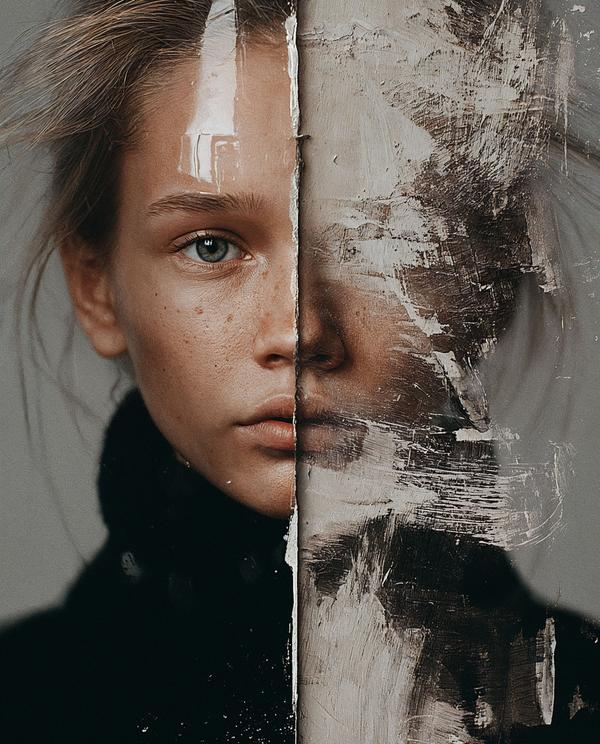
Half Remembered
She looks like a portrait caught halfway between being painted and being erased.
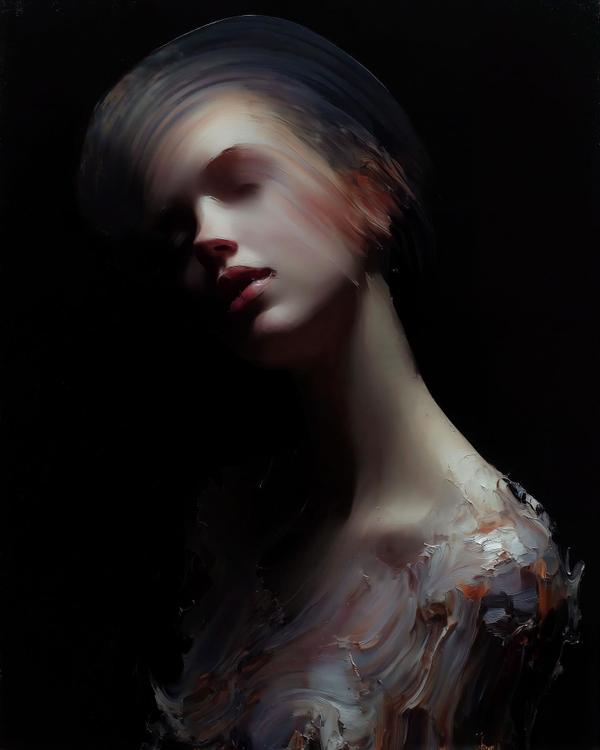
The Unraveling
At first glance, it looks like beauty caught mid-meltdown—portraits of grace dissolving into motion.

Two Women Walk Into One Memory
Some portraits look at you. This one is trying to remember your name.
Available as a museum-quality print.
Request this print