

What the Walls Remember
Somewhere between a midnight espresso and a very expensive renovation, a face started appearing in the plaster.
At first glance, it's a wall of thick, overlapping strokes in espresso brown, burnt umber, caramel, and warm ivory. Stay a moment, and a face begins to emerge. A dark eye, the suggestion of a nose, a mouth buried beneath layers of paint.
The remarkable thing is how little the artist gives us to work with.
De Staël built compositions from broad, muscular blocks of color, allowing abstraction and recognizable imagery to share the same canvas. Auerbach pushed paint into dense, sculptural surfaces, repeatedly reworking his subjects until their faces seemed excavated rather than painted.
That same tension runs through this piece. The rectangular strokes behave almost like bricks, building a portrait from fragments. The dark left side carries considerable weight, while creamy highlights across the center and right pull the face toward the light.
And those edges! Every ridge throws a tiny shadow, making the surface feel like something you could explore with your fingertips.
There's a fascinating psychological trick at work here. Our brains are extraordinarily eager to discover faces, even in arrangements of completely unrelated shapes. Psychologists call this face pareidolia.
Once you see the person hiding in these layers, good luck convincing your eyes to leave them alone.
FUN FACT
The Italian word impasto means “dough” or “mixture.” In painting, it describes thick applications of pigment that retain the marks of the brush or palette knife, allowing light to create actual shadows across the artwork's surface.
Related works
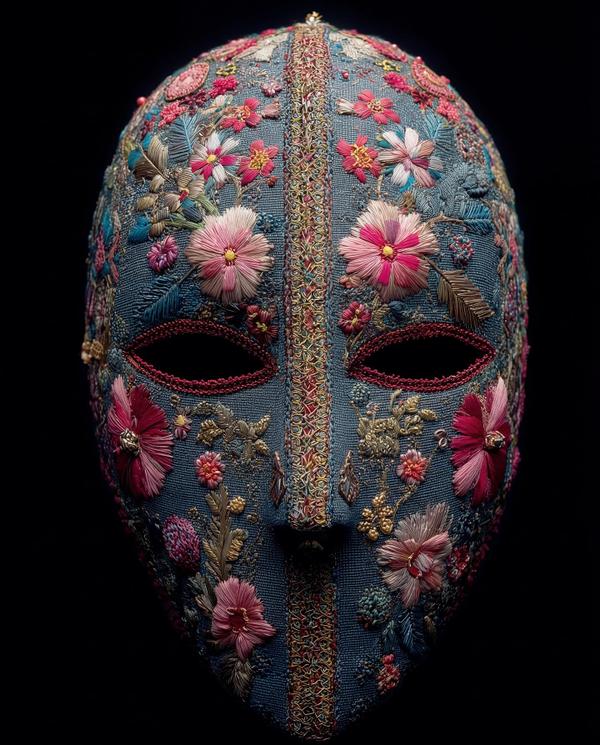
Playoff Garden Armor
If a brick wall and a bouquet had a baby, and that baby could stop a slap shot, it would look like this.
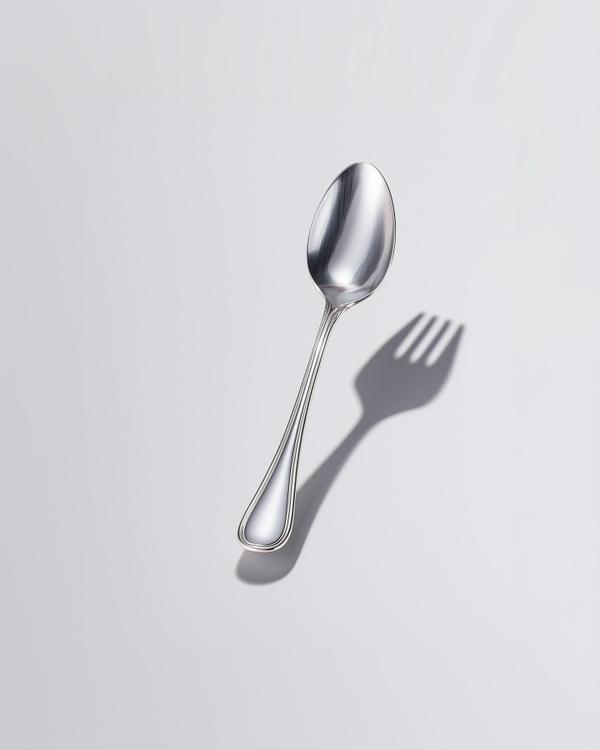
Plot twist: this spoon has impostor syndrome
You reach for it expecting soup, and suddenly it’s auditioning for the role of a fork. This is kitchenware doing cosplay. And crushing it.
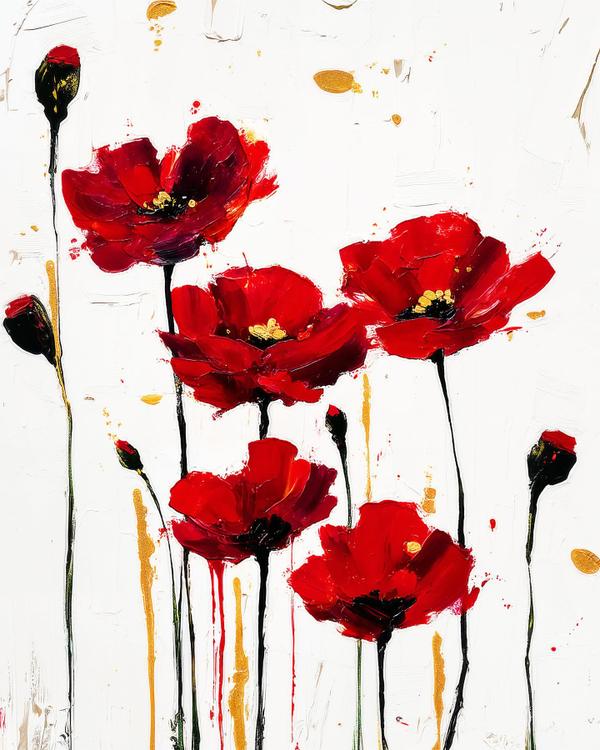
Poppies, No Apologies
Thick white paint scraped like plaster. Five red poppies punched in like wet lipstick. Gold drips and black stems running down the page like ink. Twist: this is a bouquet that refuses to behave.
Available as a museum-quality print.
Request this print