
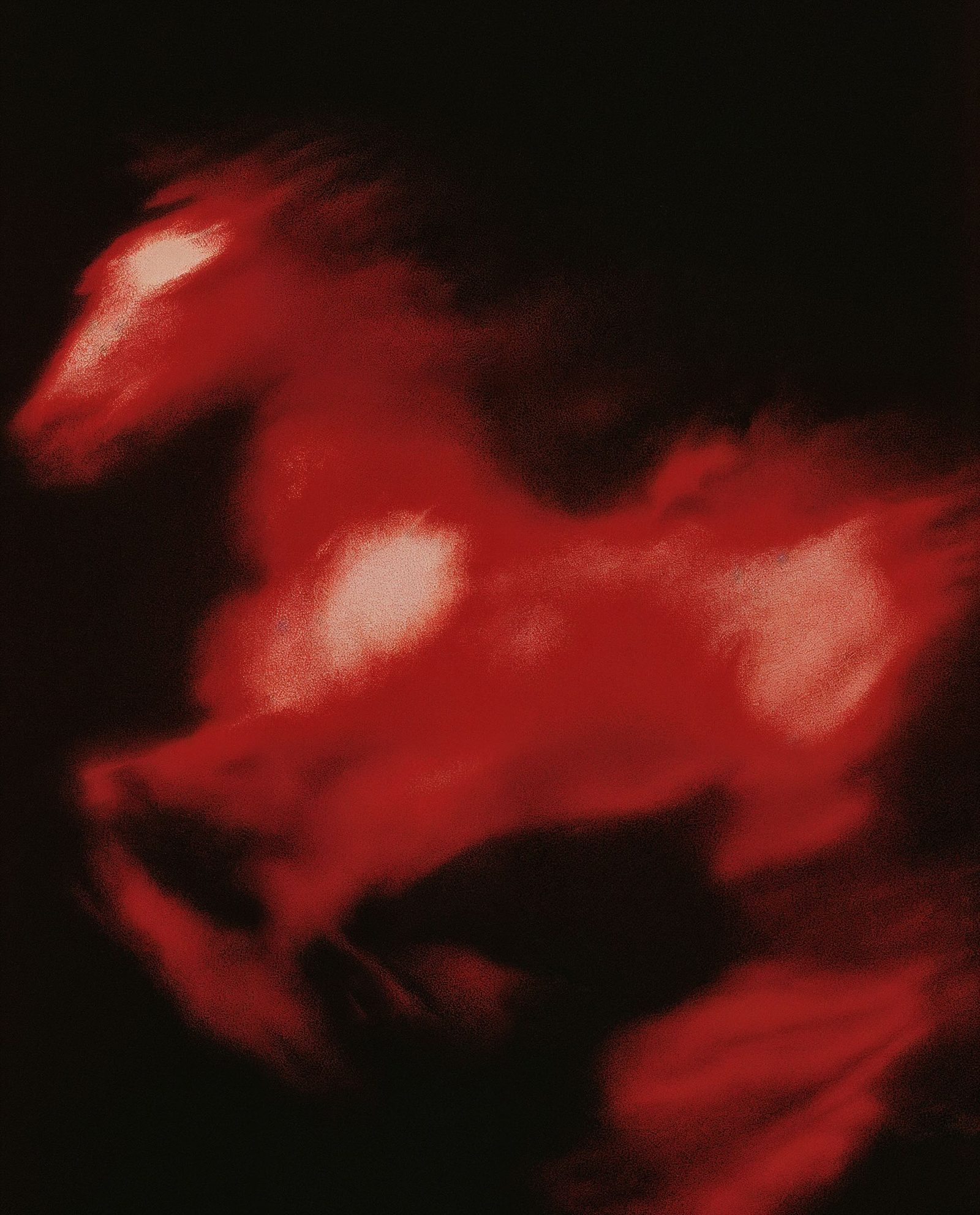
Ember Horse
This looks like a horse galloping through a dream you only half remember.
A red apparition bursts out of the black, all heat, speed, and blur, like someone painted a stallion with smoke, neon, and a shot of adrenaline. The body barely holds still long enough to become a body. That’s the magic here. You’re seeing an animal, sure, but you’re also seeing movement itself—raw, slippery, impossible to pin down.
There’s a little Franz Marc in the emotional use of color, where the horse becomes something symbolic rather than merely observed. I also feel the ghost of Francis Bacon in the smeared, haunted presence, and a nod to the Futurists, who loved showing motion as a kind of visual vibration. Artists have chased that problem forever: how do you paint something that refuses to stop moving?
One answer is gesture. Another is dissolution. Leave edges soft. Let the form break apart. Push color harder than realism would ever allow. Suddenly the image feels alive, because your brain has to finish the sprint.
FUN FACT
And that color. Red does a lot of heavy lifting. It signals danger, passion, force, blood, speed. Fun fact: horses have been a favorite subject in art for over 30,000 years—those ancient cave painters at Chauvet and Lascaux were already obsessed with capturing their power. Apparently humans saw a horse run once and said, “Well, there goes my whole artistic career.”
Related works
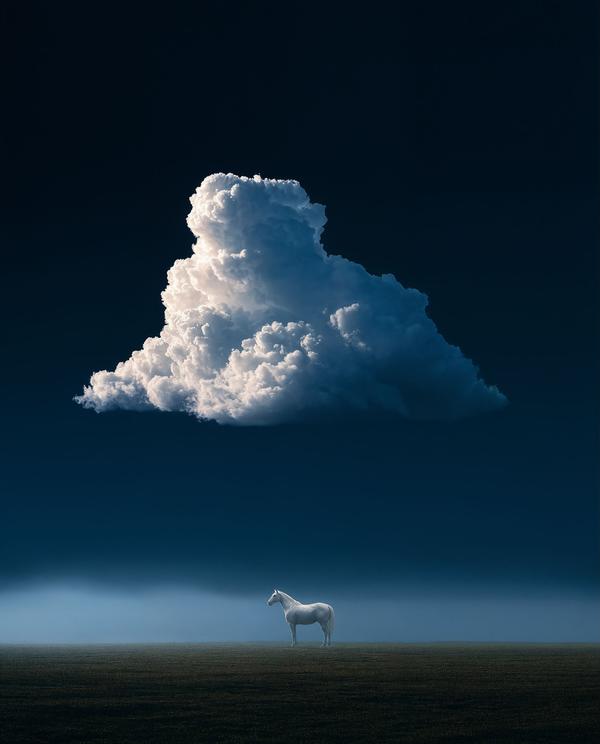
The Weight of Quiet
The horse has seen the forecast and chosen dignity. Alone in a dark field, he stands perfectly still beneath a cloud that looks less like weather and more like a mountain passing overhead. The light catches both figures—the bright edge of the cloud, the pale curve of the horse—while everything else slips into deep blue silence.
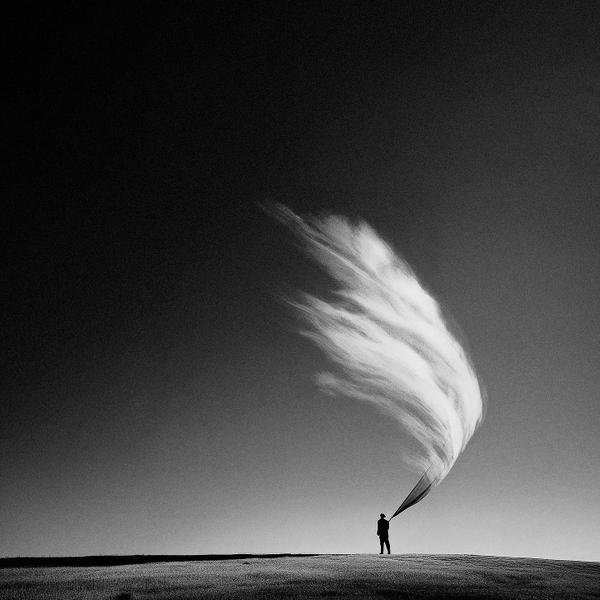
Wind
A simple assignment: make the invisible visible.
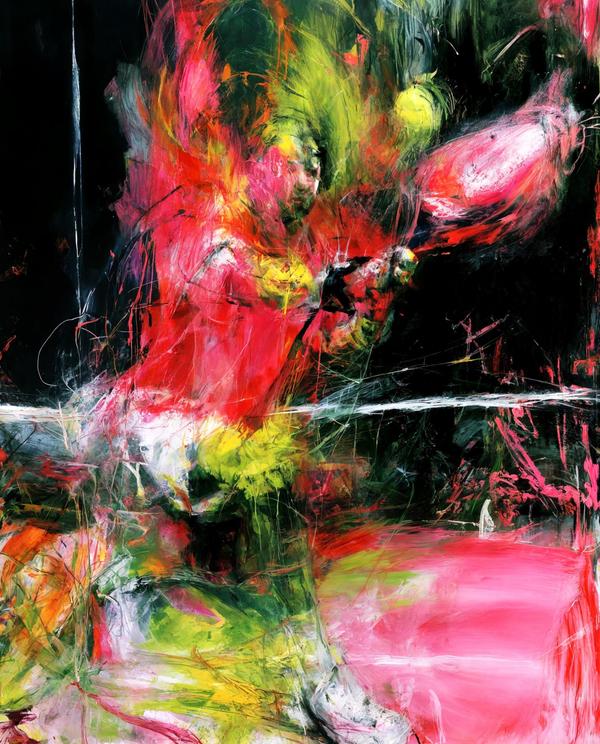
Missing the Bounce
Turns out not playing padel is a terrible way to realize how much you like playing padel.
Available as a museum-quality print.
Request this print