In Full Bloom
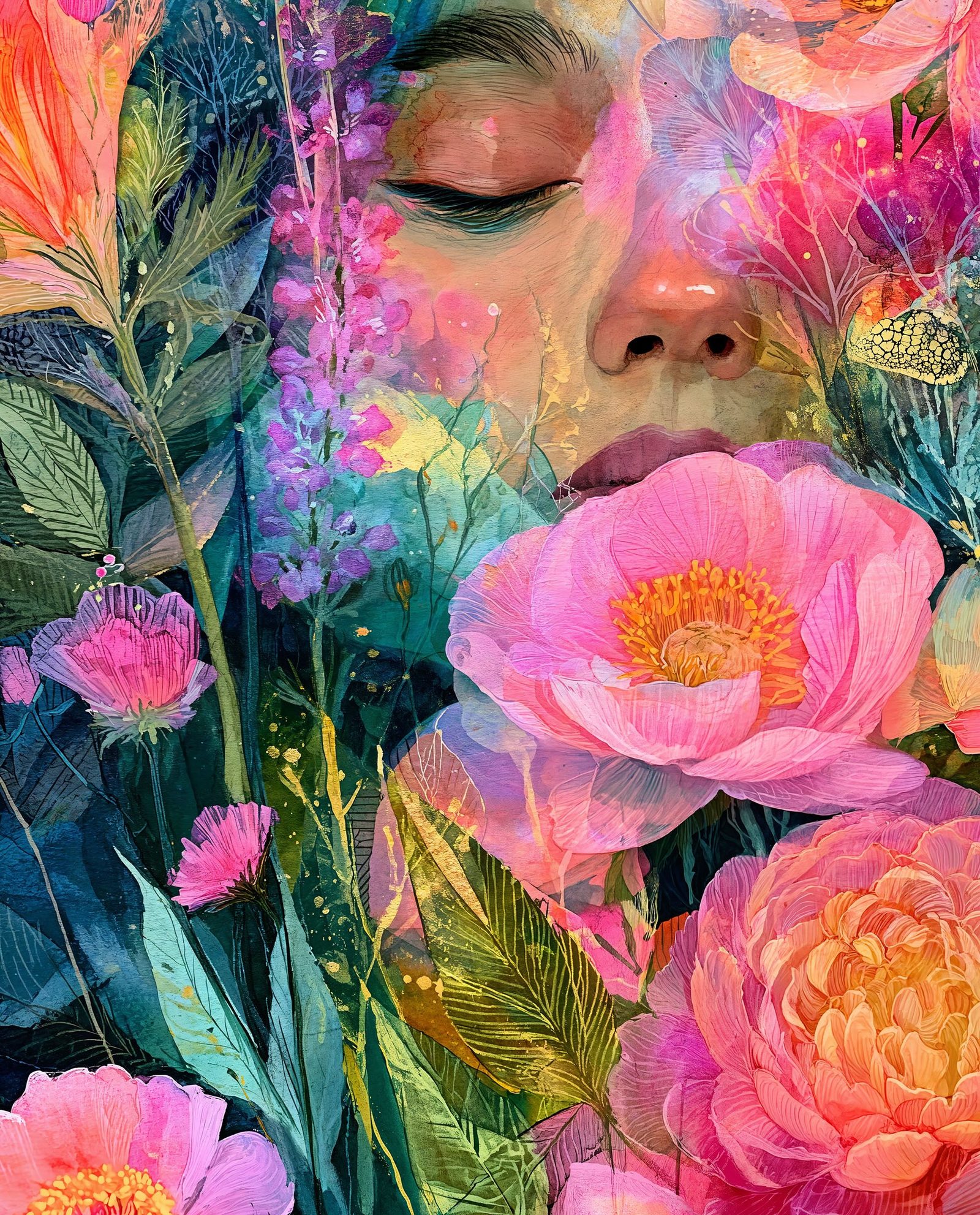
She looks like Mother Nature finally agreed to sit for a portrait.
A closed eye emerges from peonies, wildflowers, leaves and washes of impossible color, while the rest of the face seems to disappear into the garden. Look long enough and it becomes hard to tell where the person ends and everything growing around her begins.
That dreamy collision has deep roots in Symbolism, the late-19th-century movement that gave artists permission to paint inner life instead of simply recording what was in front of them. Odilon Redon filled his work with floating faces, enormous flowers and strange botanical worlds that seemed pulled from dreams. Georgia O’Keeffe later pushed flowers so close to us that petals became entire landscapes, while the layered fragments here carry some of the visual rhythm of Romare Bearden’s collages.
Here’s the trick: none of these flowers have to literally mean anything.
Together, though, they do.
Artists use visual symbolism to let familiar objects carry emotion. Flowers can suggest beauty, growth, mortality, memory, sexuality, renewal—or several of those at once. Your brain starts making connections before you’ve consciously decided what the picture is “about.”
That’s why this feels strangely personal even though we know almost nothing about the woman.
FUN FACT
flowers have been used as coded messages in art for centuries. During the Victorian era, people even developed a whole “language of flowers,” where different blooms could communicate feelings that polite society preferred not to say out loud.
Related works
The Garden Took a Breath
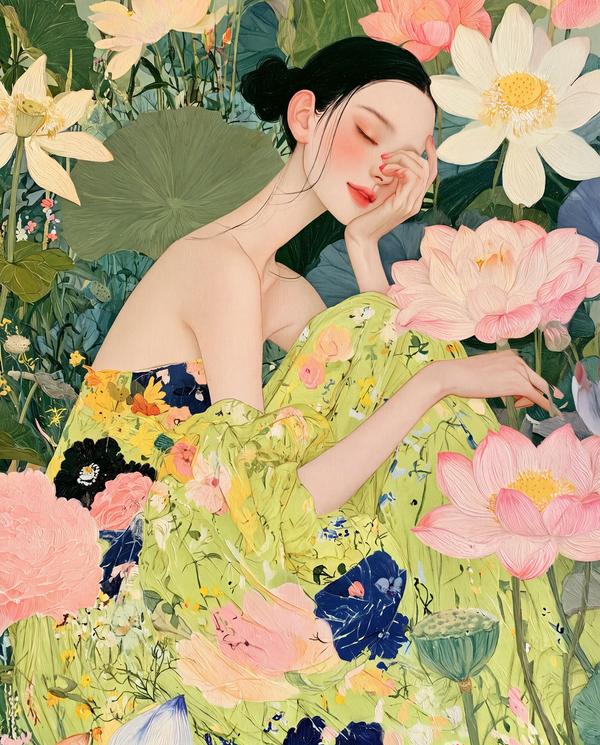
She appears to have reached the advanced stage of relaxation where even gravity has stopped making demands.
Flower Child
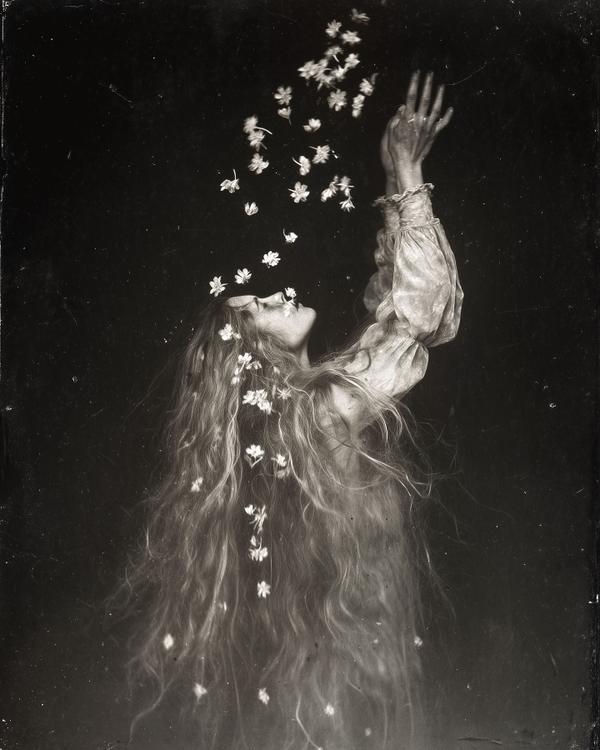
The figure seems to be disappearing into the same atmosphere that surrounds her.
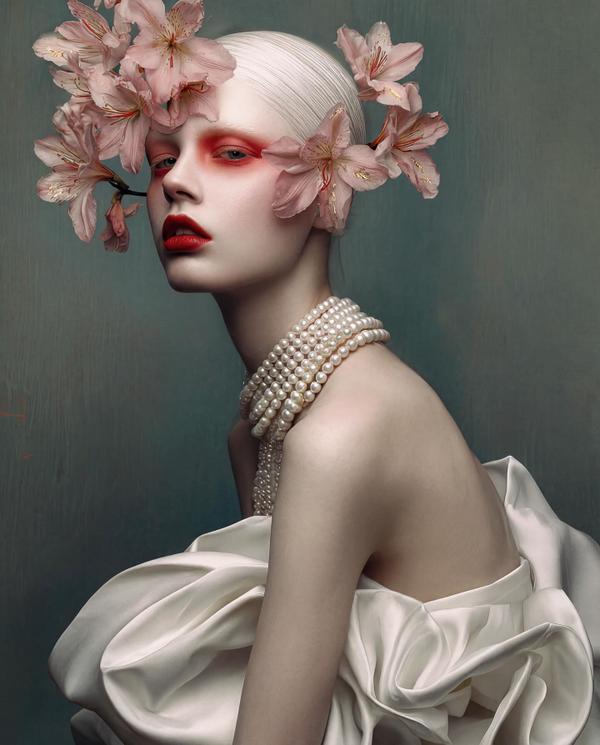
Pearls Before Sunrise
Like if a porcelain doll went to fashion week, fell into a cherry blossom storm, and came back emotionally untouchable.
Available as a museum-quality print.
Request this print