
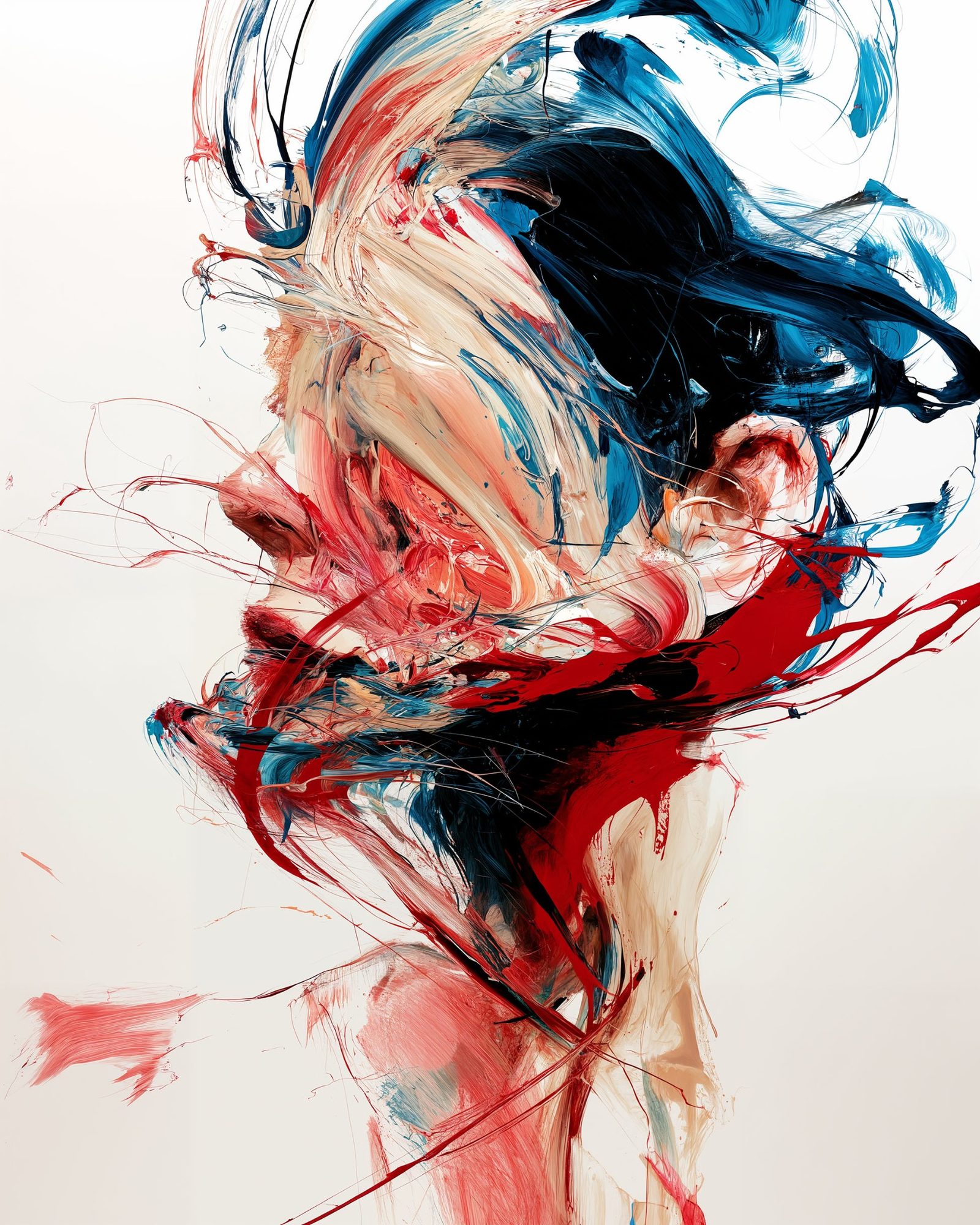
She Came Apart Beautifully
Some portraits sit politely for you. This one appears to have escaped the frame at 60 miles an hour.
A face is in there—almost. You catch the curve of a cheek, the suggestion of an eye, a flash of ear—and then everything dissolves into teal, black, coral, cream and those gorgeous arterial streaks of red. The figure keeps forming and unforming while you look at it.
De Kooning spent decades wrestling the human figure into abstraction, letting a shoulder become a brushstroke and a face become a collision. Bacon pushed bodies even further, smearing and twisting them until emotion seemed physically embedded in the paint. Cecily Brown carries that idea into contemporary painting, where recognizable bodies can appear for a second and then vanish back into the marks.
There’s a useful art term hiding here: figure-ground ambiguity. Your brain wants to separate “person” from “background,” but the painting keeps sabotaging the job. A blue stroke may describe hair for half an inch, then suddenly become empty space.
Your eyes have to negotiate.
Which may explain why this feels strangely alive.
The painting moves because your brain does.
FUN FACT
The human brain is so eager to find faces that we routinely see them in clouds, toast and electrical outlets. Artists can use that instinct like a dimmer switch—give us just enough information, and we finish the portrait ourselves.
Related works
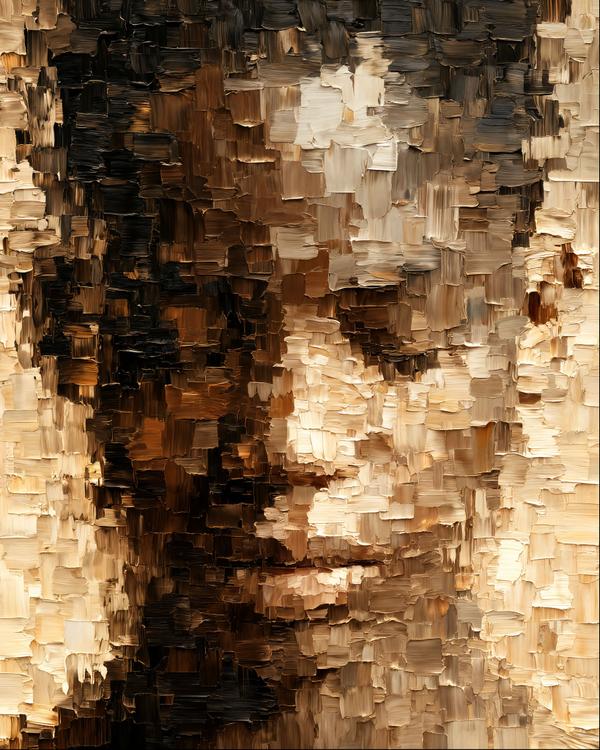
What the Walls Remember
Somewhere between a midnight espresso and a very expensive renovation, a face started appearing in the plaster.

The Garden Has Taken His Side
Somewhere beneath that shrubbery is a man who clearly told the gardener he wanted privacy.

The Elephant in the Room
Finally, someone dealt with the elephant in the room. He seems pretty comfortable there.
Available as a museum-quality print.
Request this print