
The Blue Thread
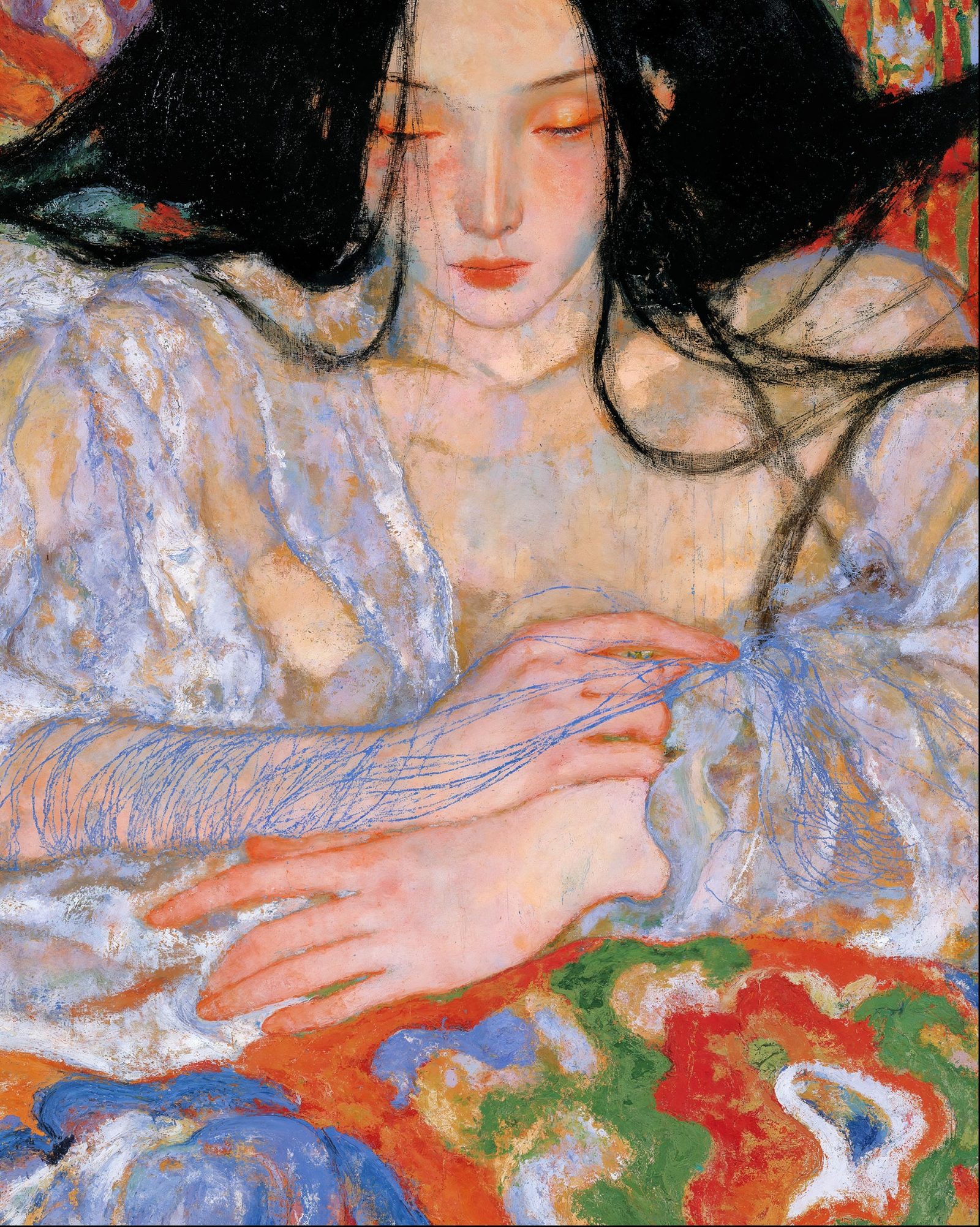
Her body is still returning to the world, and she’s already busy repairing it. Apparently resurrection comes with sewing.
She emerges softly, almost translucent, while her hair spreads across the picture like spilled ink. Then your eye lands on the electric-blue thread.
That tiny streak of color carries the whole painting.
Her hands guide it across her wrist with the concentration of someone performing delicate surgery on herself. The blue lines echo veins, stitches, drawing marks, even fate itself—the old idea of a thread connecting lives, translated here into something physical and strangely tender.
The Chinese xieyi tradition is especially present in the looseness. The term roughly means “writing the idea”: artists use expressive marks to capture the spirit of a subject rather than obsess over microscopic description. You can feel that freedom in the hair, robe, and unfinished edges of the figure.
Klimt comes to mind in the collision of pale skin against decorative pattern, while Schiele lingers in those elongated, articulate hands. Hands in figurative painting are notorious little traitors. Here, they become the emotional center.
And look at the color: coral skin, black hair, violet-white fabric, then that impossible blue. Your eye keeps returning to it because the palette has quietly appointed it narrator.
She has survived something terrible. The first gesture we witness is repair.
FUN FACT
In traditional Chinese painting, calligraphy and painting share the same brush techniques; a painted line can carry the rhythm and personality of handwriting.
Related works
What the Walls Remember
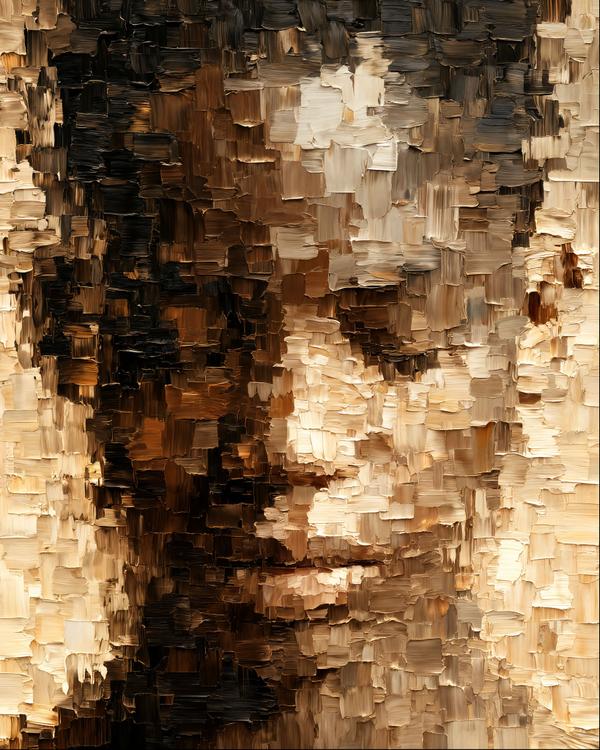
Somewhere between a midnight espresso and a very expensive renovation, a face started appearing in the plaster.
The Garden Has Taken His Side
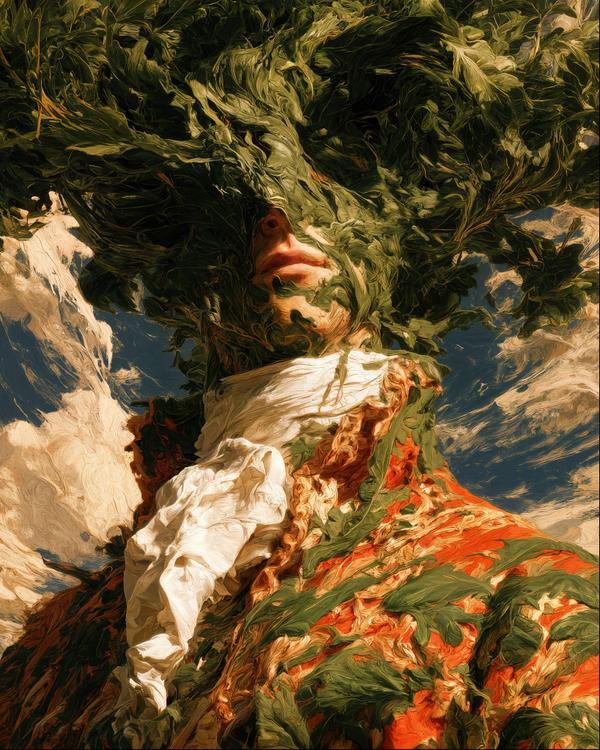
Somewhere beneath that shrubbery is a man who clearly told the gardener he wanted privacy.
The Elephant in the Room
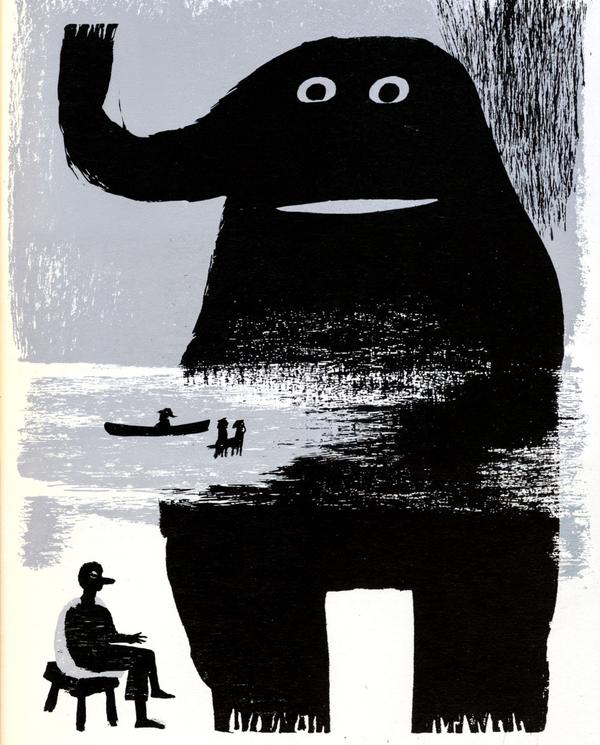
Finally, someone dealt with the elephant in the room. He seems pretty comfortable there.
Available as a museum-quality print.
Request this print