
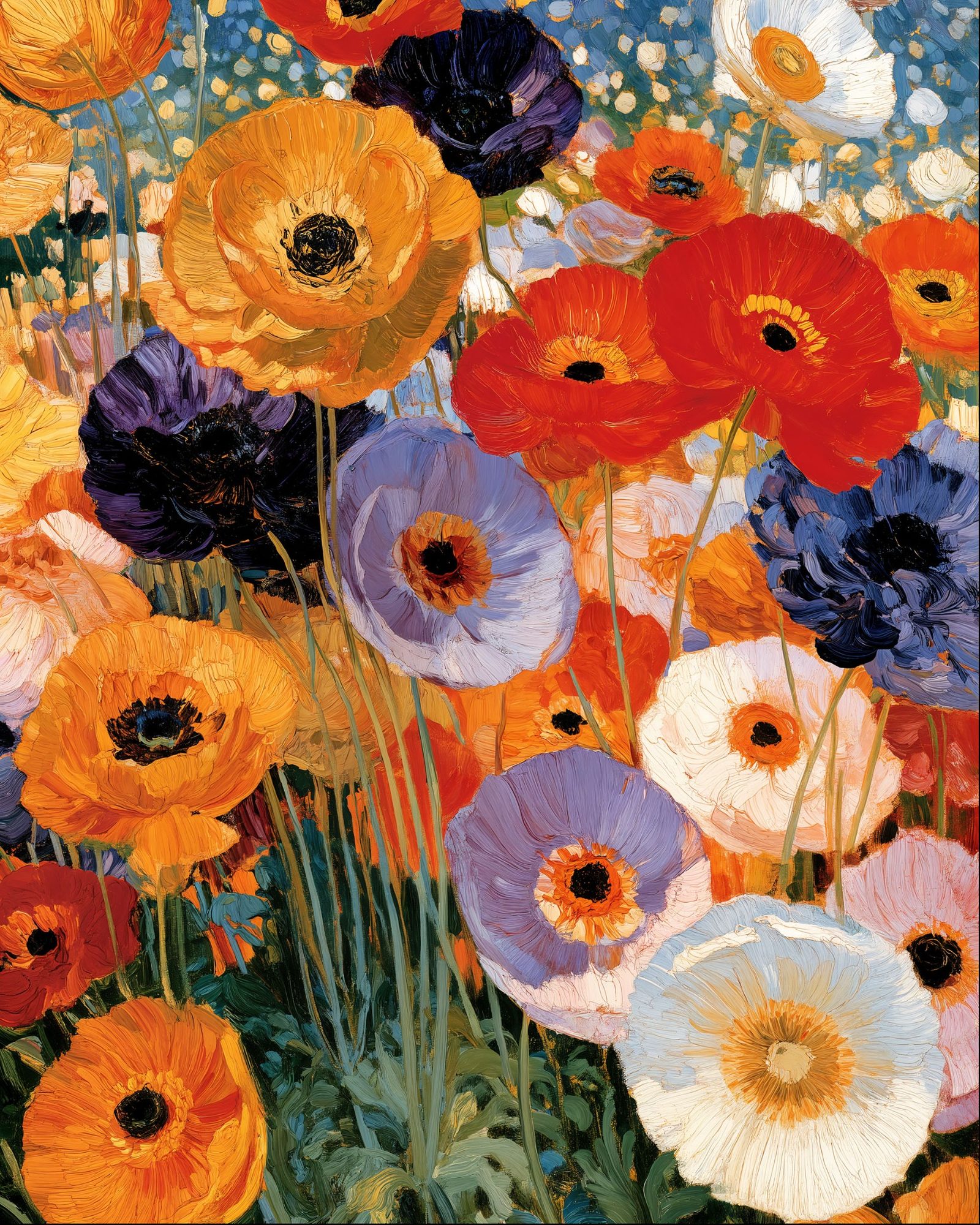
The Garden Has Other Plans
Apparently, the flowers received an invitation to behave themselves and collectively declined.
This garden has absolutely no interest in growing in straight lines.
Great, buttery orange blossoms jostle for attention beside scarlet poppies, lavender petals, and flowers so dark purple they nearly disappear into black. Every bloom seems to be speaking at once. Somehow, the conversation works.
The secret is texture. Thick ridges of paint catch the light, making the petals feel almost sculptural. This technique, called impasto, gives the flowers physical presence. You can practically imagine dragging your fingertips across the surface. Please don't. Museum security gets surprisingly emotional about that.
Emil Nolde understood the expressive power of flowers painted in gloriously unnatural intensity. Joan Mitchell brought a different energy to floral imagery, allowing color and gesture to communicate the sensation of nature rather than its precise appearance.
Here, the warm oranges and reds advance toward us while cooler violets and blue-greens create little pockets of breathing room. The dark flower centers act as visual anchors, keeping the exuberance from dissolving into complete chaos.
Look closely at the background. Those scattered yellow and cream flecks suggest sunlight slipping through a crowded garden, giving the entire composition a shimmering, almost musical rhythm.
There's something wonderfully generous about flowers. They put on their finest clothes, make an extravagant entrance, and never ask whether the colors clash.
We could learn something from that.
FUN FACT
The word impasto comes from Italian, meaning “dough” or “paste.” Some painters apply pigment so thickly that their brushstrokes cast actual shadows across the canvas.
Related works
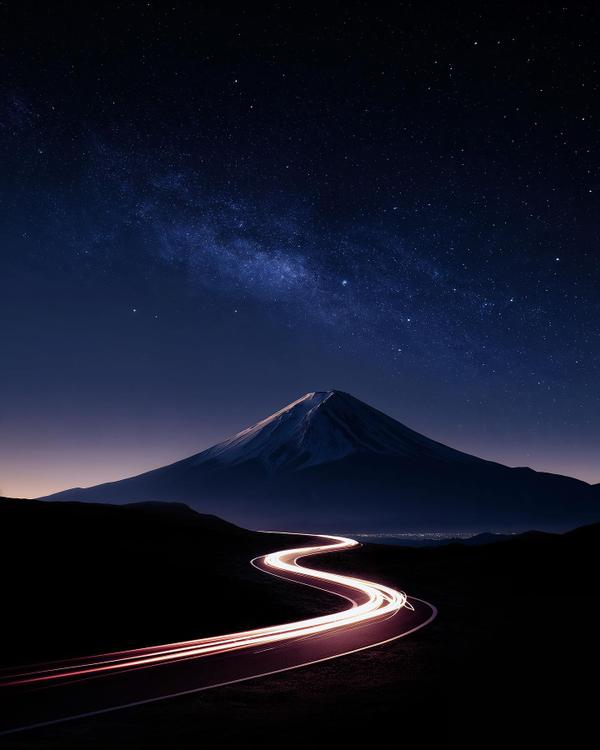
The Road That Time Built
Ever wonder what it would look like if patience had a paintbrush? This is it. A winding road that glows like a comet’s tail, snaking up Mount Fuji under the Milky Way — a scene our eyes could never catch in a single moment, but our cameras can if we give them time.
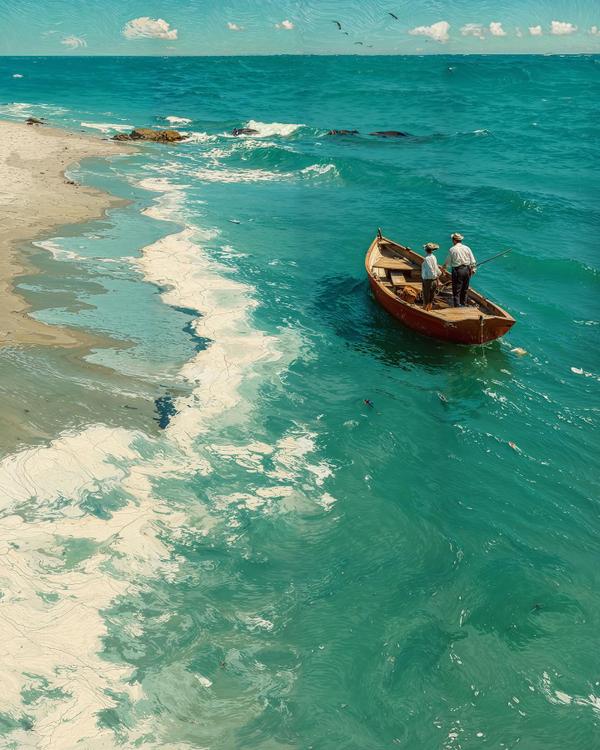
The Sea Stole the Show
This piece sails with Winslow Homer energy: working boat, honest light, weather doing the storytelling. Two figures stand in a dory while turquoise water eats 80% of the frame—classic Homer move: small humans, big sea, maximum drama without shouting.
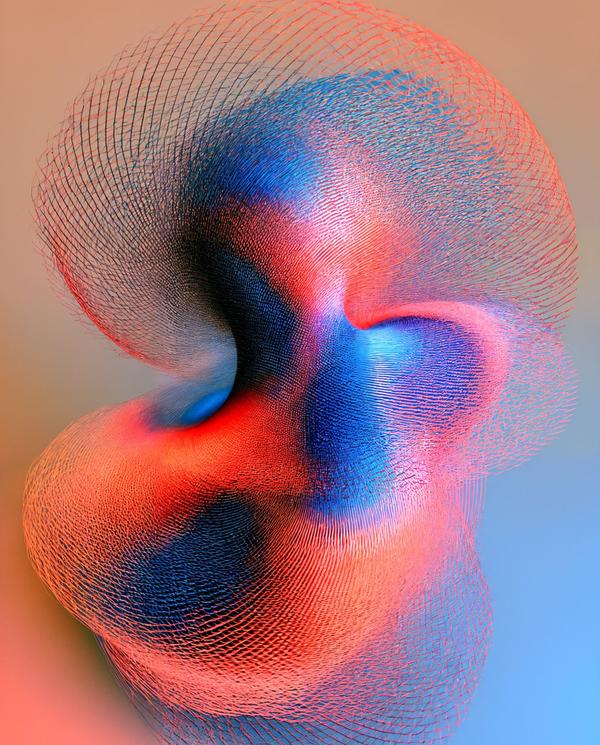
The Shape of a Thought
This looks like geometry discovering it has a nervous system.
Available as a museum-quality print.
Request this print