
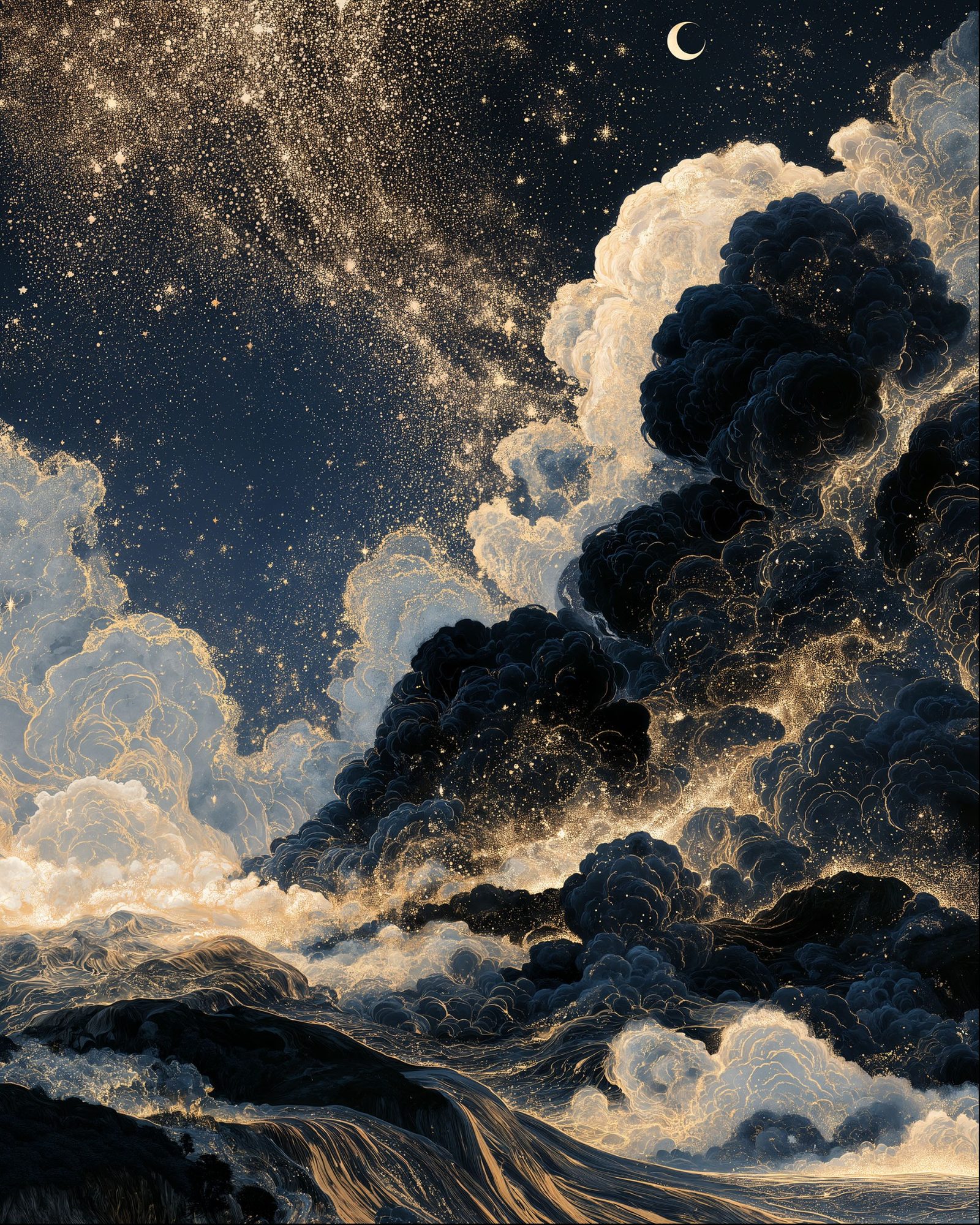
Where the Night Keeps Its Secrets
The universe has apparently hired a decorator. The budget was unlimited, and subtlety didn't make the meeting.
A tiny crescent moon hangs above a landscape where clouds have grown into entire mountain ranges.
Cream-colored billows glow against an almost black sky, while enormous masses of midnight blue rise like ancient monuments. Thousands of golden specks scatter through the darkness, suggesting stars, drifting dust, and perhaps a few secrets the universe hasn't gotten around to explaining.
The composition feels theatrical. Light spills through gaps between the clouds, tracing their edges in delicate gold. These illuminated contours are a form of rim lighting, a visual effect that makes objects appear to glow from within.
John Martin's vast Romantic landscapes often made nature feel overwhelming, even supernatural. Gustave Doré used dramatic contrasts of light and darkness to give his illustrations an almost biblical intensity. Edmund Dulac's jewel-toned fantasy illustrations offer another connection, particularly in the intricate decorative patterns and luminous atmosphere.
The most compelling detail is the contrast between scale and delicacy. Those colossal clouds look capable of swallowing continents, yet their surfaces are covered in tiny, almost embroidered curls.
And high above everything, that slender moon quietly minds its own business.
There's a peculiar comfort in imagining the heavens this way: impossibly vast, extravagantly beautiful, and entirely indifferent to tomorrow's calendar.
For once, that's a rather pleasant thought.
FUN FACT
In the early 19th century, John Martin became famous for enormous apocalyptic paintings. His spectacular visions drew crowds who paid admission to see them, anticipating the appeal of today's blockbuster cinematic spectacles.
Related works
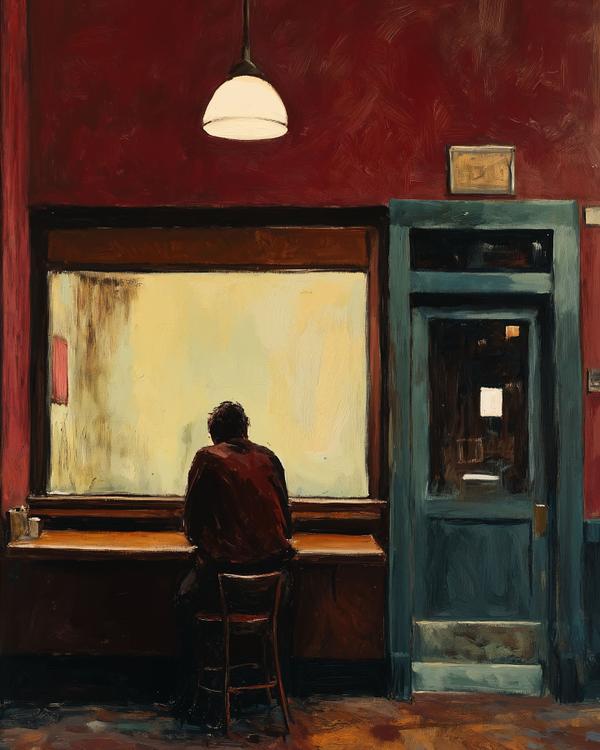
Window Light, Quiet Night
Art reminds us that someone, somewhere, understands—even in silence. If you’re in a quiet season right now, let this painting be a soft, painted hug. You matter. You are seen. The light will change. The door will open. Someone else is out there looking for the same connection you are. Keep going.
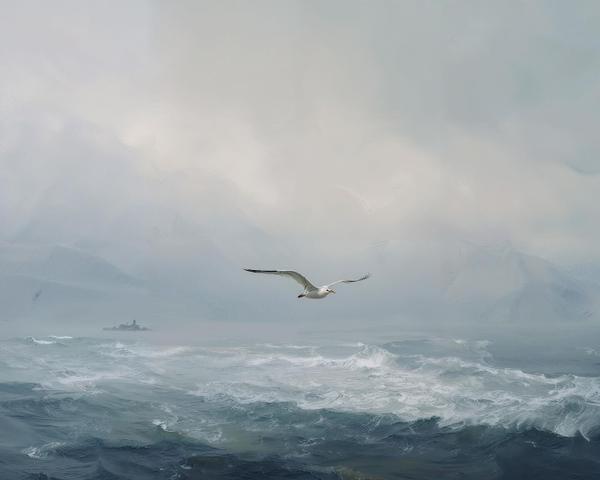
Wings Where Sea Meets Sky
This image feels like a hymn to solitude — a lone gull gliding above restless waters, a flicker of life stitched against an endless horizon. It echoes the Romantic tradition, where painters like Caspar David Friedrich and Ivan Aivazovsky tried to capture not just what the sea looked like, but what it felt like: vast, sublime, and slightly terrifying. The faint lighthouse in the mist is a whisper of human presence, almost embarrassed to exist in nature’s cathedral. The sea, frothing and alive, reminds us that water is both cradle and abyss — a theme Romantic artists adored. They believed the “sublime” was that paradoxical beauty we feel when confronted with something larger than ourselves: awe wrapped in a shiver. Fun fact to pocket: Friedrich often painted tiny figures gazing at vast landscapes, not to glorify them, but to remind us of our own fragile scale. In a way, this gull is today’s “tiny figure,” suspended between the storm and the sky. What makes this piece contemporary is its dreamlike smoothness — like the edges of memory softened by time. The sea becomes less about geography and more about metaphor: freedom, longing, and that eternal tug between staying ashore or taking flight. So next time you see a bird over water, remember: it’s not just flying. It’s sketching poetry across the sky.
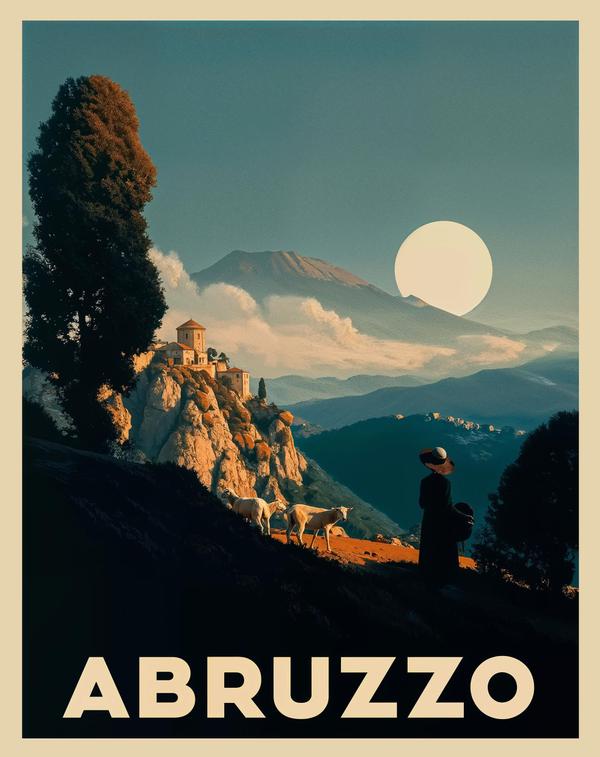
Wish You Were Dramatic
Abruzzo: where even the goats look like they’re waiting for a film score.
Available as a museum-quality print.
Request this print