The Hour Between
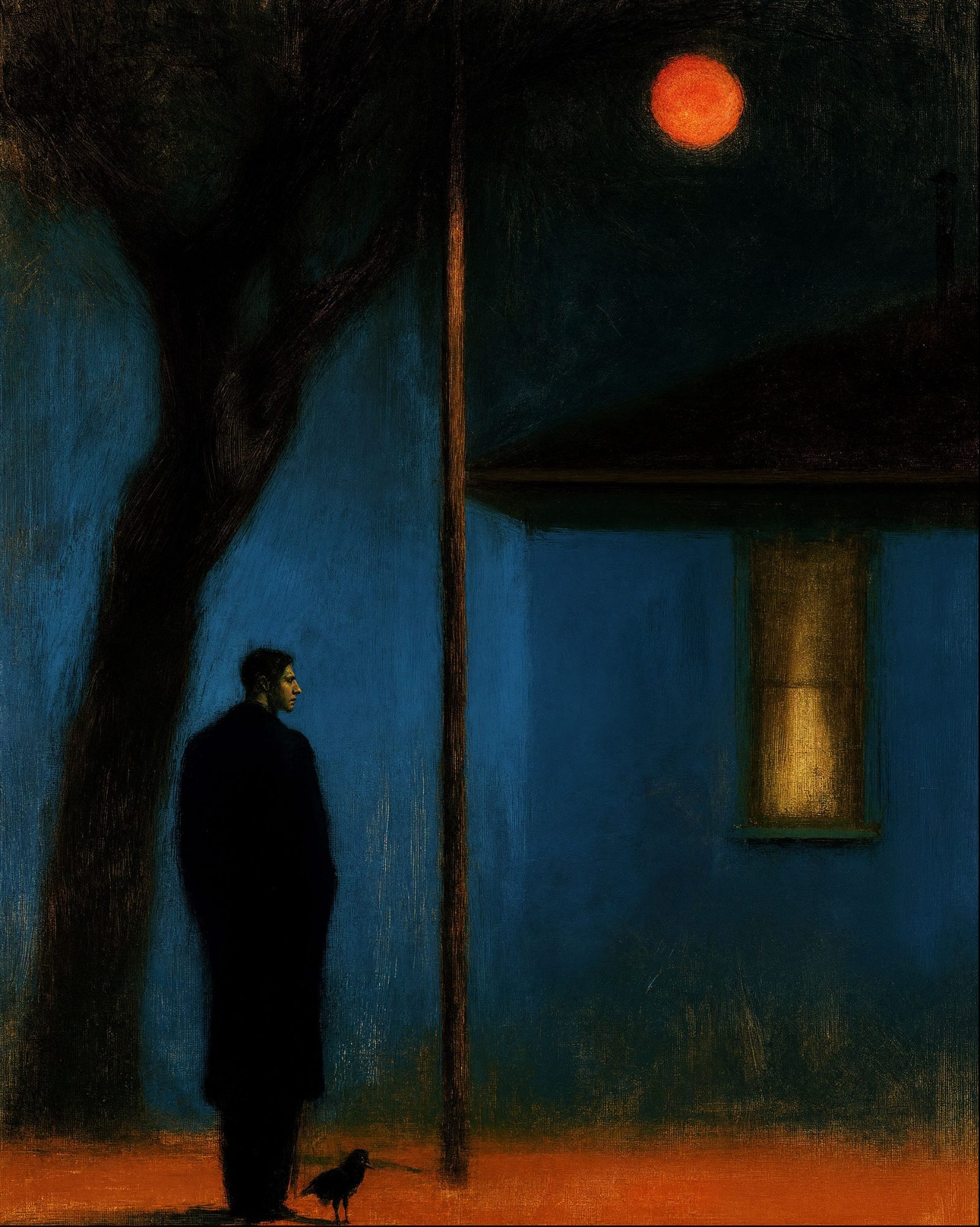
A man, a bird, and a streetlight. Apparently, loneliness has a dress code.
A solitary man stands beneath a massive tree, his dark coat nearly disappearing into the night. Beside him, a small black bird stands on the orange pavement, an unlikely companion in an otherwise deserted street. Across the way, a single golden window glows against an enormous wall of blue.
Someone's home. Someone's awake. Neither appears particularly interested in company.
Hopper understood the emotional weight of an illuminated window. His urban scenes often placed human figures beside architecture that seemed to know more than they did. Tooker brought a dreamlike stillness to ordinary places, while Vallotton used broad, nearly flat areas of color to make darkness feel wonderfully mysterious.
Here, the composition is almost architectural. The tree anchors the left, a thin vertical pole divides the scene, and that lonely rectangle of yellow becomes the destination for our eyes.
Then there's the moon. A blazing orange circle hanging over everything like a celestial warning light. Its warmth echoes the narrow strip of pavement below, enclosing the scene between two bands of fire.
The bird introduces a curious bit of symbolism. Birds have long represented freedom, migration, and the possibility of departure. This one appears content to remain exactly where it is.
Perhaps they're both waiting for someone. Perhaps the man has simply found a companion who asks fewer questions.
Either way, it's a strange little friendship.
FUN FACT
The word nocturne originally described a musical composition associated with nighttime. James McNeill Whistler adopted the term for his atmospheric night paintings in the 1870s, inviting viewers to experience color and mood almost as they would music.
Related works
Mother’s Hands
Musmanno, in Rebus
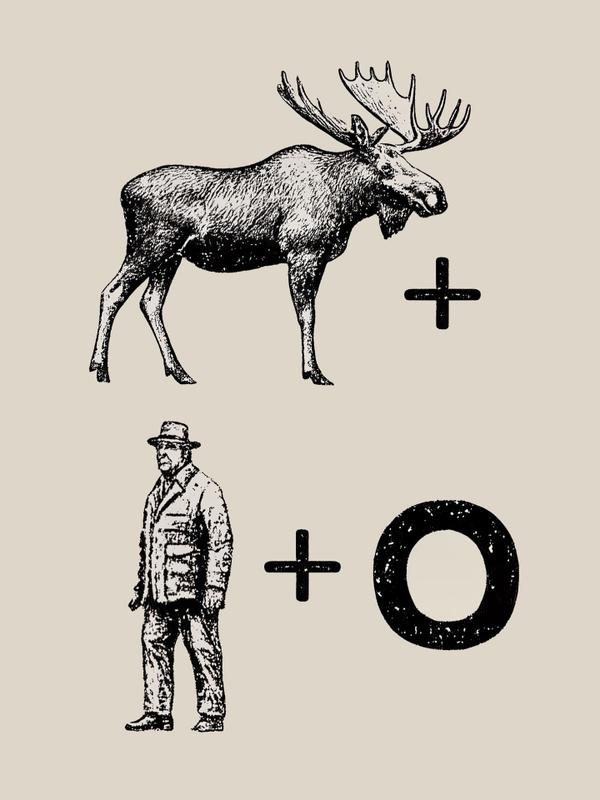
📜 Tiny backstory: The term rebus comes from the Latin phrase “non verbis, sed rebus”—meaning “not by words, but by things.” These puzzles date back to ancient Egypt and medieval Europe, when people used images instead of text because 1.) illiteracy was common, and 2.) who doesn’t love a little visual mischief? 👁️+💓+ u = “I love you.” 📦+ER = “Boxer.” Ever seen a moose, a man, and a giant “O” team up to spell a name? You have now. This vintage-style rebus puzzle doesn’t just say my last name “Musmanno”—it illustrates it. Let’s break it down like a detective in a tweed blazer: 🫎 Moose + 👨 Man + ⭕ = Musmanno. It’s phonetic, it’s visual, it’s pun-tastic. And yes, it’s my name spelled like a crossword clue after three espressos. 🧩 Art snack of the day: Rebuses work because of a cognitive trick called dual coding—your brain loves combining images and language. That’s why you’ll remember “moose + man + O” faster than someone’s phone number. 🎉 Fun fact: The rebus has even made its way into pop culture—from Prince’s symbol (yep, that one) to vintage game shows to tattoos. Some people literally ink cryptic wordplay on their bodies. In the 1600s, French aristocrats used rebuses to flirt in secret. Because nothing says romance like a drawing of a goose next to a ladder that somehow means “meet me behind the stables.”
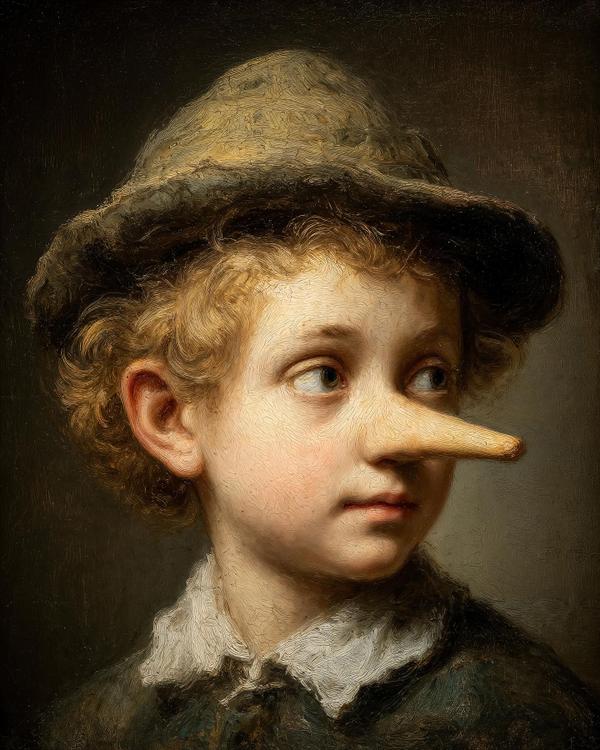
Once Upon a Candlelight
If Rembrandt ever moonlighted as Disney’s concept artist, this is probably what his portfolio would’ve looked like—fairy tales dipped in candlelight and moral ambiguity.
Available as a museum-quality print.
Request this print