
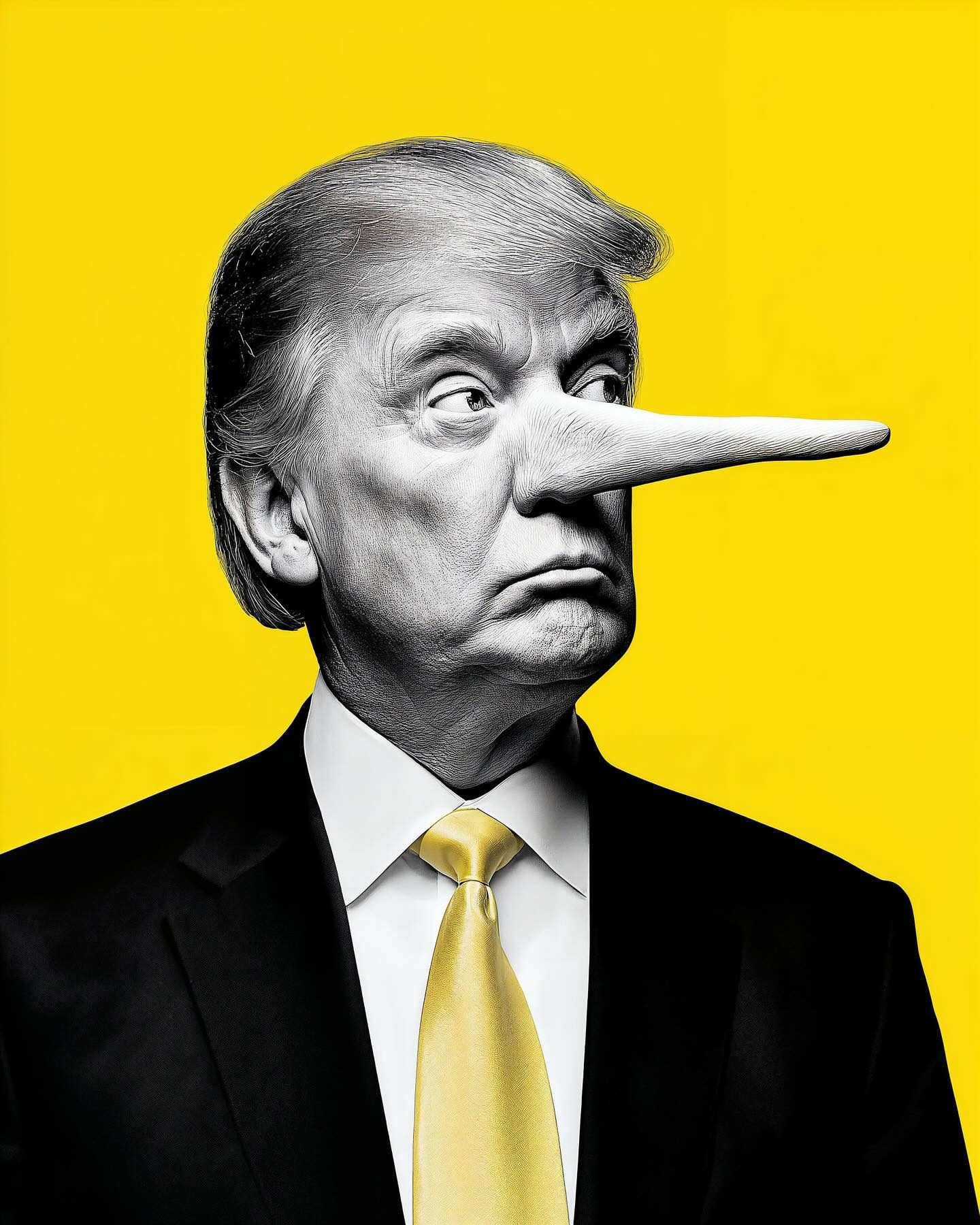
The Long Nose Era
Quick note before anyone spikes their phone: this isn’t a team jersey. Left, right, center—doesn’t matter. Truth is missing more than ever, and what’s worse? The absence is getting normalized. Like we’re all supposed to nod politely while reality gets workshopped.
Now… nothing says “trust me” like a Pinocchio situation in a power suit.
We’ve got a grayscale portrait locked in like a presidential headshot… except the nose is doing a full runway extension into the yellow void. The background is pure alarm-bell sunshine. The tie matches it, too. Subtle as a megaphone. And that sideways glance? That’s the universal expression for: “If I don’t look at it, it’s not a lie.”
Style-wise, this is Pop Art meets political caricature—the punchy, billboard-simple language of Andy Warhol (flat fields, celebrity-as-symbol) with the satirical DNA of Honoré Daumier, updated to modern editorial illustration where a single visual gag can do an entire op-ed’s job.
Mini art lesson: exaggeration is visual shorthand.
Caricature isn’t just roast comedy. It’s compression. One amplified feature becomes an idea you can read in half a second. Big nose = lying. Bright yellow = warning. Clean background = no distractions, no escape routes. Your brain gets the message before you even finish your scroll.
Fun fact for dinner: Pinocchio started as satire, not sweetness. Early versions were darker and more punishing—a cautionary tale about consequences long before Disney turned it into a lullaby.
Related works
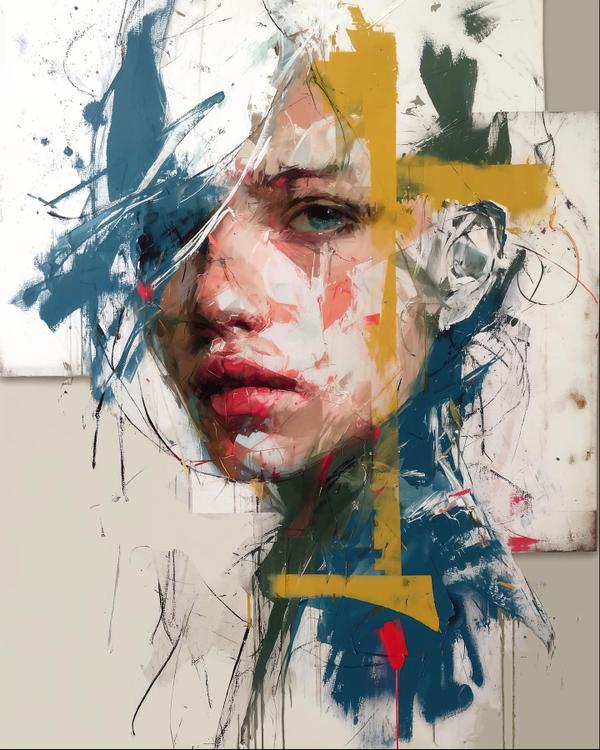
Crosshairs & Cheekbones
Teal bruises of paint. A mustard-yellow cross slicing the face like tape on a crime scene. And those hot little red drips—like the canvas couldn’t keep the secret in.
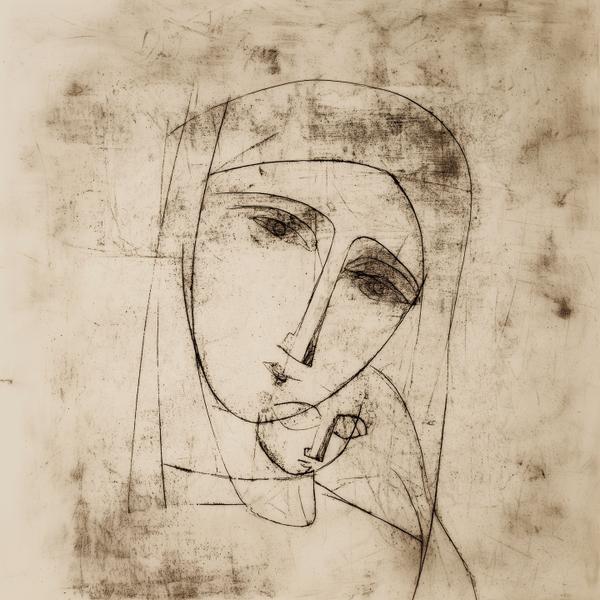
Cubist Madonna
At first glance, this piece looks like it was whispered into existence—soft, delicate lines, yet each stroke lands with intention, like someone doodling with the weight of history on their pencil. The elongated noses and almond eyes nod toward Amedeo Modigliani, while the geometric flattening and quiet angularity carry the echo of Cubism’s rebellious heart. But here’s the twist—this isn’t pure Picasso-era chaos. There’s a warmth, a modern minimalism, that softens the abstraction. And if you’re picking up on the Madonna and Child vibe—you’re right. The mother’s tilted face bends toward the child like a crescent moon, both figures locked in a timeless embrace that’s been painted for centuries… only here it’s been stripped down to its emotional blueprint. That’s where Peggy Kuiper struts in. Her work lives in that dreamy intersection where modern digital fluidity meets classic form. I first stumbled across her after Olivia Wilde posted a piece she bought (celeb art inspo, anyone?). Kuiper’s portraits feel like they’re drawn from memory—stripped of excess, yet packed with intimacy. Her influence shows here in the way emotion is distilled into the barest shapes without losing that sacred tenderness. Fun fact: Minimalist portraits like this rely on line economy—the art of saying the most with the least. It’s harder than it looks. Every curve has to carry meaning, because there’s nowhere for a bad line to hide. It’s like haiku for your eyeballs. Save this one for the next time someone says “less is more” and you want to prove it with actual evidence.
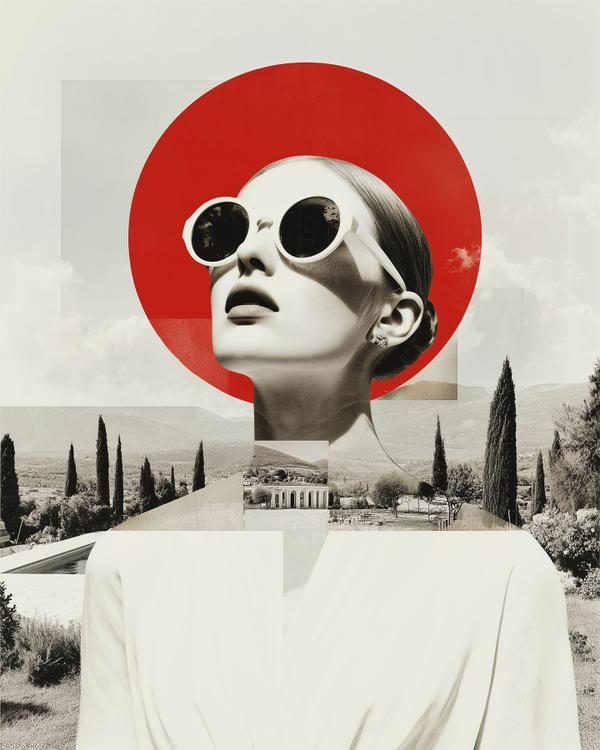
Dada Meets Dolce Vita
This surreal sun-soaked siren is what happens when Dada takes a Roman holiday.
Available as a museum-quality print.
Request this print