Crosshairs & Cheekbones
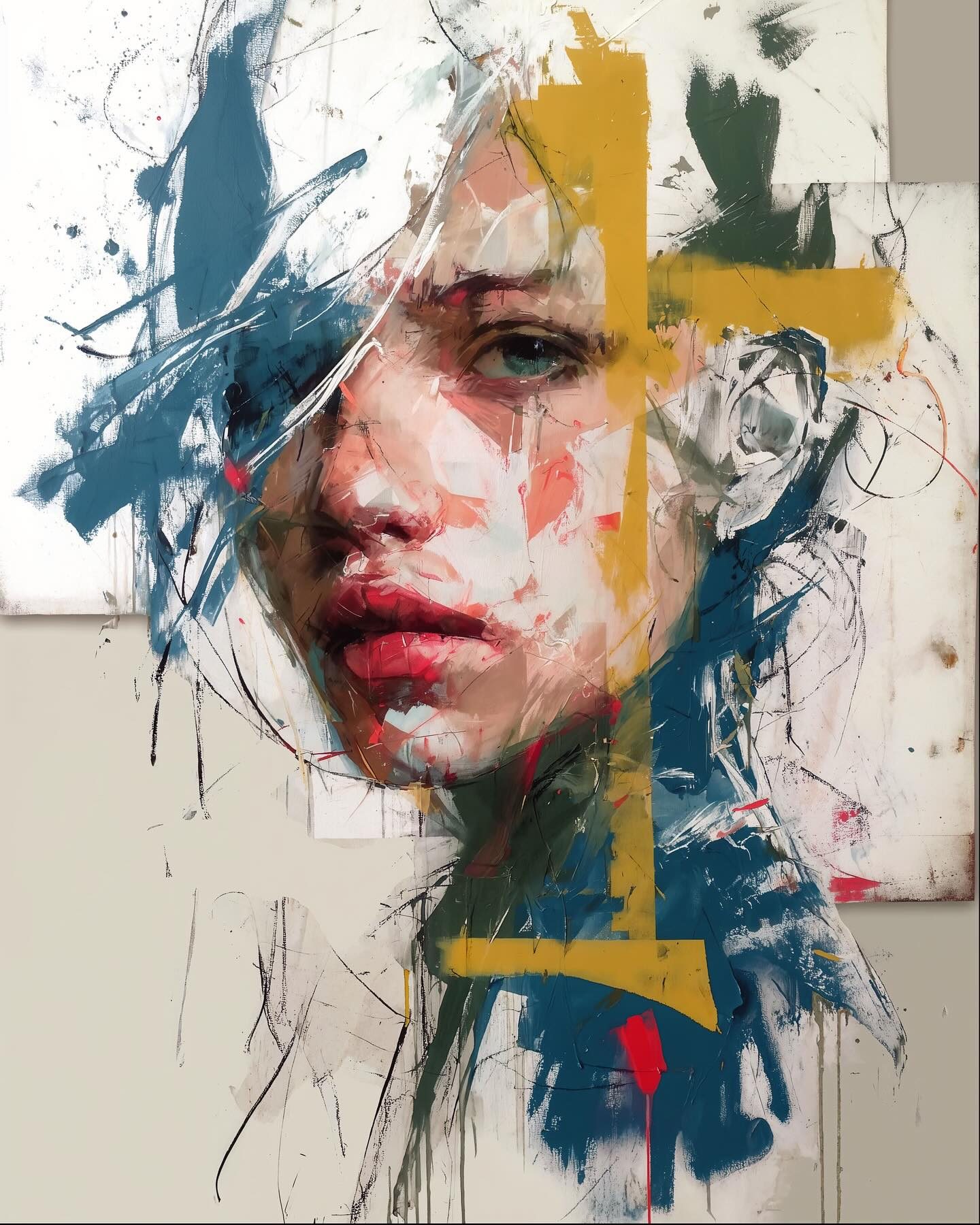
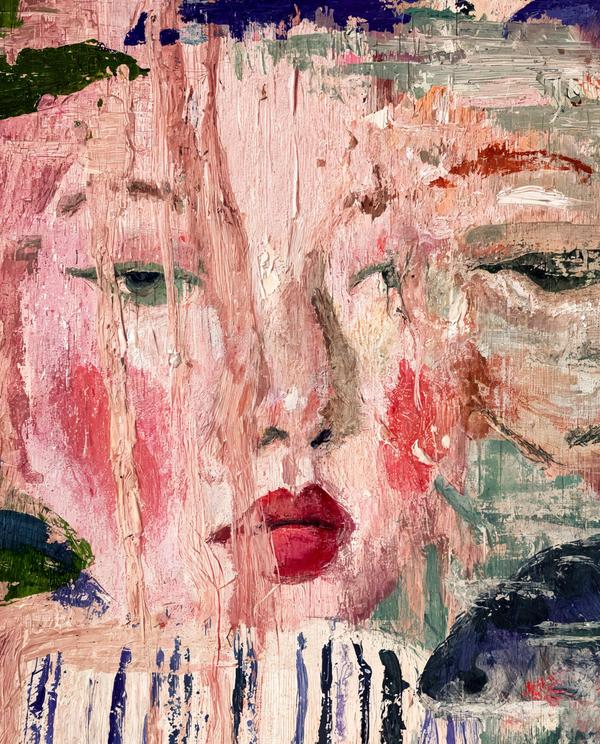
Teal bruises of paint. A mustard-yellow cross slicing the face like tape on a crime scene. And those hot little red drips—like the canvas couldn’t keep the secret in.
This is a portrait caught mid-thought. One eye locks on, the other slips away. The mouth is soft, but the marks around it are ruthless. Tender subject. Aggressive weather.
It’s got Abstract Expressionist swagger with a neo-figurative comeback—think de Kooning’s push-pull between beauty and wreckage, with a Basquiat-adjacent urge to scar up the “pretty” parts on purpose. Even the sketchy lines feel like Schiele: nervous, intimate, unflinching.
Mini art lesson: “lost and found edges.” Notice how some contours are razor-sharp (that eye, the lip ridge), while others dissolve into messy strokes. That’s not an accident. Sharp edges pull focus. Soft edges let forms breathe and drift, like memory. Want a face to feel alive? Don’t outline everything. Let parts disappear.
Fun fact: our brains will forgive almost any distortion in a portrait if the eyes are convincing. Painters have known this forever—nail the gaze, and you can “break” the nose, twist the cheek, smear the jaw… and the viewer still swears it looks real.
Related works
The Original Side-Eye
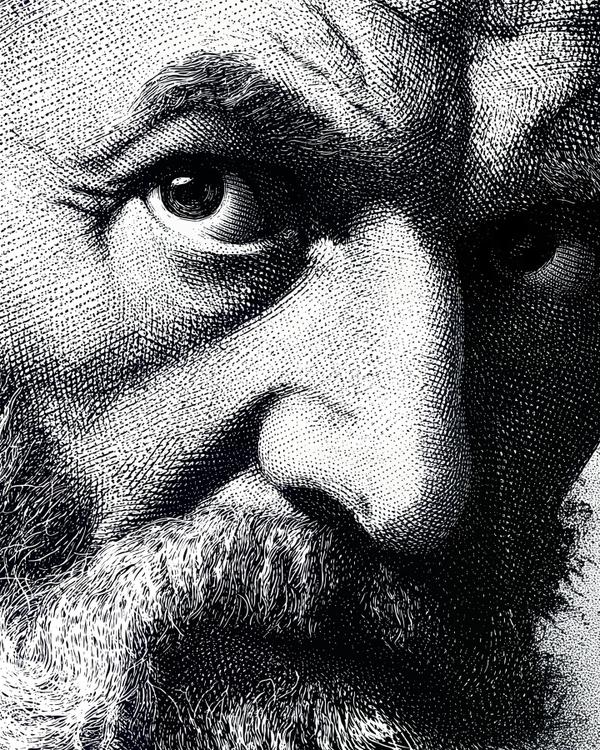
Like if wisdom itself got etched into a face and still wasn’t fully buying your argument.
The Part That Stayed
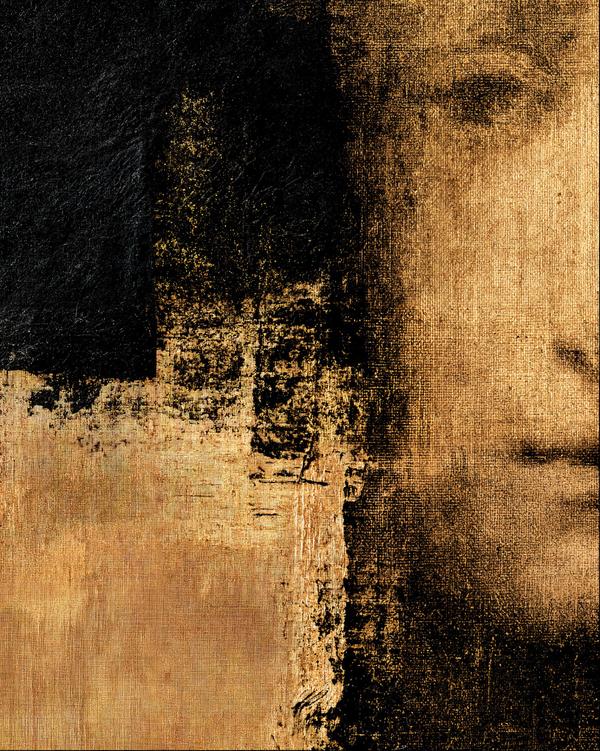
This face arrives the way a memory does—late, partial, and somehow in charge of the room.
The Pond Heard Everything
These sirens look like they’ve been crying beautifully for several centuries.
Available as a museum-quality print.
Request this print