Two Faces, One Secret
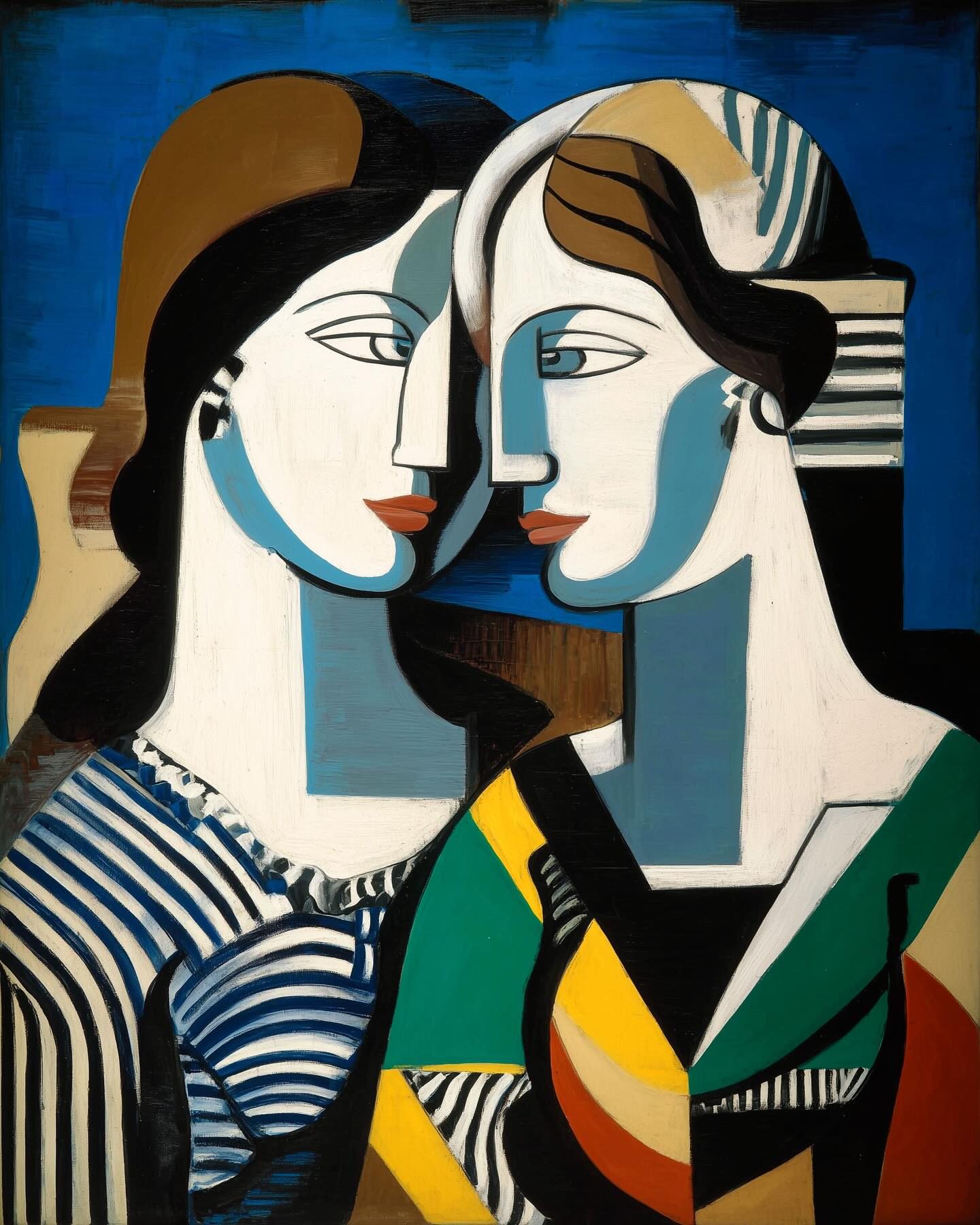
A cobalt-blue backdrop that hums like late-night jazz. Two sculpted profiles pressed so close the air between them feels borrowed. And those clean color blocks—teal cheek, rust lip, a slash of yellow—like emotion reduced to geometry.
This is intimacy without the greeting-card sweetness. It’s the private moment right before someone tells the truth. Their eyes don’t lock, they slide. Like they’re listening with everything except their pride.
The whole thing reads like Cubism learned how to whisper. Picasso’s fractured faces are here, but softened—less shatter, more overlap. And there’s a little Modigliani elegance in those long necks and calm, stylized poise.
Mini art lesson: simplify the face and you amplify the feeling. When an artist strips away pores, lashes, and little “realistic” details, your brain stops cataloging and starts projecting. Big shapes become big emotions. That’s why one blue patch can feel like distance, and one warm lip can feel like a dare.
Fun fact: Picasso didn’t invent Cubism alone—Georges Braque was right there in the lab with him, and for a while their work got so similar that even close friends couldn’t tell who painted what. Also, your brain is obsessed with faces: babies can recognize a face-like pattern within hours of being born. Which explains why two sideways noses and a few bold lines can still hit you right in the gut.
Related works
Available as a museum-quality print.
Request this print