The Part That Stayed
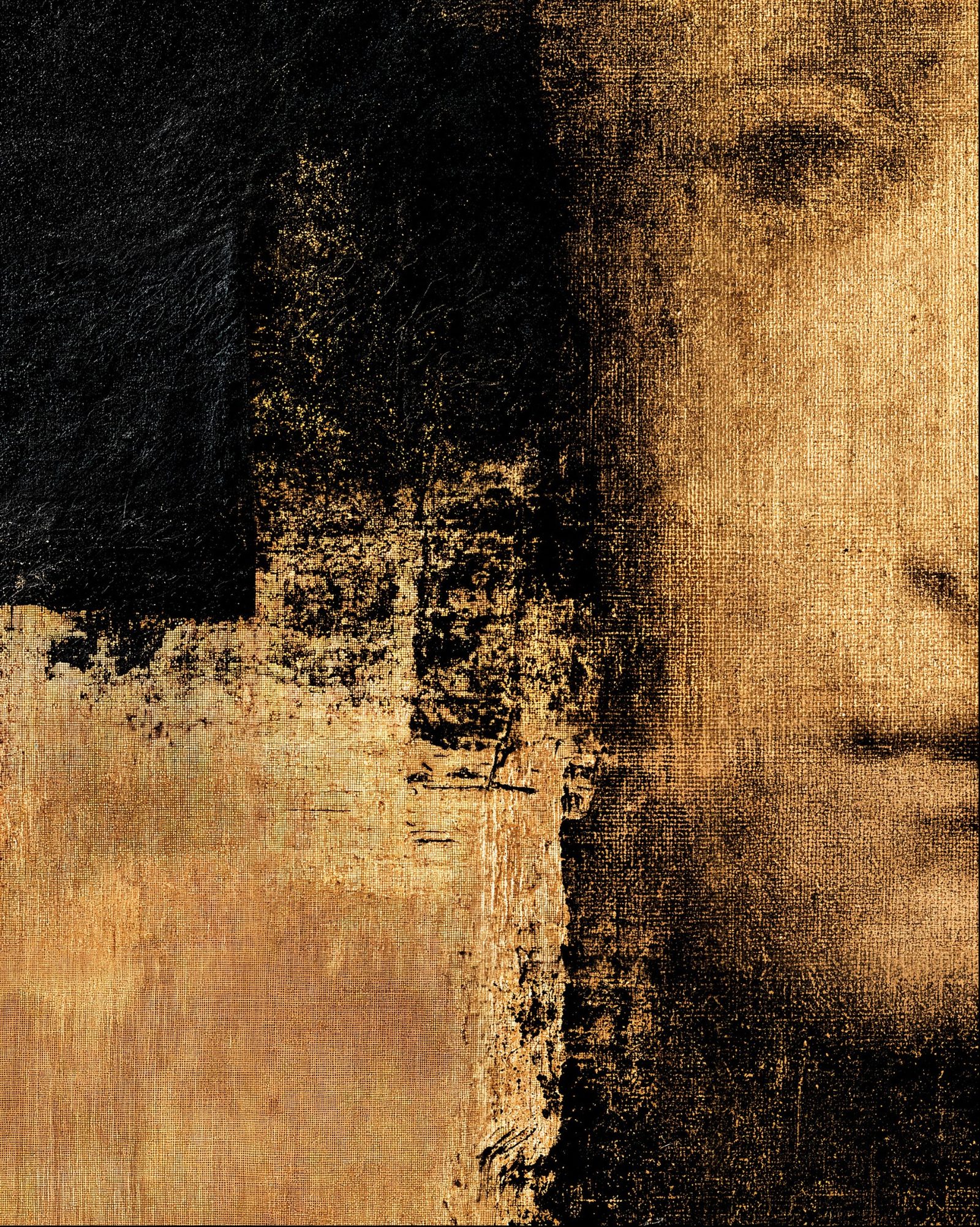
This face arrives the way a memory does—late, partial, and somehow in charge of the room.
A single eye, the suggestion of a mouth, a field of black, and all that raw ochre canvas—and suddenly we’re in the presence of someone we almost know. The composition works because it withholds just enough. The face occupies the right side like an apparition pressing through the surface, while the left side turns into a wall of shadow, scraped and scarred and beautifully uncooperative.
That surface matters. You can see the weave of the canvas fighting its way through the paint, which gives the whole image a bodily feel. The black isn’t flat; it breathes. The ochre doesn’t just sit there looking handsome—it warms the piece from underneath, like old paper, candlelight, or a memory that’s been handled too often. One eye and half a mouth should not be this emotionally effective, and yet here we are.
You can feel the influence of Antoni Tàpies in the battered, material-heavy surface, where texture carries as much meaning as image. There’s a touch of Gerhard Richter too, in the way the face hovers between revelation and blur. And Pierre Soulages comes to mind in the use of black as an active, luminous force rather than a void.
This piece understands something difficult: sometimes identity shows up in fragments. Sometimes that’s the most honest version.
FUN FACT
Soulages famously called his late black paintings outrenoir—“beyond black”—because he treated black as a way to reflect and shape light, not simply darken a picture.
Related works

Buffering Self
Ever have one of those days where your thoughts are buffering but your face has to pretend everything’s fine? Yeah. That’s today’s piece.
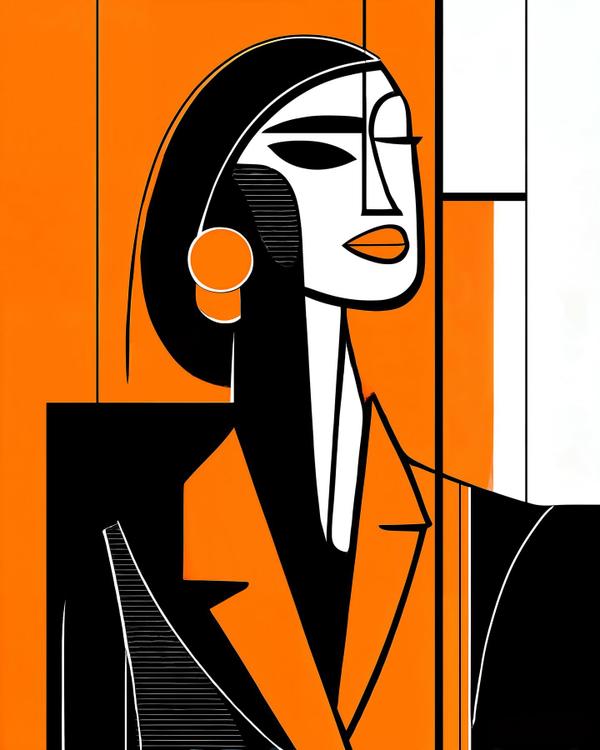
CEO of Color Blocking
Tell me you run the room without telling me you run the room.
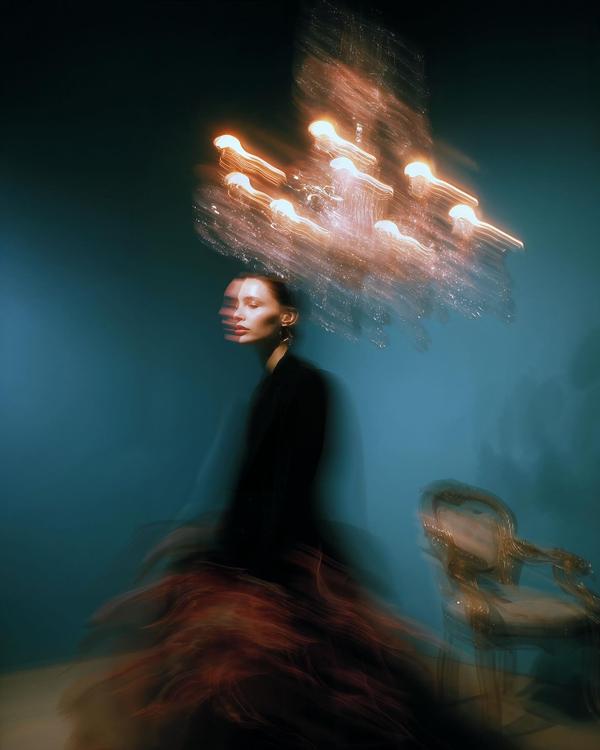
Chandelier Fever
Like if elegance had a panic attack. In a good way.
Available as a museum-quality print.
Request this print