
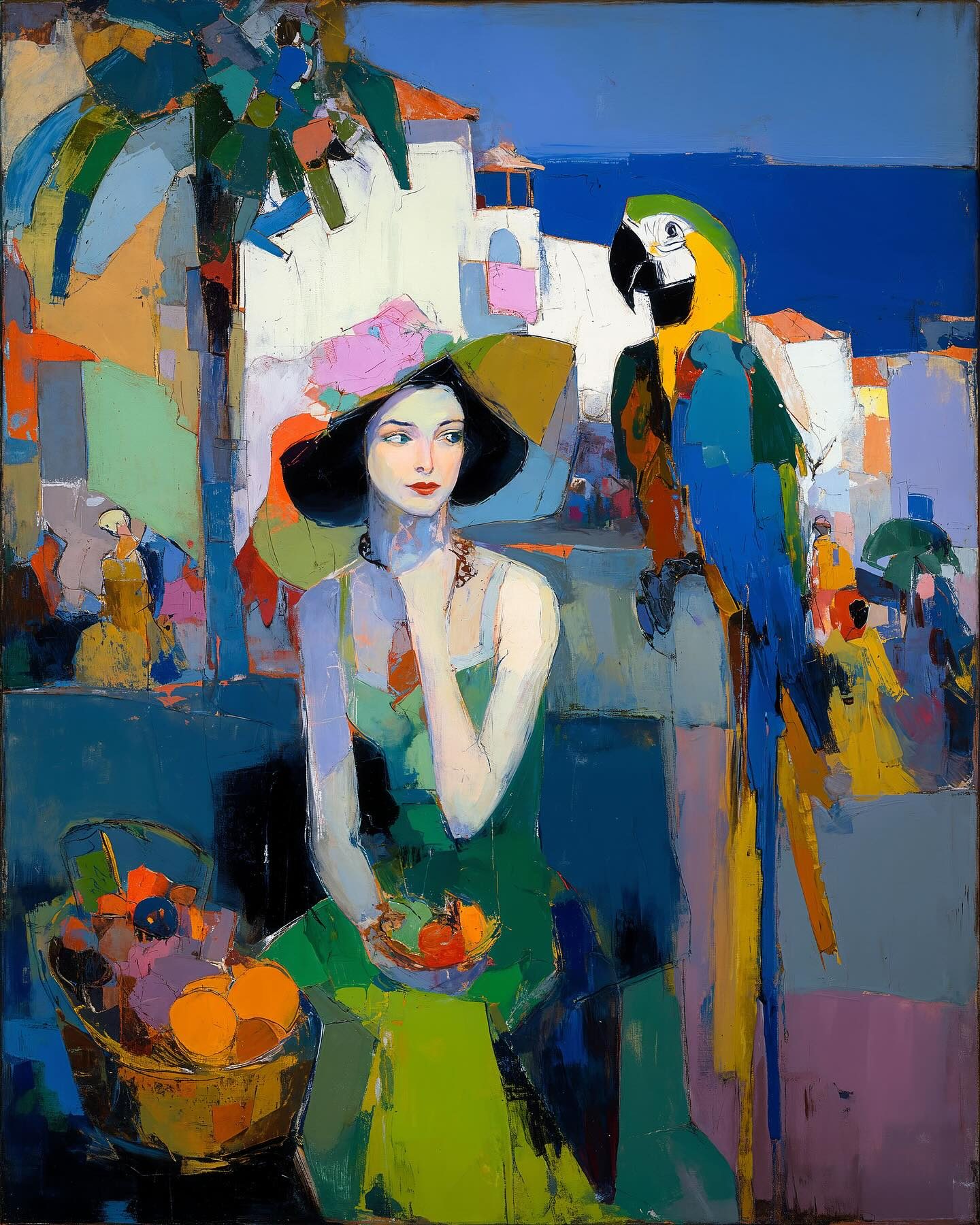
The Woman, the Parrot, and the Paint That Refused to Sit Still
Some paintings whisper. This one samba-dances.
It’s like Matisse crashed a beach wedding in Rio and forgot his sunscreen — all those sun-drunk colors vibrating at once. The woman sits elegantly poised, but the brushwork behind her is pure carnival: slabs of orange, teal, and coral jostling like floats in motion.
The style? It’s got one foot in Fauvism (where color went rogue in the early 1900s — Matisse and Derain were basically the original color-influencers) and another in the post-Impressionist tradition of simplifying forms into planes of bold, emotional pigment. There’s even a whiff of Nicolás Uribe’s modern expressionism — that mix of gesture and glamour — and a nod to Leonid Afremov’s palette-knife vibrancy.
But the powerhouse here is contrast:
* The woman is calm geometry, composed in cool greens and creamy light.
* The parrot? Chaos in feathers — a living brushstroke that mocks the stillness beside it.
Together they make a visual duet: control meets carnival.
Art concept to learn: Color temperature. Notice how warm and cool hues dance without blending — orange next to blue, pink against green. Painters use this trick to make scenes feel alive, even when nothing’s moving.
Fun fact: Brazil’s national bird is technically the rufous-bellied thrush — but let’s be honest, the parrot stole the cultural spotlight long ago. You’ll find them in everything from folk art to fútbol mascots.
So next time you paint (or dress), remember: life’s better when your colors argue a little.
Related works
Available as a museum-quality print.
Request this print