
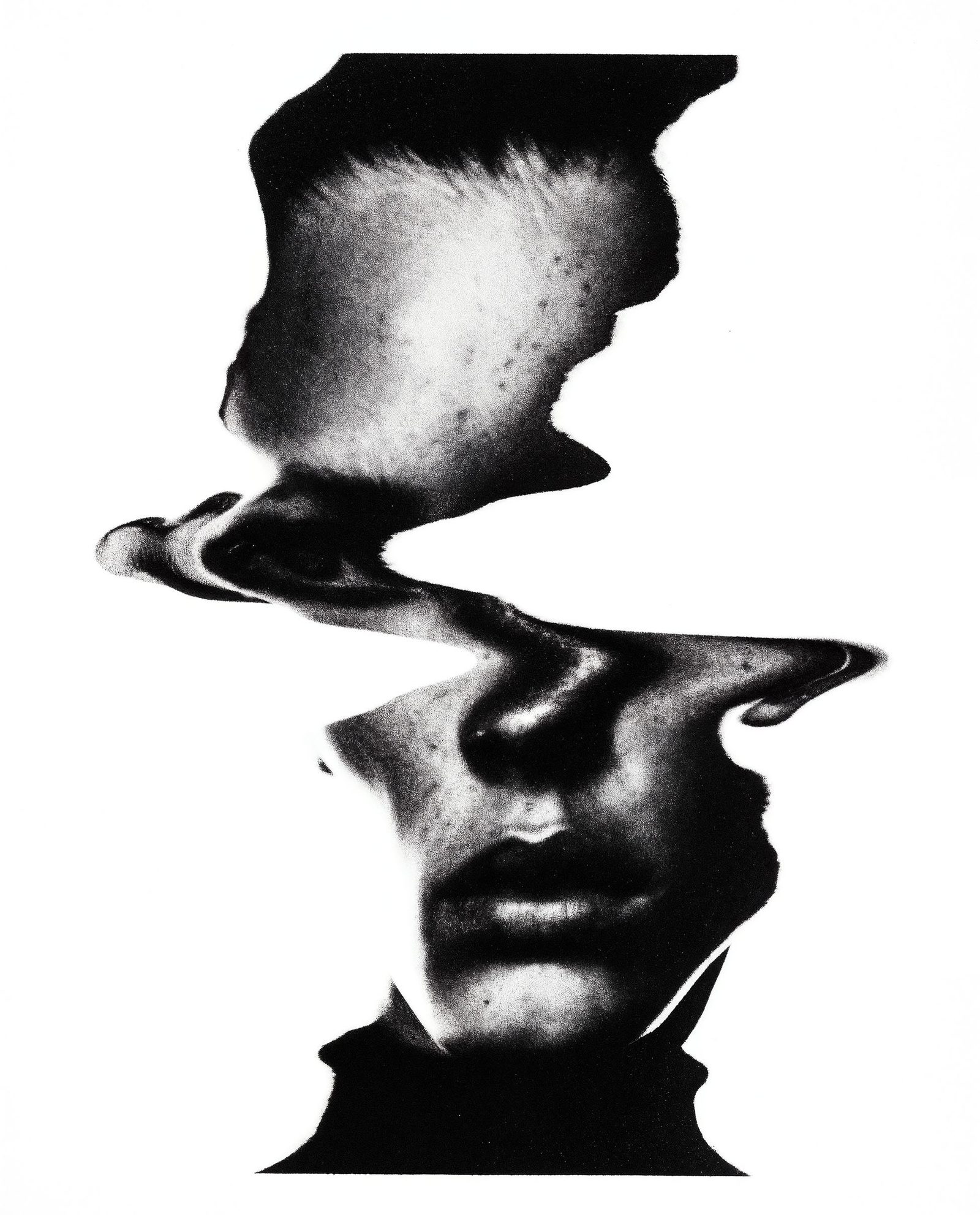
Almost Someone
How much of a face can disappear before your brain gives up?
Apparently, quite a lot.
There are barely enough pieces here to build a person: an eye, a mouth, the suggestion of a nose, a dark collar. Everything else has been stretched, burned, blurred and pulled sideways. Yet within a fraction of a second, your brain snaps the fragments together and says: face.
That little trick is called pareidolia, our tendency to find recognizable forms—especially faces—in incomplete or random visual information. Artists have been exploiting it forever. Clouds become figures. Shadows become bodies. Two dots and a line become somebody staring back at you.
The photographic language here points toward Lee Miller and Man Ray, whose solarized images turned ordinary portraits wonderfully strange by partially reversing light and dark. There’s some Francis Bacon in the dragged, unstable face too, and a hint of Gerhard Richter, who understood that blurring a portrait can somehow make us look at it harder.
That’s what I love here.
Your eye keeps trying to rescue the person from the distortion.
FUN FACT
Lee Miller accidentally rediscovered the darkroom phenomenon that she and Man Ray developed into their famous solarization technique. A mistake involving unwanted light became one of Surrealist photography’s signature effects. Art history occasionally begins with somebody thinking, “Well…that’s ruined.”
Related works
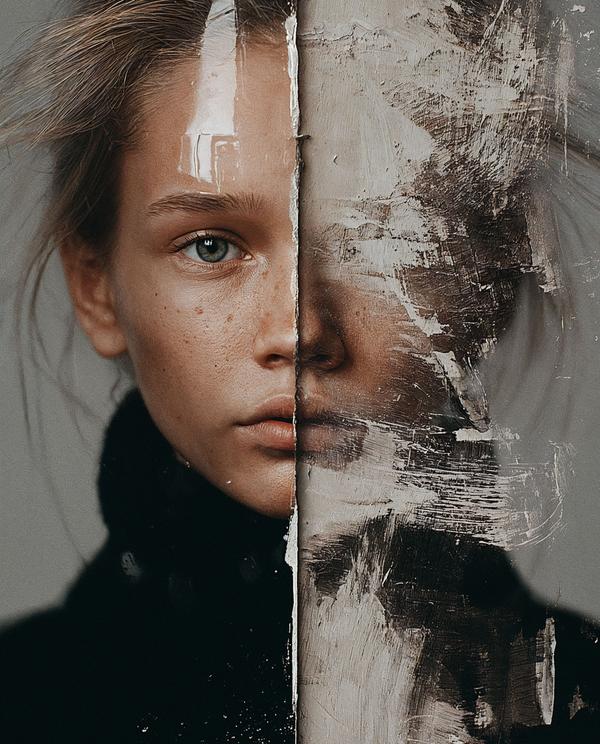
Half Remembered
She looks like a portrait caught halfway between being painted and being erased.
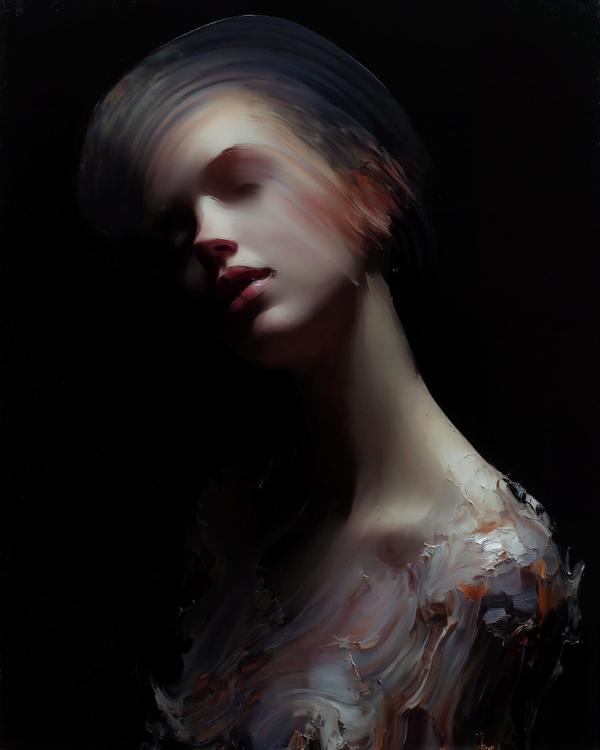
The Unraveling
At first glance, it looks like beauty caught mid-meltdown—portraits of grace dissolving into motion.
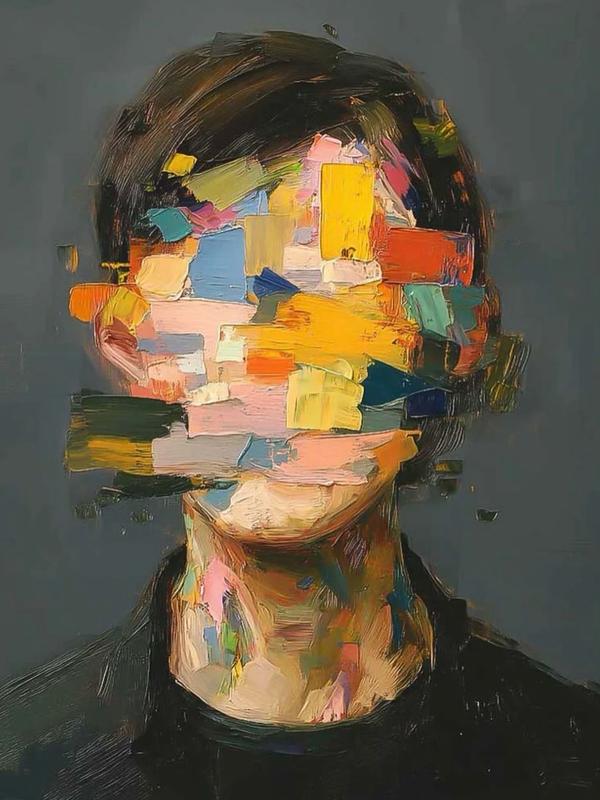
Face With Bad Wi-Fi
This portrait looks like it tried to remember its own password and gave up halfway through.
Available as a museum-quality print.
Request this print