
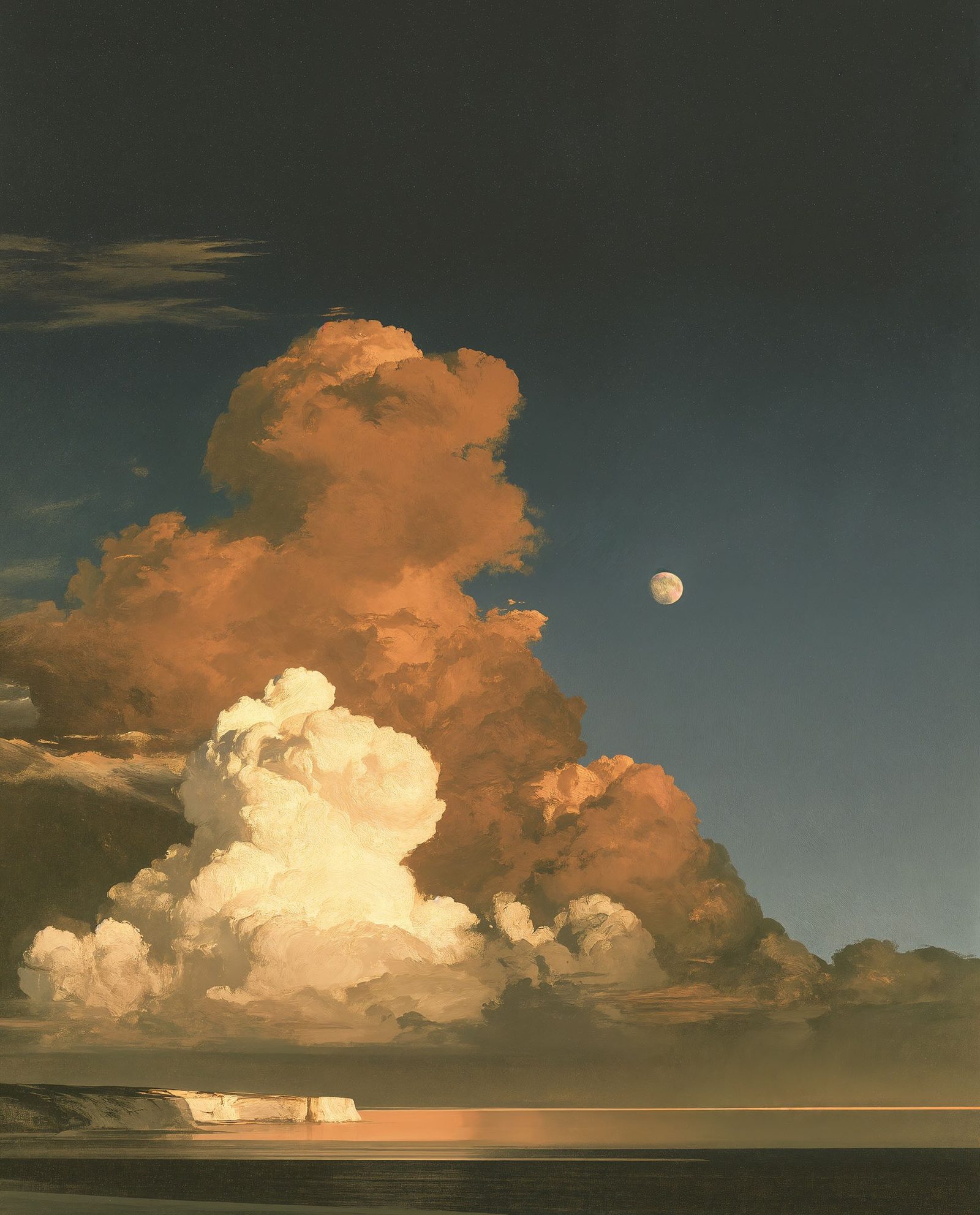
The Moon Drew the Short Straw
Imagine showing up for your big scene and discovering the clouds got all the lines.
A tiny moon hangs there against a ridiculous mountain of weather, almost swallowed by clouds glowing cream, rust and burnt orange. The whole thing feels staged—like someone rolled a Baroque backdrop onto the horizon and told the sky to be dramatic.
And dramatic it is.
There’s a little J.M.W. Turner in the light, especially the way atmosphere seems to dissolve the landscape, and a strong connection to the old artistic idea of the sublime: nature made so enormous and beautiful that you feel both thrilled and wonderfully insignificant.
The trick here is scale.
That little moon is doing more work than it appears to. Your brain knows roughly how large the moon should feel in a sky, so it becomes a visual measuring stick. Suddenly the clouds seem colossal. The thin strip of land below makes them feel even bigger.
You’re looking at a landscape, but the weather has basically taken over the lease.
FUN FACT
Artists of the Romantic era became fascinated with the sublime because beauty alone wasn’t enough. They wanted paintings to produce awe—storms, mountains, oceans and skies big enough to make the viewer feel physically small.
Related works
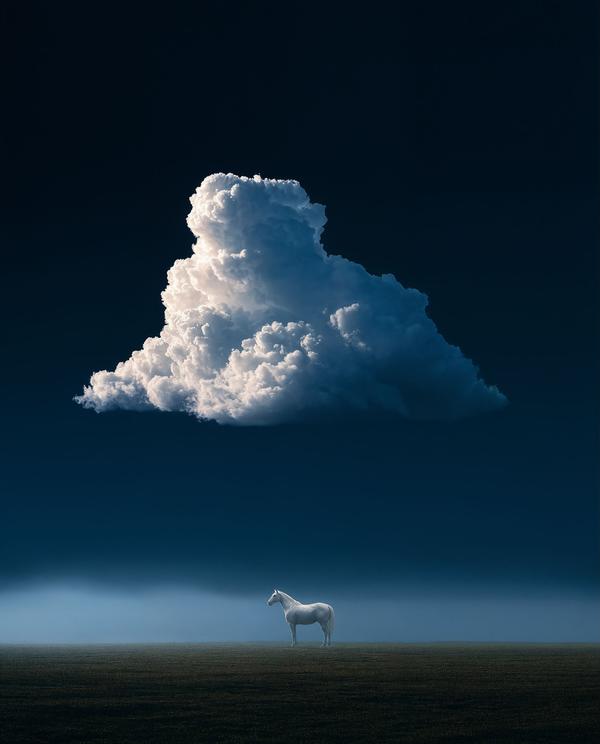
The Weight of Quiet
The horse has seen the forecast and chosen dignity. Alone in a dark field, he stands perfectly still beneath a cloud that looks less like weather and more like a mountain passing overhead. The light catches both figures—the bright edge of the cloud, the pale curve of the horse—while everything else slips into deep blue silence.
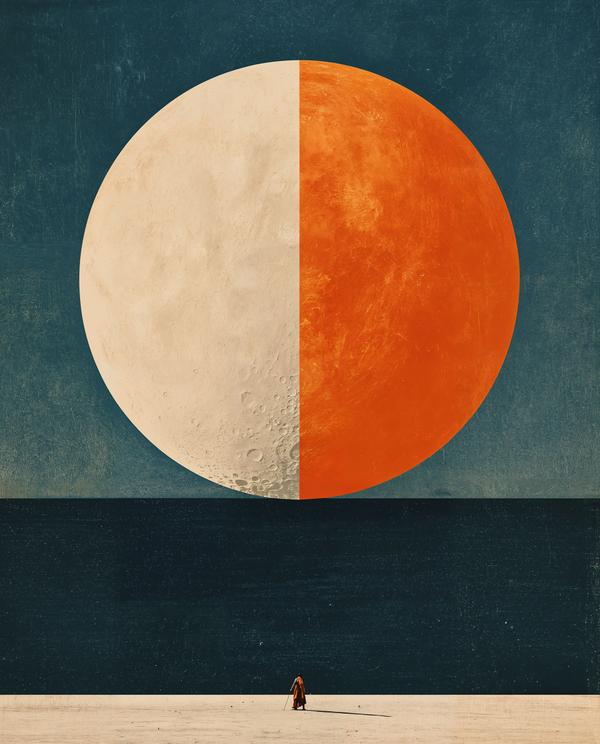
The 400-to-1 Coincidence
Coincidence—or a signature?
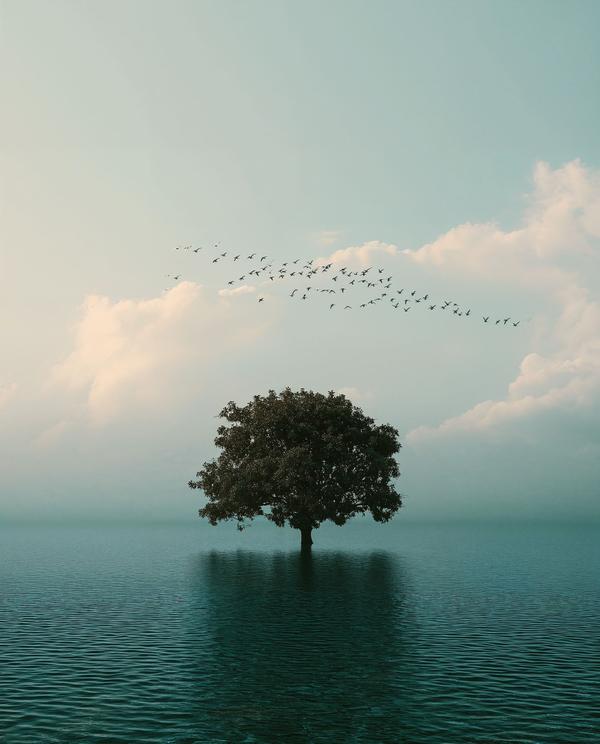
The Tree That Stayed
This looks like a landscape after the world exhaled.
Available as a museum-quality print.
Request this print