
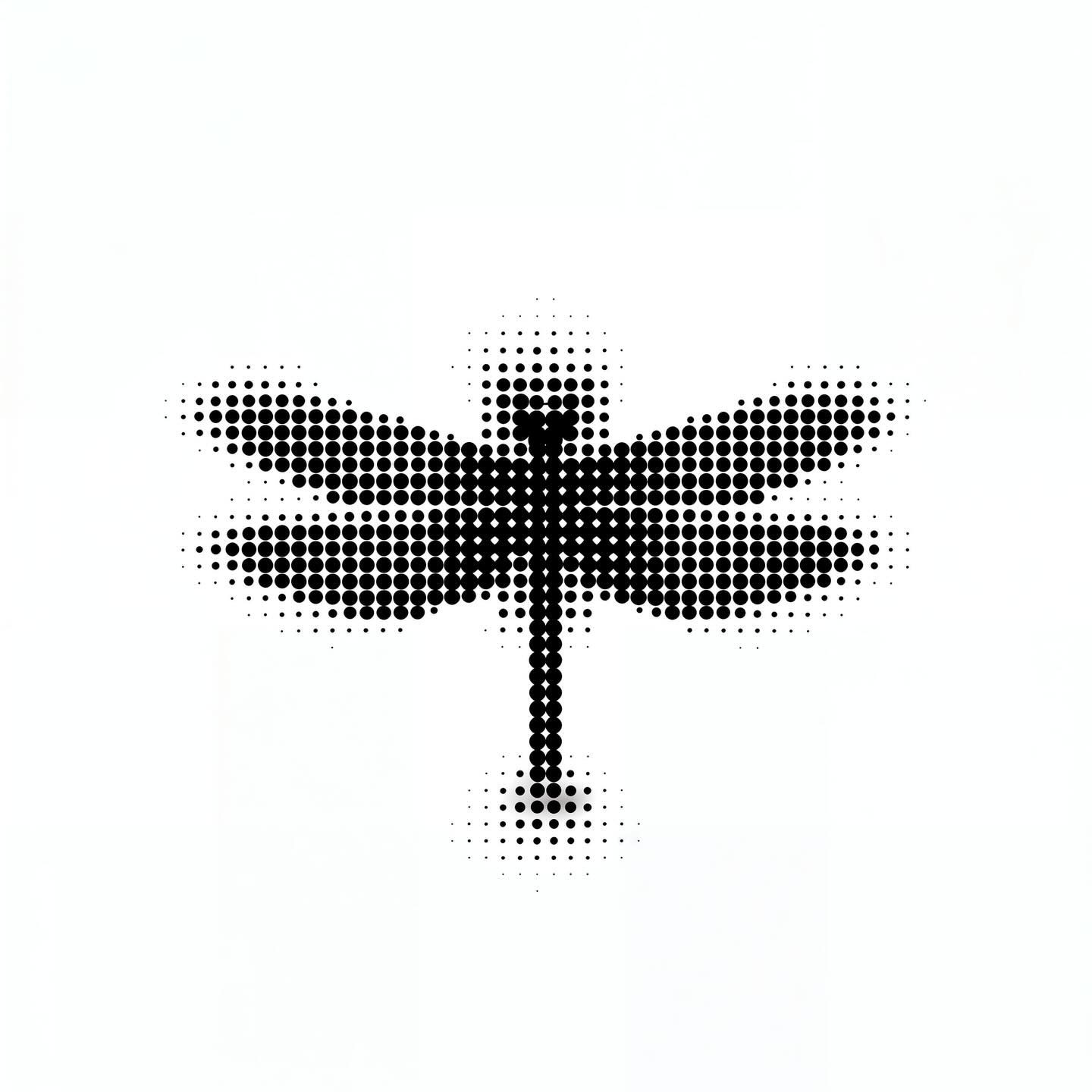
Dot Flight
Like if a dragonfly got redesigned by a minimalist with a spreadsheet and excellent taste.
At first glance, this feels almost too clean. Just black dots on white. But then the insect lands in your brain. Four wings stretched wide. A narrow body like a punctuation mark. A halo of fading circles that makes the whole thing hum, as if it’s appearing and disappearing at the same time. It’s part specimen drawing, part optical trick, part “how is this doing so much with so little?”
What makes it work is the old magic of halftone—an image built from dots instead of lines or shaded brushstrokes. Newspapers, comics, and print ads used this trick for generations: change the size and spacing of dots, and the eye blends them into tone, depth, and form. Your brain basically becomes the intern, doing free labor to finish the picture.
You can feel the influence of Pop Art print culture, especially the mechanical dot language of Roy Lichtenstein, mixed with the perceptual games of Op Art and the graphic reduction of modernist poster design. There’s even a little pointillist logic in here—except Seurat took the scenic route, and this image took the express lane.
And the subject is perfect. Dragonflies already look engineered by someone showing off. They’ve been around for more than 300 million years, which means they were zipping around before dinosaurs showed up and started acting like they owned the place.
That’s the deeper lesson here: simplicity isn’t the absence of detail—it’s the control of it. Great design knows what to leave out. Great art knows what your eye will supply. This piece trusts the viewer. Bold move. Smart one.
Related works
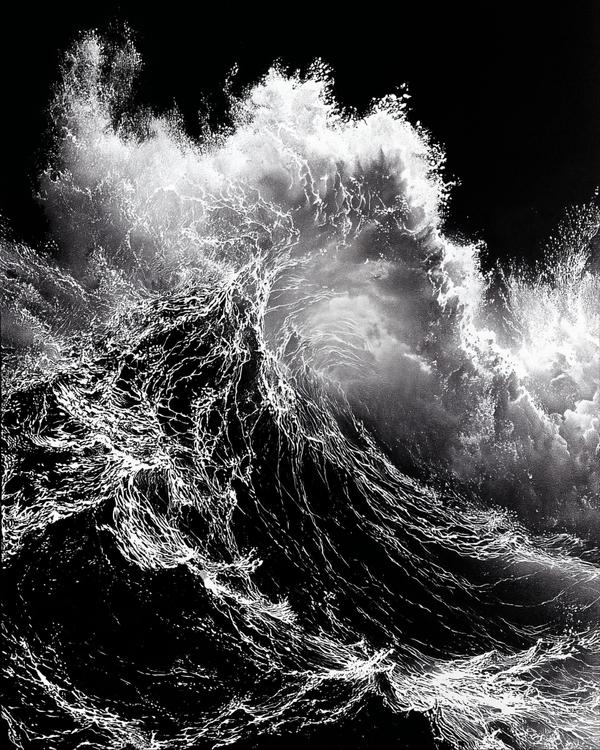
White Noise, Black Water
This wave looks like it’s about to give humanity a very short performance review.
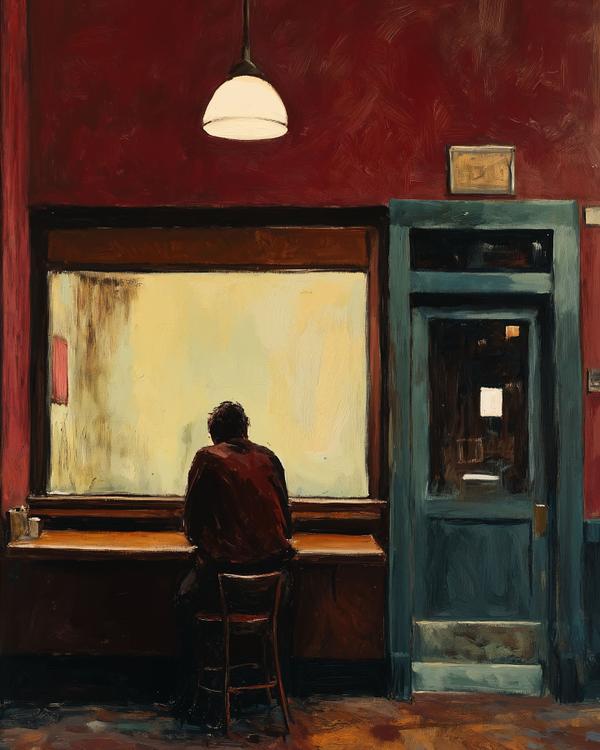
Window Light, Quiet Night
Art reminds us that someone, somewhere, understands—even in silence. If you’re in a quiet season right now, let this painting be a soft, painted hug. You matter. You are seen. The light will change. The door will open. Someone else is out there looking for the same connection you are. Keep going.
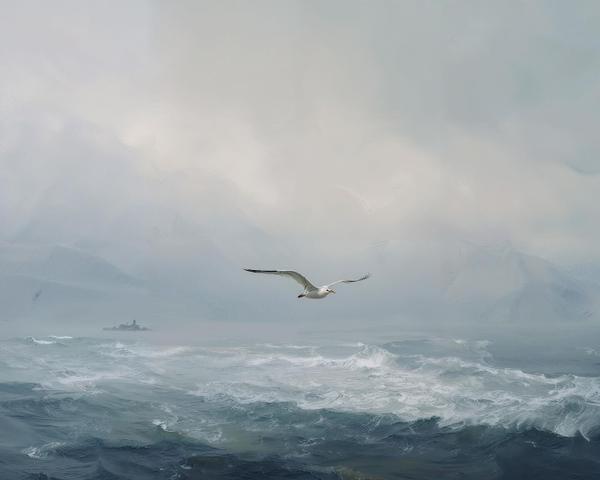
Wings Where Sea Meets Sky
This image feels like a hymn to solitude — a lone gull gliding above restless waters, a flicker of life stitched against an endless horizon. It echoes the Romantic tradition, where painters like Caspar David Friedrich and Ivan Aivazovsky tried to capture not just what the sea looked like, but what it felt like: vast, sublime, and slightly terrifying. The faint lighthouse in the mist is a whisper of human presence, almost embarrassed to exist in nature’s cathedral. The sea, frothing and alive, reminds us that water is both cradle and abyss — a theme Romantic artists adored. They believed the “sublime” was that paradoxical beauty we feel when confronted with something larger than ourselves: awe wrapped in a shiver. Fun fact to pocket: Friedrich often painted tiny figures gazing at vast landscapes, not to glorify them, but to remind us of our own fragile scale. In a way, this gull is today’s “tiny figure,” suspended between the storm and the sky. What makes this piece contemporary is its dreamlike smoothness — like the edges of memory softened by time. The sea becomes less about geography and more about metaphor: freedom, longing, and that eternal tug between staying ashore or taking flight. So next time you see a bird over water, remember: it’s not just flying. It’s sketching poetry across the sky.
Available as a museum-quality print.
Request this print