
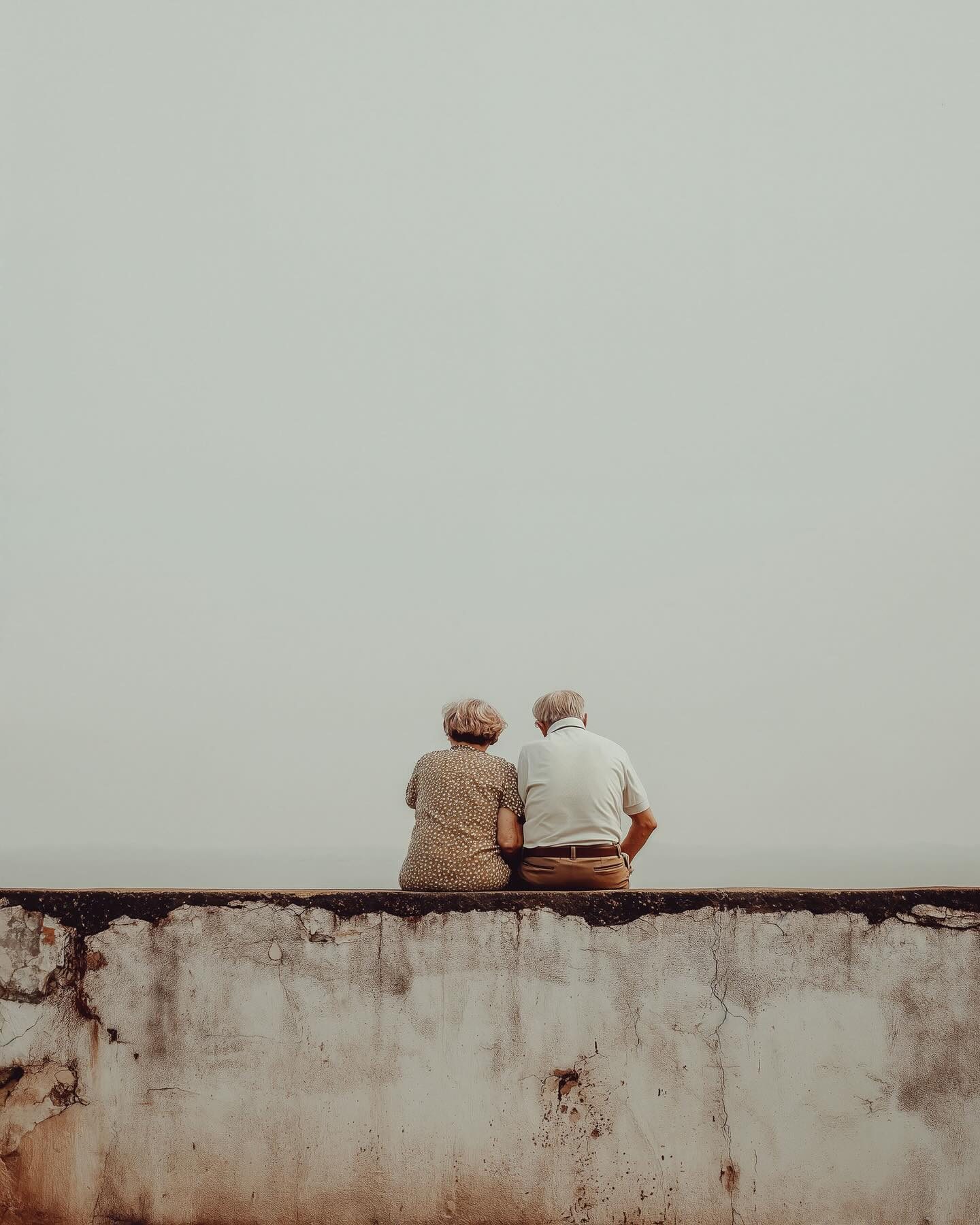
Still Here
Like a love story directed by silence and edited by time.
An old wall. Two small figures. A whole lifetime sitting there between them.
This image does something rare: it gets quieter the longer you look at it. The cracked concrete takes up half the frame like history made physical—scarred, worn, still standing. Above it, an elderly couple sits shoulder to shoulder, seen only from behind, staring into a pale, empty distance that somehow feels full of memory. No big gesture. No dramatic kiss. Just proximity. Which, frankly, is where the real romance lives after the fireworks pack up and go home.
Visually, this leans into minimalist cinematic photography and poetic realism. You can feel the hush of Yasujirō Ozu in the stillness, the weathered tenderness of Wim Wenders, maybe even a touch of Andrew Wyeth in the way texture and emptiness carry emotion. The composition is doing heavy lifting here. Tiny human figures. Vast negative space. A battered foreground. Everything says time passes. Love stays put.
Here’s the art lesson: this piece uses scale and negative space to create feeling. When artists make people small inside a large frame, it can suggest loneliness, humility, or awe. But here, because there are two figures pressed together, the emptiness doesn’t feel cold. It feels protective. The world is huge. Their little corner of it is enough.
And that wall matters. Texture in art isn’t just surface decoration—it’s storytelling. Those stains, cracks, and worn edges act like visual evidence. Life happened here. A lot of it.
Fun fact for dinner: in film and photography, showing subjects from behind often makes an image feel more universal. You’re not reading facial expression. You’re projecting your own story into the scene. It’s a neat little emotional trick. Devastating, really.
This one isn’t loud. It doesn’t need to be. It understands that tenderness, like good design and good marriage, is often about what you don’t overdo.
Related works
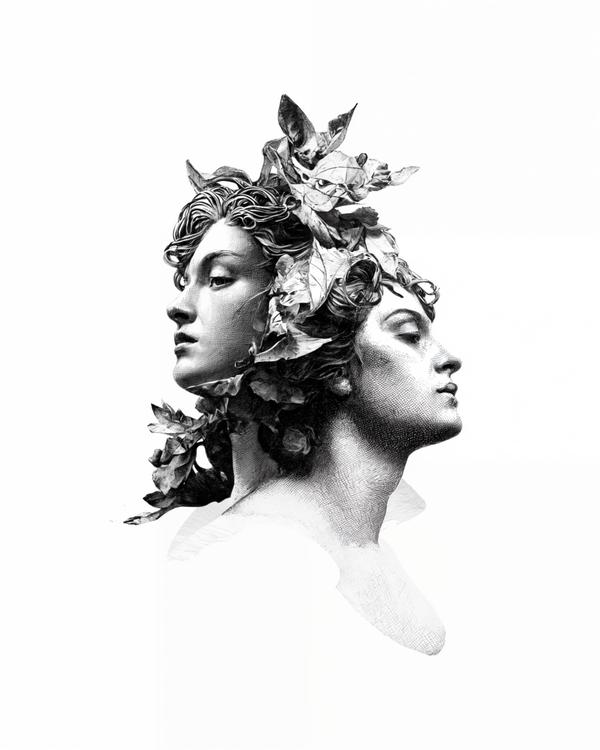
Two Minds, One Bloom
Looks like a Roman coin had a very glamorous midlife crisis.

Two Women Walk Into One Memory
Some portraits look at you. This one is trying to remember your name.
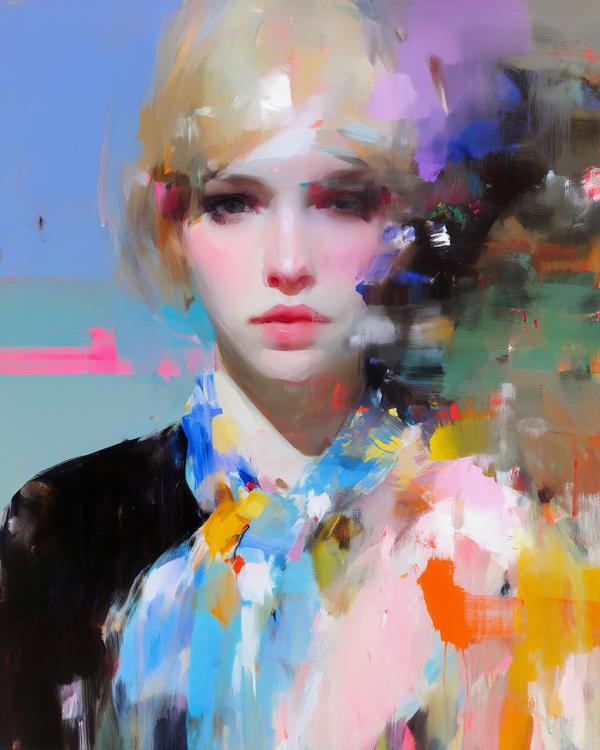
Vogue Meets Pollock
What you’re seeing here is a quartet of portraits that live right on the border between fashion photography and abstract expressionism. The faces are delicate, porcelain-smooth—think John Singer Sargent’s society portraits or 1950s Vogue spreads shot by Irving Penn. But then—bam!—the brushstrokes go rogue, exploding into colorful chaos like Pollock crashing a Jeremy Scott runway or Cecily Brown painting with confetti cannons. This is a classic example of gestural abstraction meeting figuration: the painter grounds us with recognizable faces, then destabilizes the image with painterly eruptions. That tension—the crispness of the gaze versus the blur of the world—is what makes you stare longer. It’s portraiture that doesn’t just capture a person, but the feeling of being a person in a messy, overstimulated world. Art term to drop at brunch: “Impasto.” That’s the thick, textured paint you can almost feel here. Fun fact: Van Gogh practically sculpted with impasto so much that conservators today worry about the peaks of his paint cracking like old frosting. And here’s a fact you’ll definitely want to repeat: in 1913, a critic described the Armory Show’s new modern art as looking like it had been “flung in the face of the public.” Judging by this piece, the tradition is alive and well—except now it feels more like glitter than a punch. So, next time someone asks why portraits need to look like people, you can say: “Because sometimes they need to look like feelings instead.”
Available as a museum-quality print.
Request this print