Star Intake
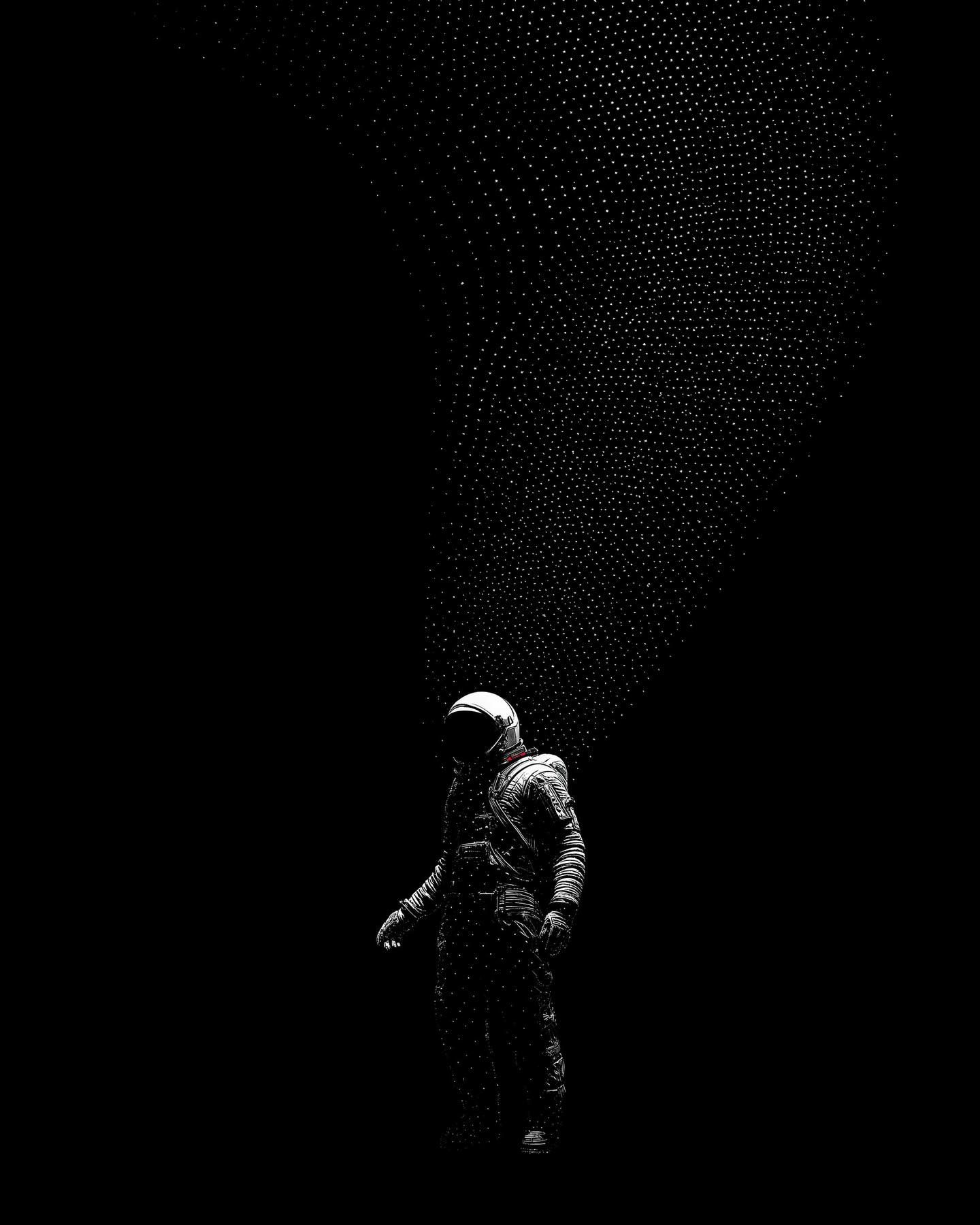
Like if solitude put on a space suit and went looking for answers.
This image is almost all silence. A lone astronaut stands in a field of black so deep it feels less like darkness and more like the universe forgetting to finish the sentence. Above him, a river of tiny white points swirls downward, not quite stars, not quite dust, more like the cosmos is being poured through a funnel and he just happened to be standing under the leak.
It’s gorgeous because it knows when to shut up. The composition is brutally minimal. One figure. One torrent of light. Endless negative space. That restraint is what gives it punch. You can feel the influence of photographers like Hiroshi Sugimoto in the meditative emptiness, and a little of Ansel Adams’ drama stripped down to its purest bones. Visually, it also nods to Op Art and pointillism—think Yayoi Kusama’s obsession with infinity by way of dots, but sent into orbit with a flashlight and an existential crisis.
Mini art lesson: this piece is a master class in contrast and scale. High contrast makes the astronaut feel carved out of darkness, almost sculptural, while the tiny dots create a second kind of scale—the human against the immeasurable. Artists do this all the time: make one thing small, surround it with vastness, and suddenly the image starts talking about awe, loneliness, wonder, even faith. Same visual trick. Different emotional bill.
And that’s the sneaky brilliance here. The stars aren’t just background. They behave like substance. Like weather. Like revelation. It turns the universe from a place into an event.
Fun fact you can use at dinner: if you could pour a tablespoon of neutron-star matter onto Earth, it would weigh about a billion tons. So yes, space remains deeply committed to overachieving.
Related works

Moonlit Delivery Window
A full winter moon glowing like a lamp, blue mountains fading into mist, and Santa’s sleigh cut out in silhouette above a sea of clouds. Twist: the “stars” are actually the town below, twinkling like a blanket of candles.
Multiplicity
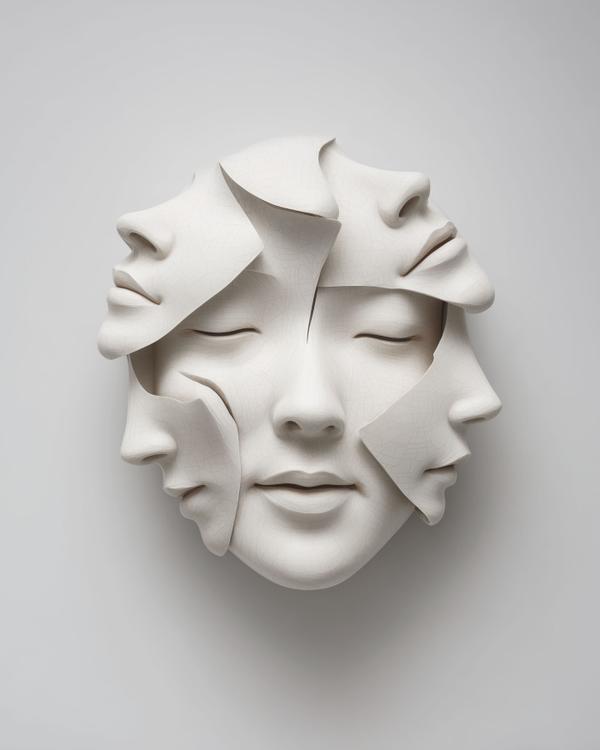
Created in the surreal style of Johnson Tsang, this porcelain-like face fractures reality—literally. Each shard spins off into its own serene expression, whispering the idea that we’re never just one self, but many. Calm, contemplative, fragmented, whole—all at once. Tsang is a Hong Kong artist known for bending clay (and minds) with dreamlike, hyperreal sculptures that blend human forms with metaphysical concepts. This piece channels his essence—soft yet sharp, poetic yet precise. Fun Fact: Tsang often sculpts in white porcelain to emphasize emotion without distraction—letting shadows and form do all the storytelling.
Nature Strikes a Chord
Available as a museum-quality print.
Request this print