The Man Who Needed More Eyes
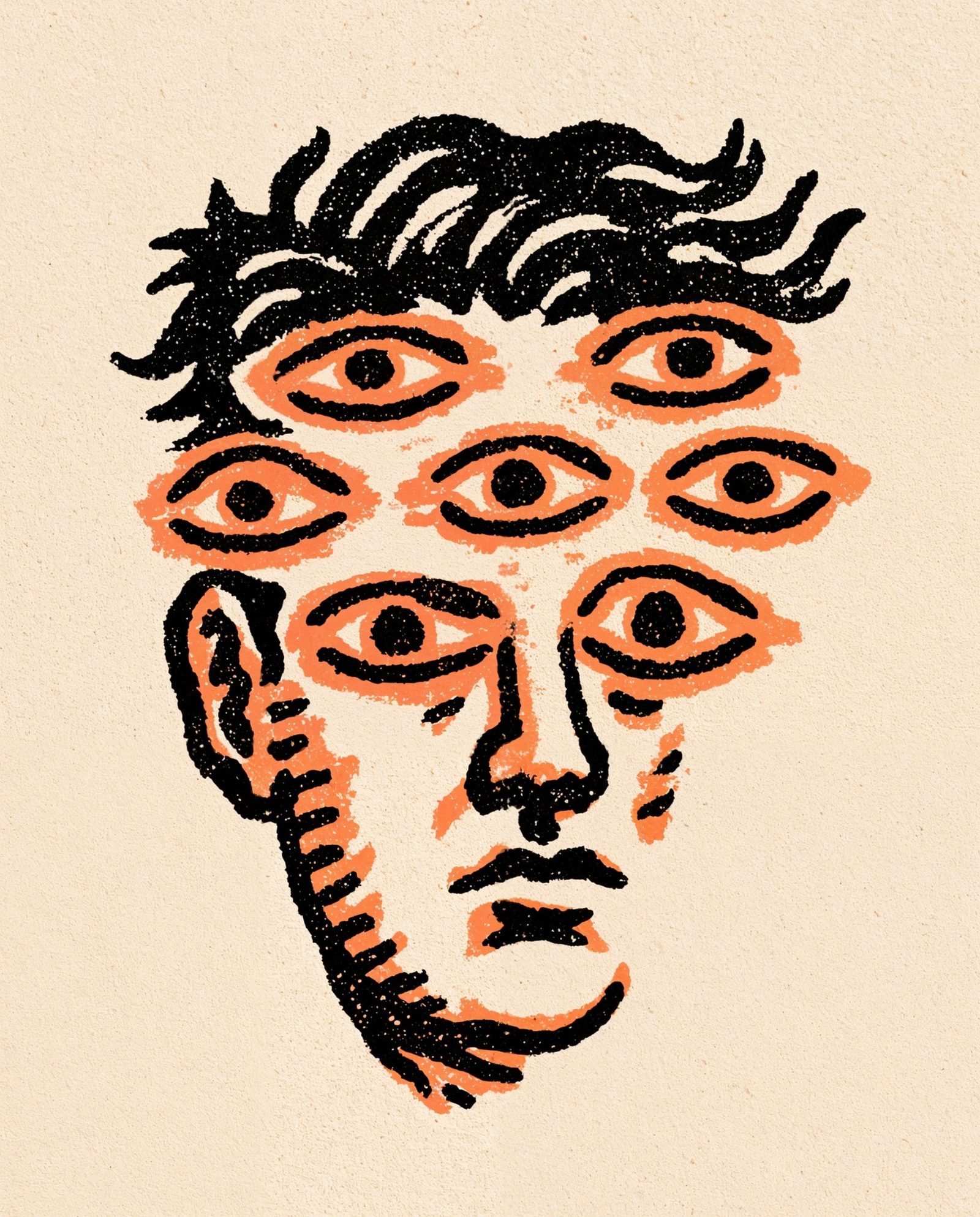
Some faces look back. This one seems to be running surveillance.
The face arrives with six eyes and no interest in pretending that one viewpoint is enough. Thick black lines carve out the features with the force of a woodcut, while that dusty coral halo gives the whole thing a second pulse. The drawing feels rough on purpose—direct, unbothered, and very alive.
Picasso cracked portraiture open by proving a face could be rearranged without losing its personhood. Dubuffet pushed even farther, embracing raw, anti-polished mark-making that valued instinct over elegance. And there’s a little Cocteau here too: the confidence of a few lines carrying a full personality.
What makes the image work is repetition. Eye after eye stacks across the forehead and cheeks until the face becomes a visual metaphor for overload, vigilance, or the exhausting business of noticing too much. The anatomy is wrong. The feeling is right.
Apparently one pair of eyes was not going to cover this shift.
FUN FACT
The word portrait once implied likeness above all else. Modern artists happily broke that contract, using distortion to describe psychology instead of appearance.
Related works
Available as a museum-quality print.
Request this print