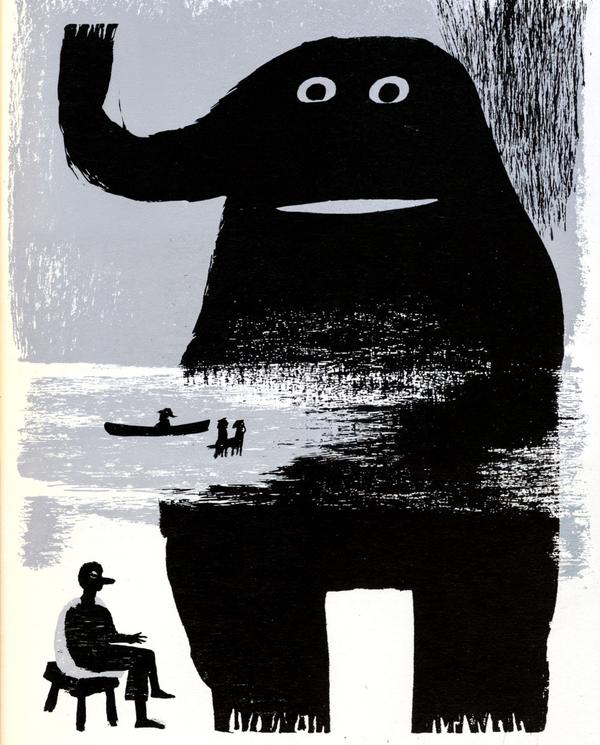
The Elephant in the Room
Finally, someone dealt with the elephant in the room. He seems pretty comfortable there.
Straight-faced jokes hung at eye level.
Finally, someone dealt with the elephant in the room. He seems pretty comfortable there.
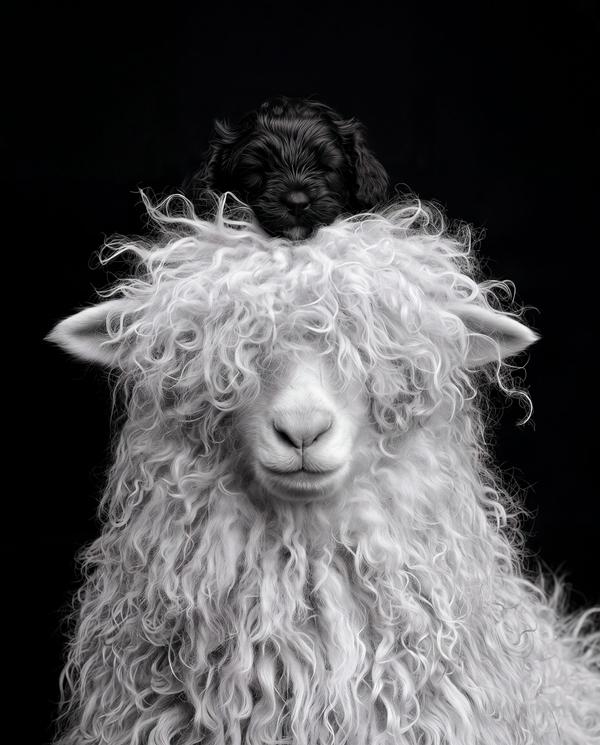
Some mothers carry their babies. This one appears to have hired hers as a hat.
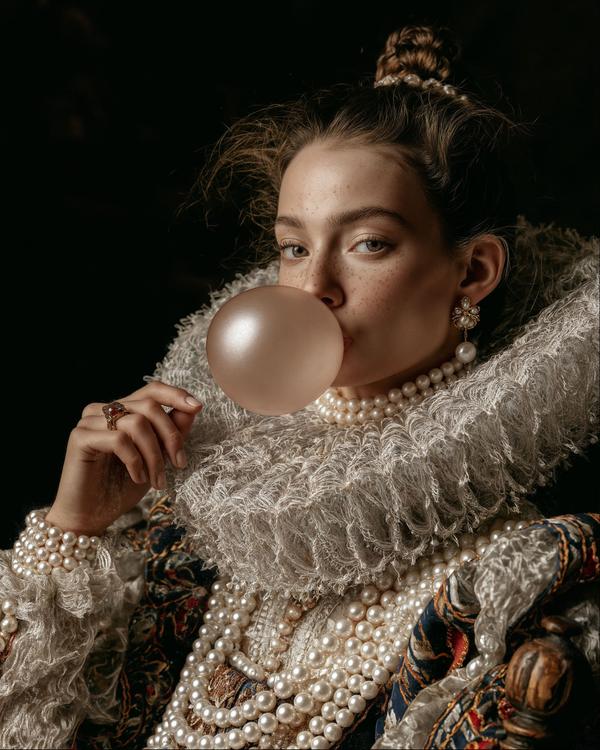
Four hundred years of aristocratic elegance, interrupted by a bubble gum commercial.
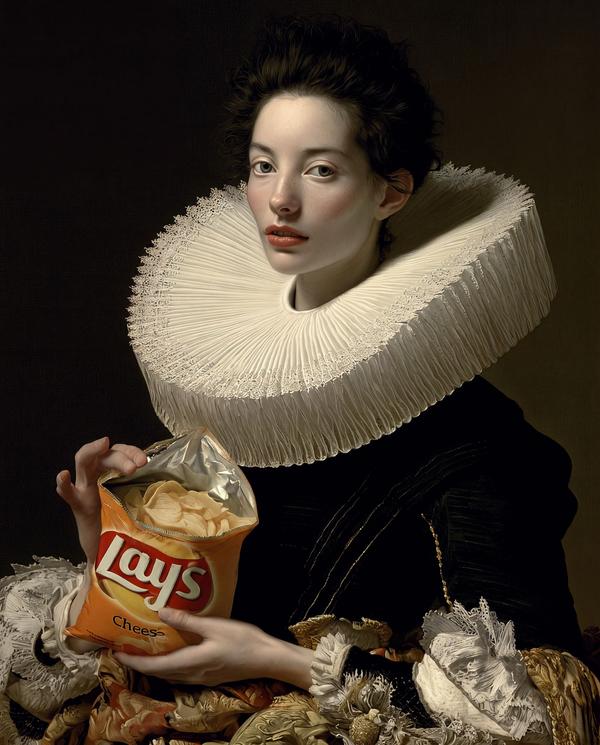
Nothing ruins aristocratic mystery like the unmistakable crinkle of a chip bag.
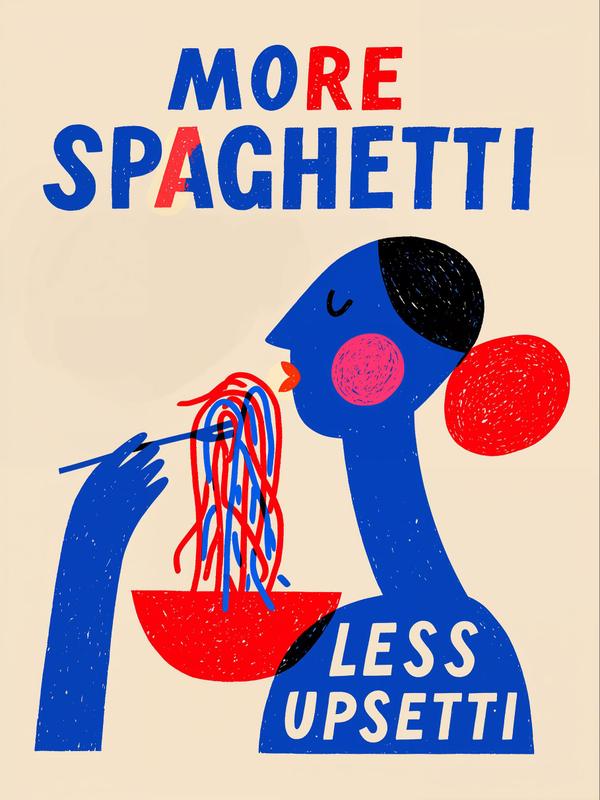
Pasta: the original mood stabilizer.
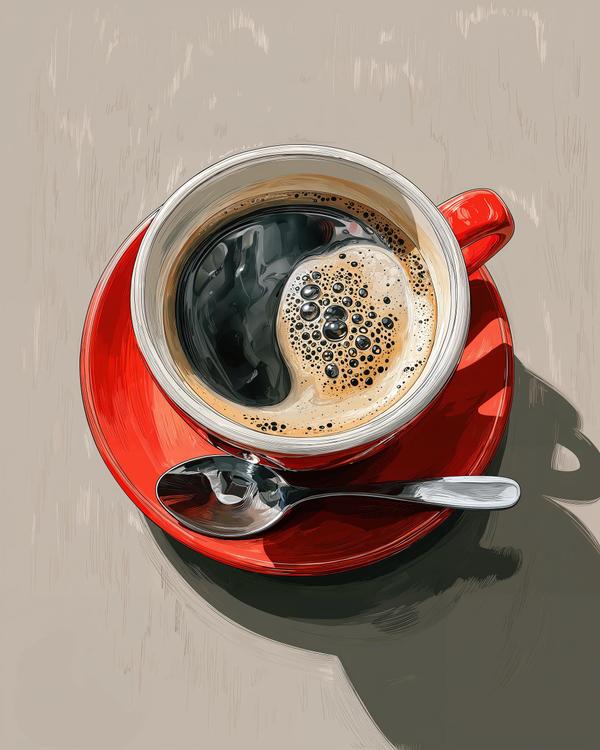
This coffee looks like it’s been awake since 1942.
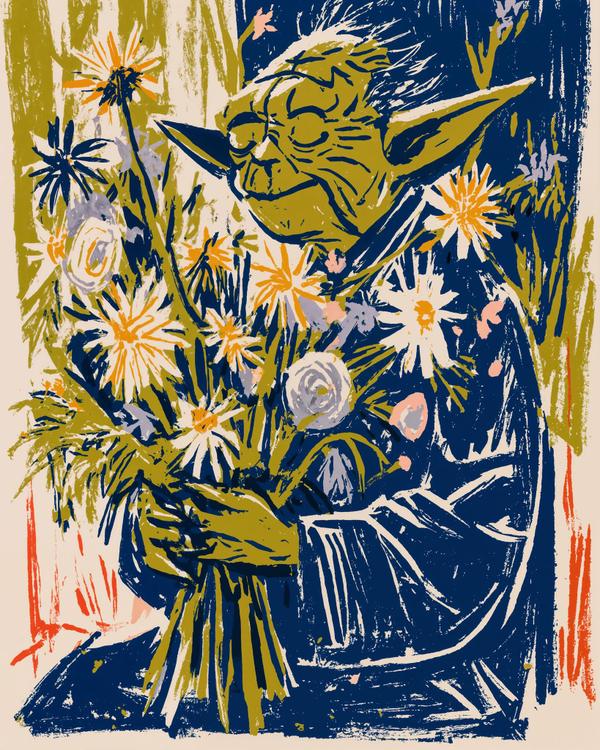
Nobody celebrates a pun holiday better than the art world.
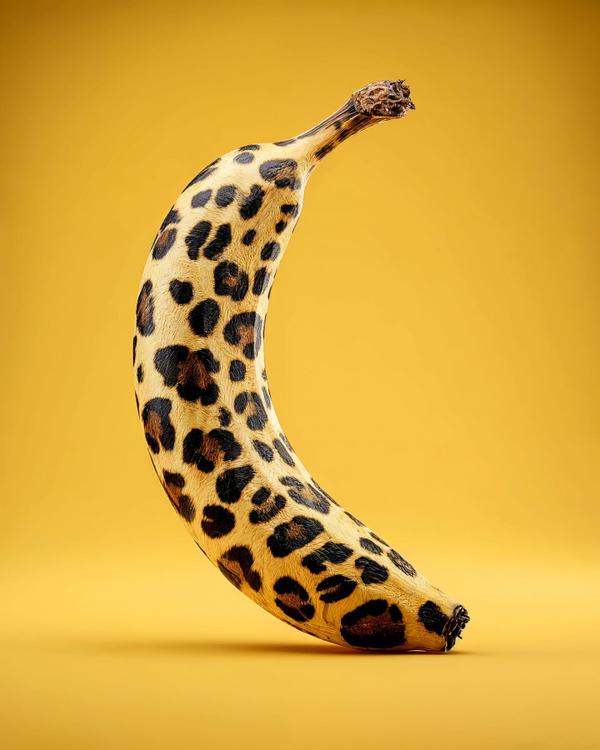
Like if a banana went on safari and came back with a personality.
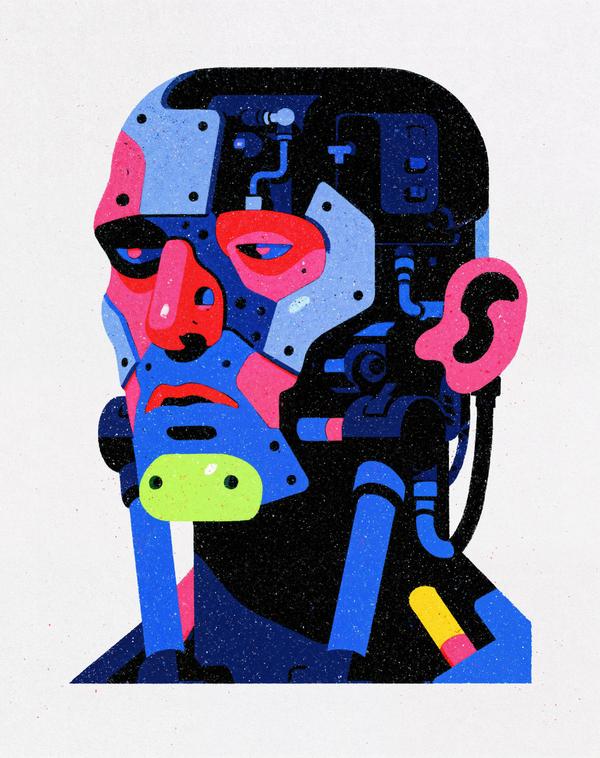
He has the expression of someone who just learned his personality is modular.
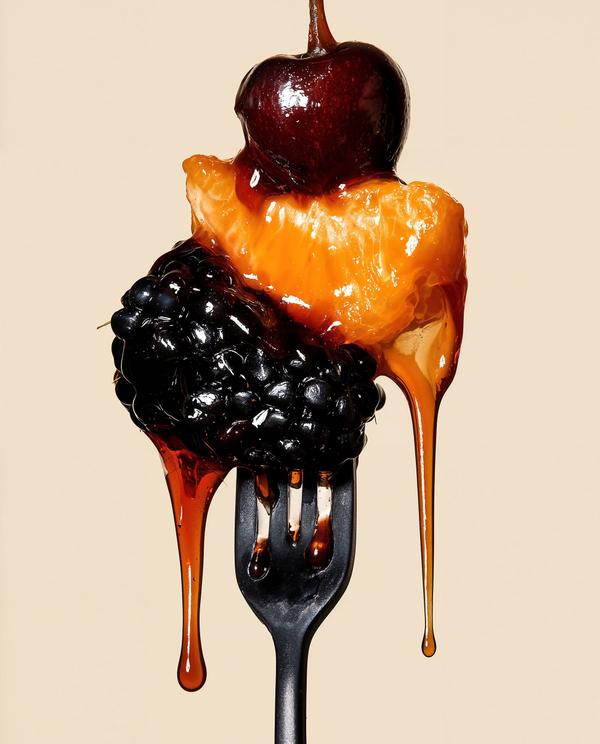
This looks like dessert dressed for a red carpet event and then immediately melted under the pressure.
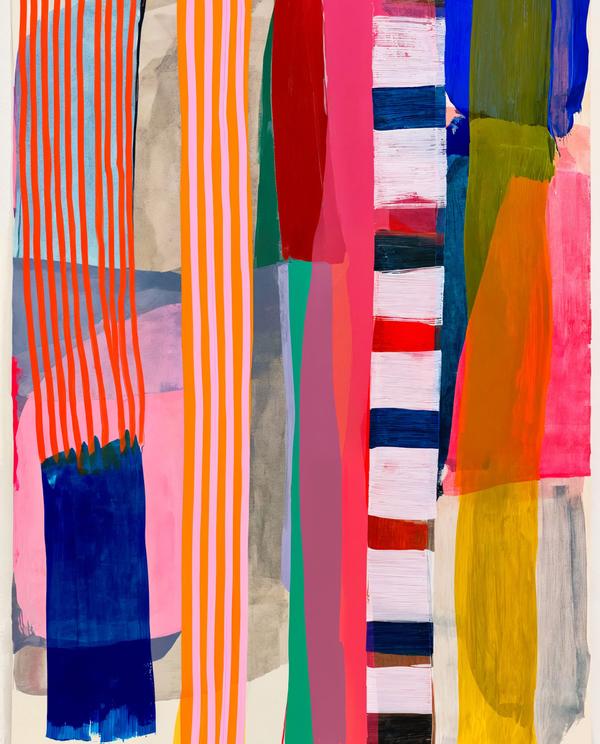
This painting looks like a jazz band got loose in a ribbon store.
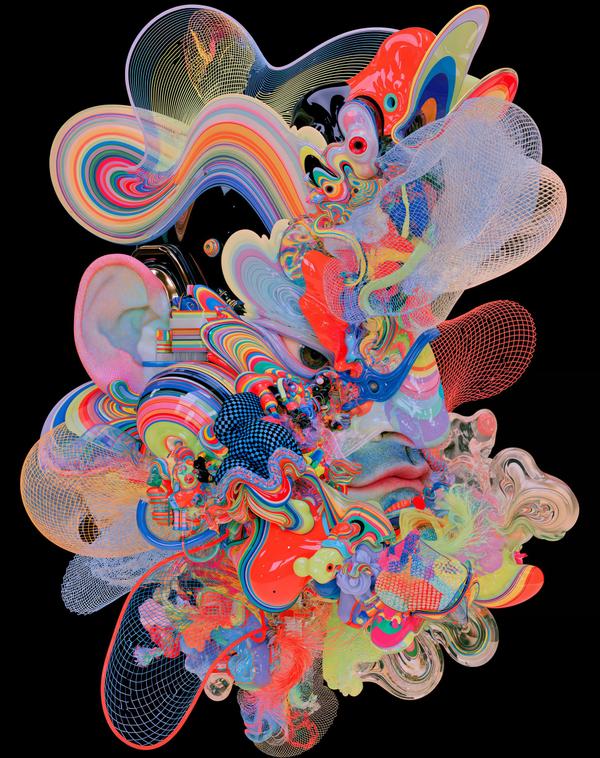
This looks like a piñata exploded inside a supercomputer.
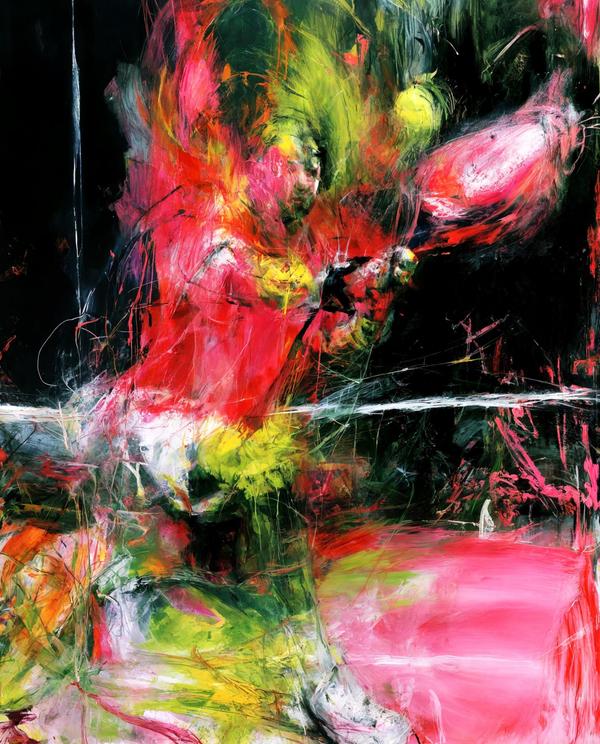
Turns out not playing padel is a terrible way to realize how much you like playing padel.
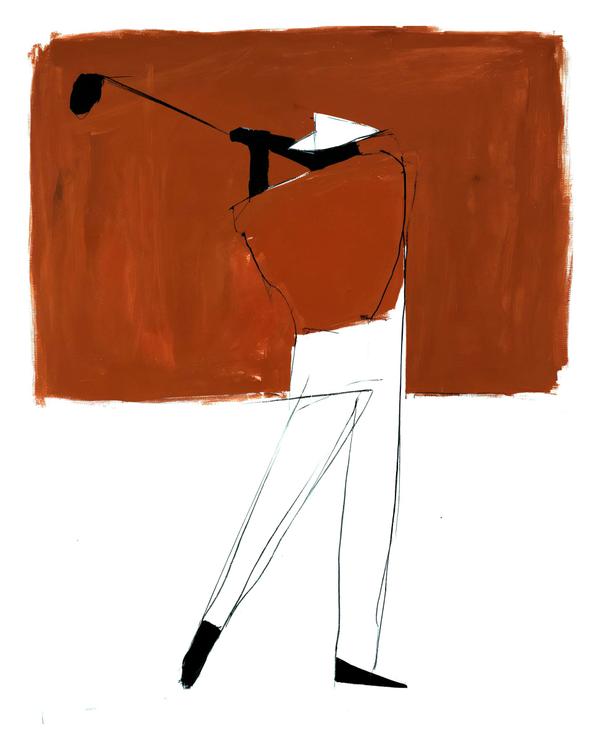
Golf is already difficult enough without trying to play it using only seven lines.
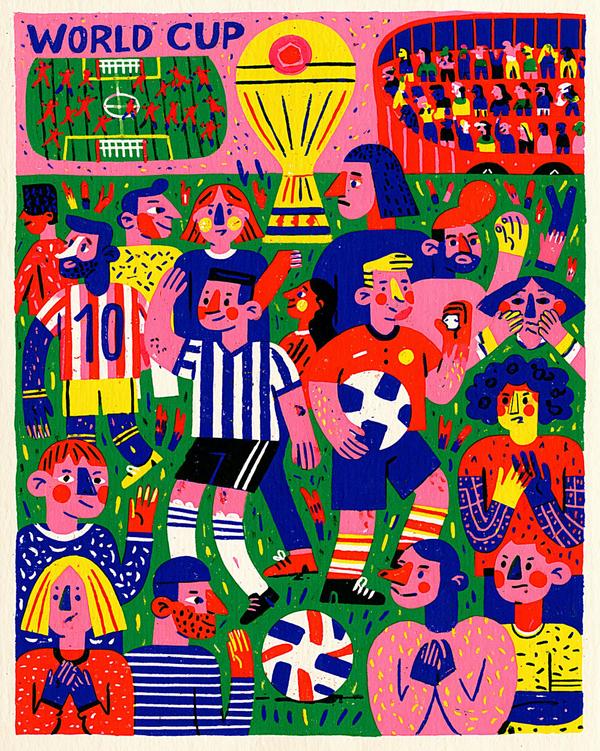
The World Cup: where grown adults willingly schedule emotional damage.
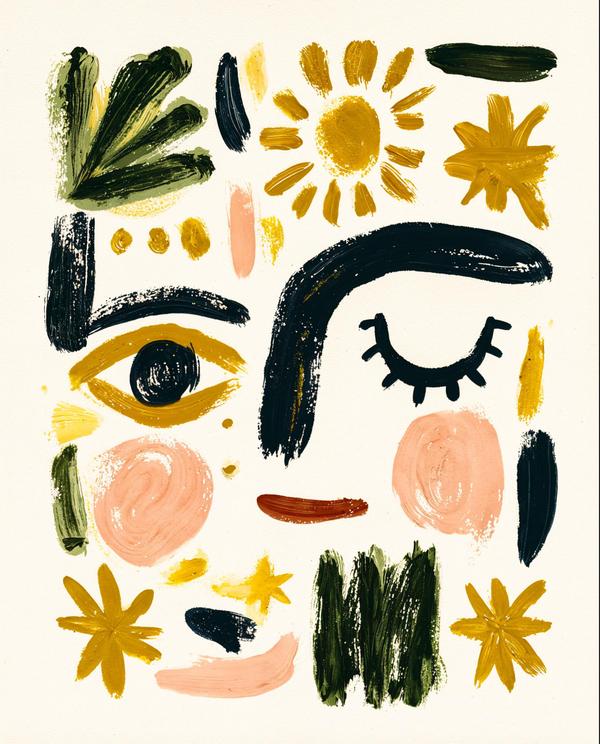
This poster tried to say “A Sky Full of Stars” and accidentally became one.
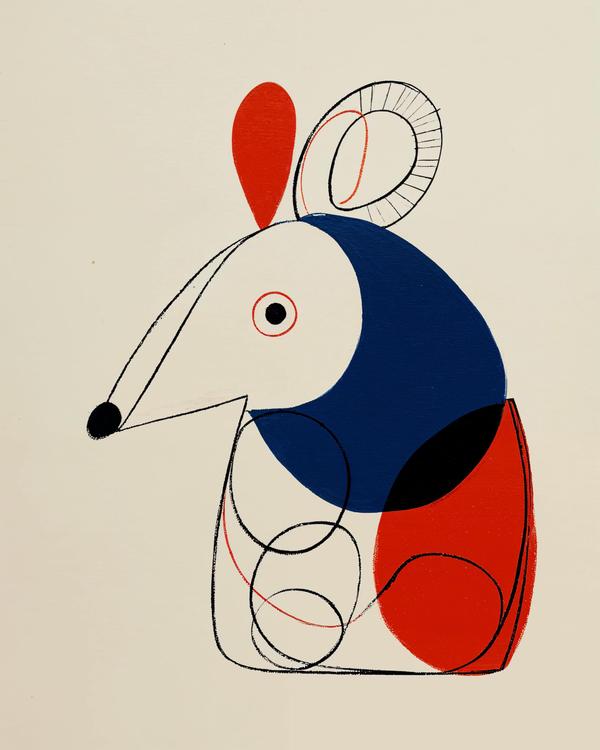
Florida handed me an armadillo, and my brain turned it into a tiny Bauhaus parade float.
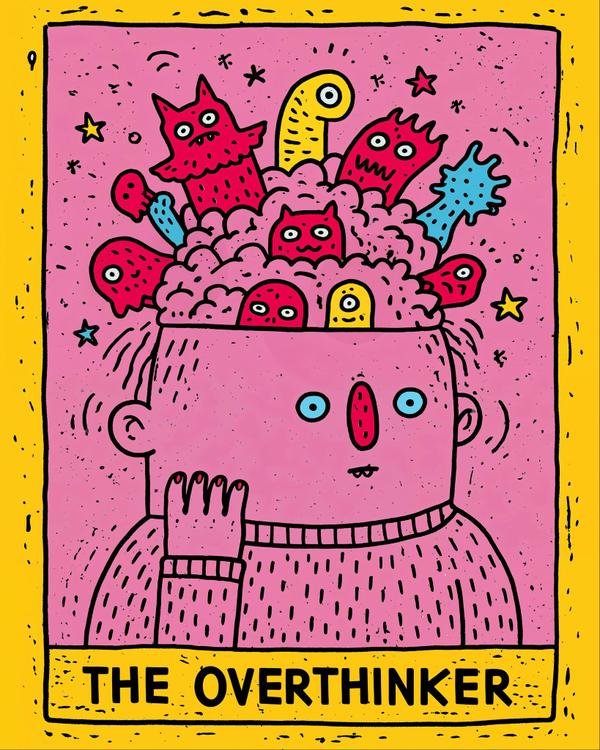
Pink clouds, bug-eyed creatures, and one very calm little face trying to pretend everything is under control. In other words: Tuesday.
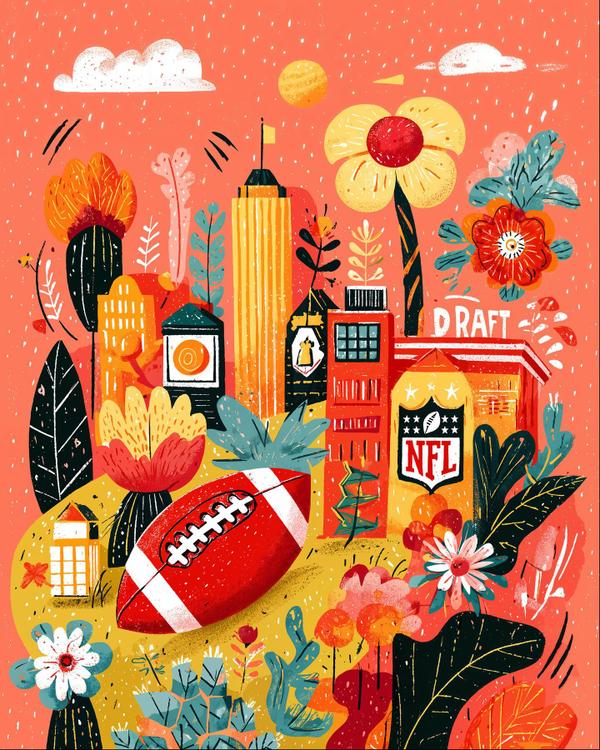
A football the size of a compact car, an NFL shield wearing its Sunday best, and downtown Pittsburgh sprouting flowers like the city just got watered with nacho cheese.
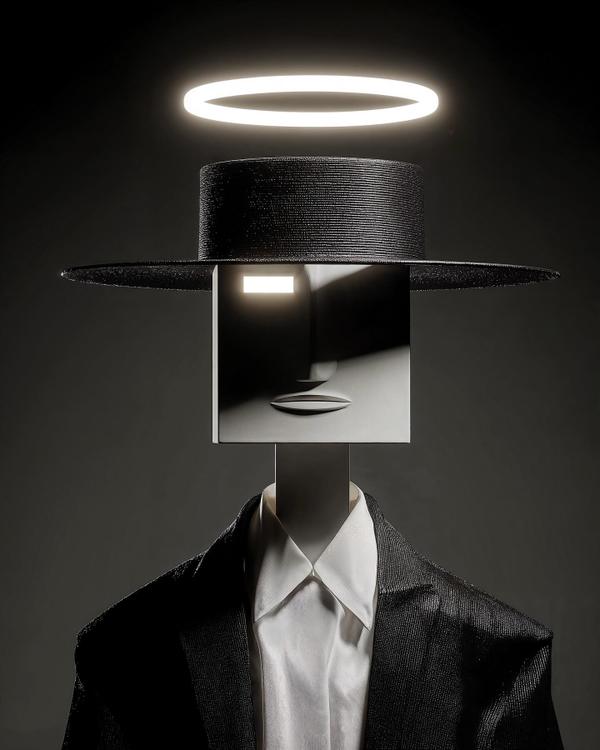
This feels like an angel took a senior leadership role and immediately became impossible to schedule.
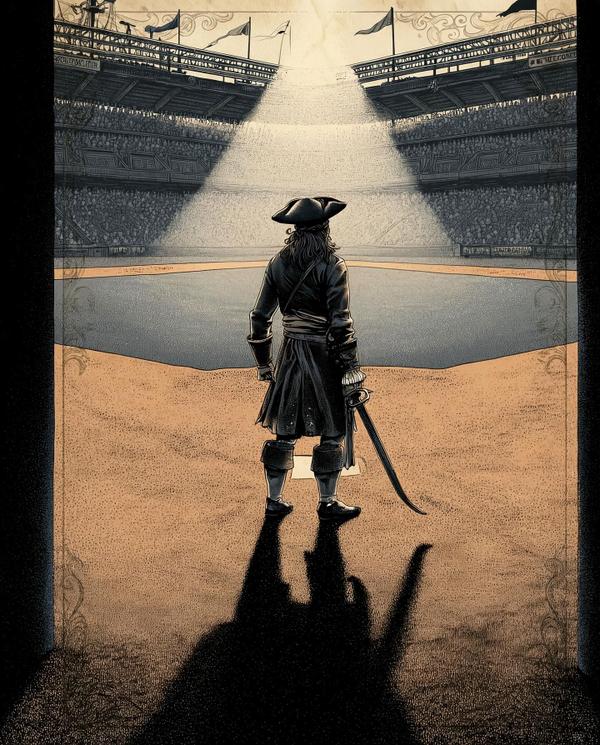
To celebrate the red-hot start from the Pittsburgh Pirates, this one feels right on time. As of April 16, the Bucs are 11–7 and sitting right in the thick of the NL Central race, with national outlets already calling attention to their surge.
Like if a wine label had one great night, found a fat black marker, and made itself a self-portrait.
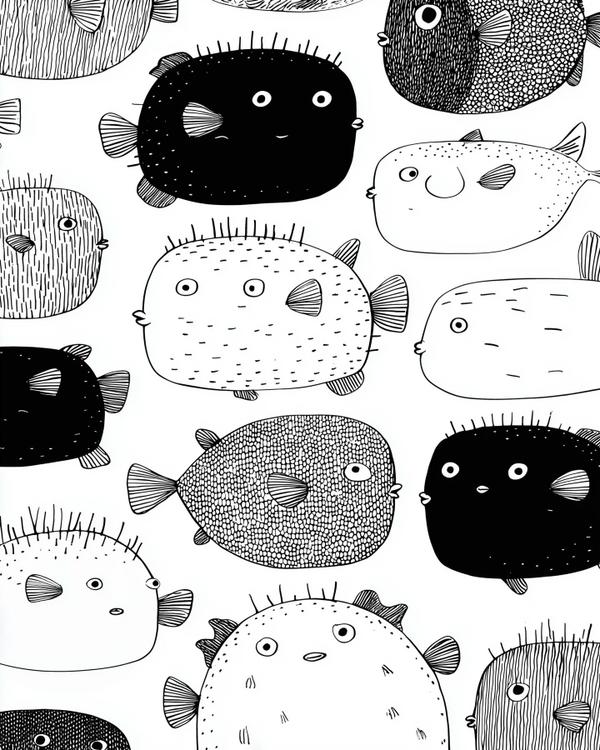
Like if a kindergarten roll call got art-directed by a Japanese printmaker.
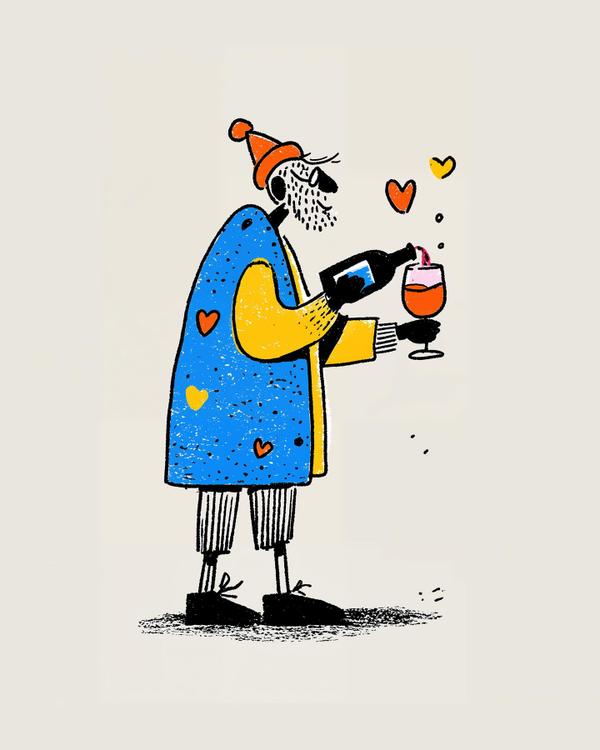
Like if joy got dressed in thrift-store chic and decided the pour count was a personal suggestion.
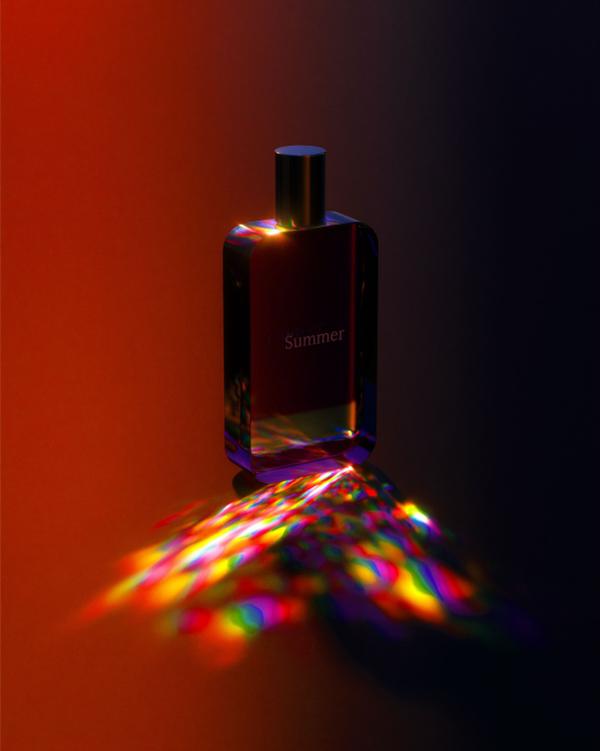
Summer: the season where your personality needs backup.
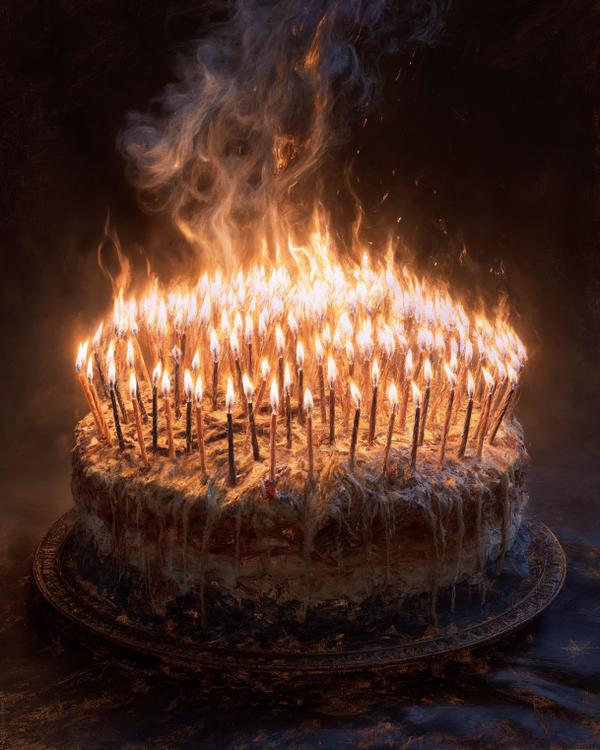
America turns 250 today, and naturally we celebrated by putting enough open flame on a cake to make the Founding Fathers ask if anyone checked the sprinkler system.
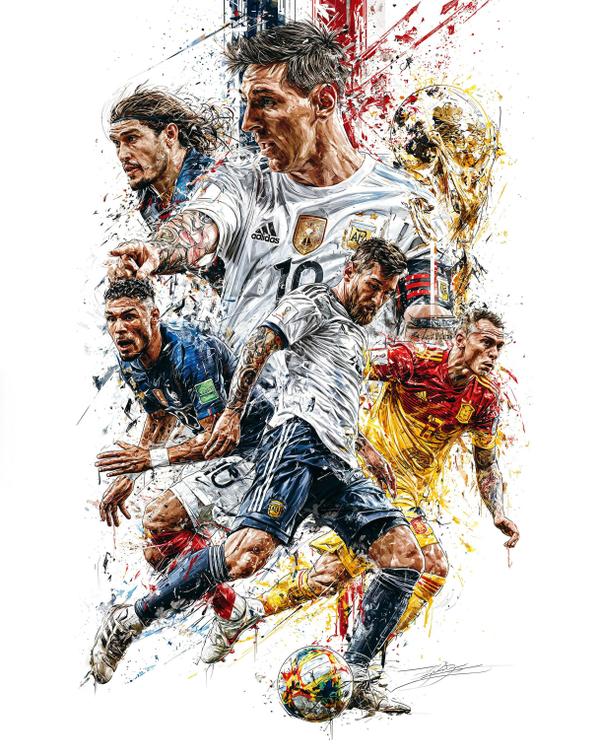
Soccer: ninety minutes of elegance interrupted by several attempted murders.
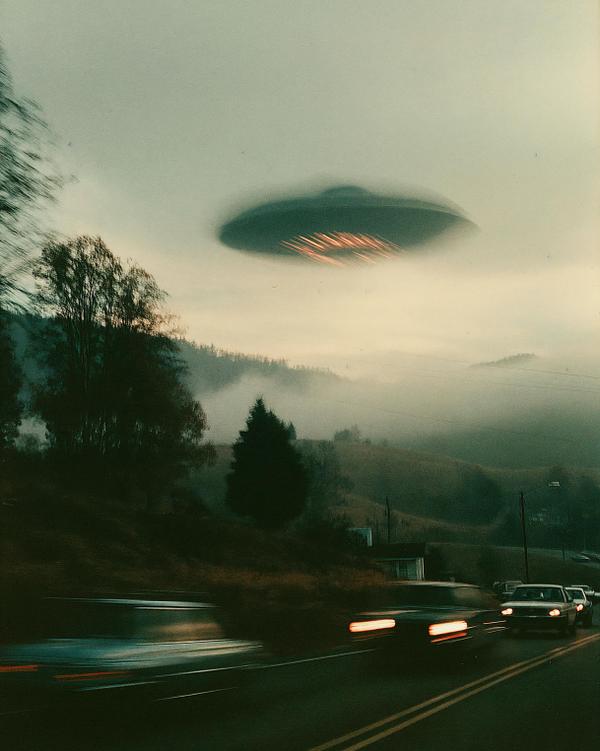
Nothing says “national security” like a glowing hubcap over Route 30.
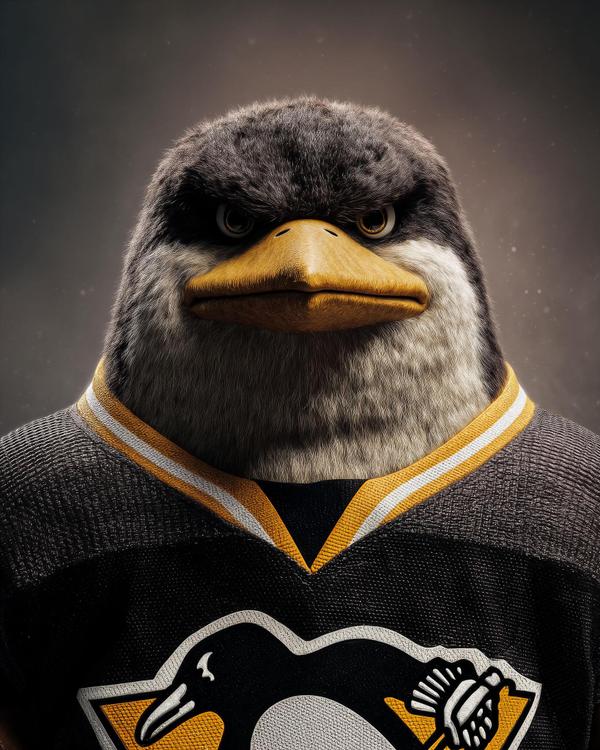
A penguin with a prizefighter’s neck, a stare borrowed from a tax auditor, and a black-and-gold sweater that looks like it was stitched during a power play. This bird is not here for your charming little bedtime story about momentum. This bird has already eaten momentum.

Hot pink robes. Blue-tinted sunglasses. Dyed Easter eggs scattered like confetti after brunch got unexpectedly theological.
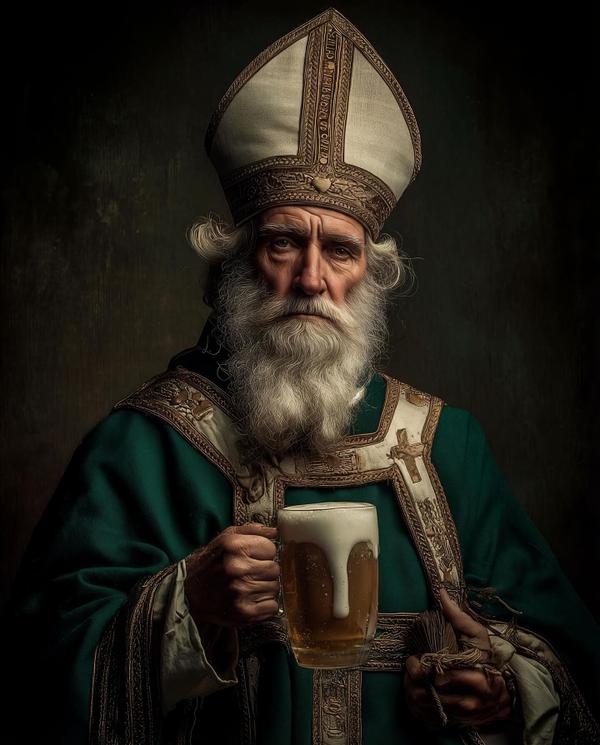
(An extra one today, because I forgot it was St. Patrick’s Day.)
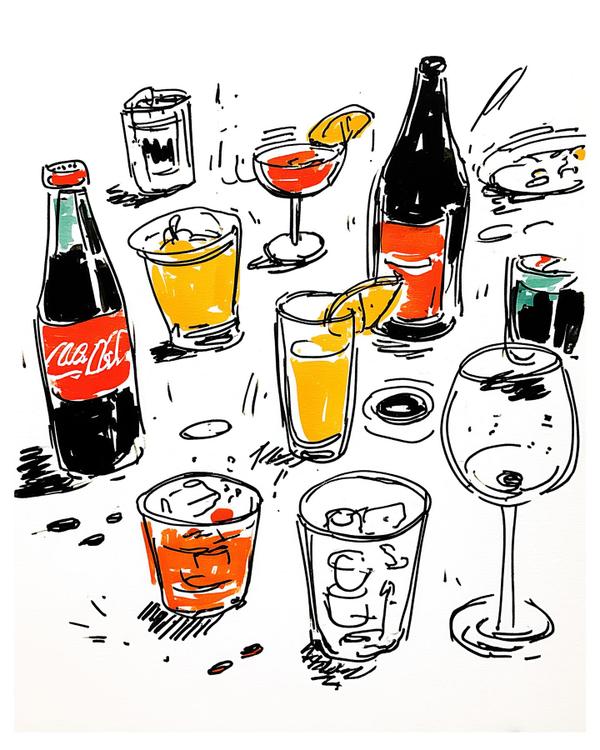
A Coca-Cola bottle screaming red like it’s wearing lipstick. Loose black ink lines that wobble on purpose, like the table is still moving. And citrus wedges glowing orange-yellow, doing the most in the smallest space.
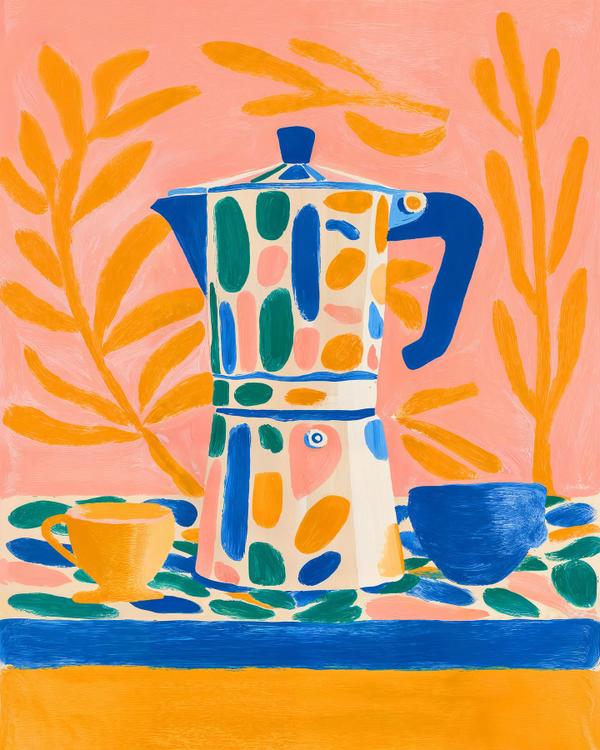
Peach-pink air. Cobalt handle that looks like it could bench-press me. A polka-dotted moka pot wearing brushy candy-colored patches like a Sunday outfit.
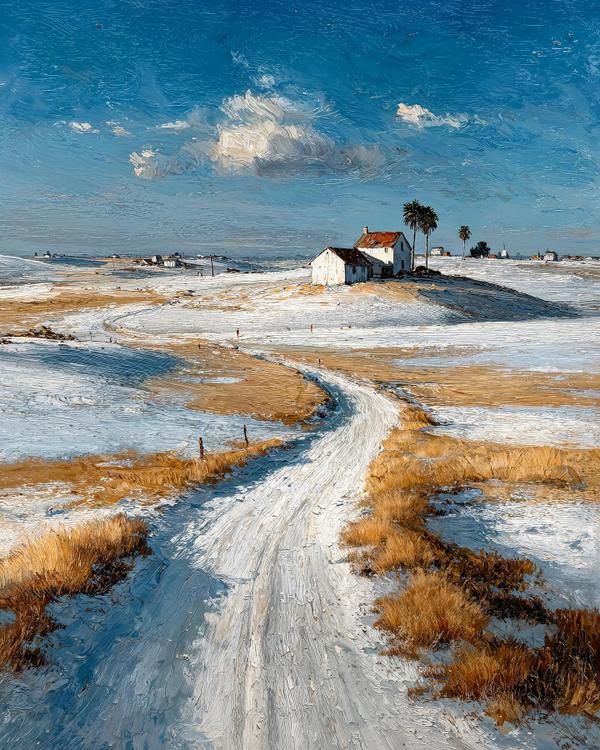
A snow-white road curling like a quiet thought. A little farmhouse with a rust-red roof. And—because Miami happened—two palm trees just hanging out like they took a wrong turn at Fort Lauderdale.
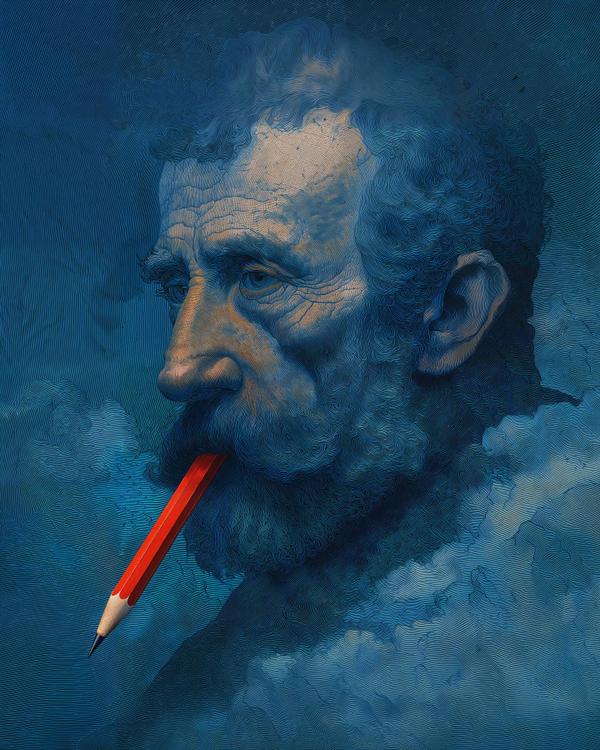
Blue-on-blue everything. An old man’s profile carved in tight, curly linework. And that one ridiculous, perfect interruption: a bright red pencil clenched like a cigar.
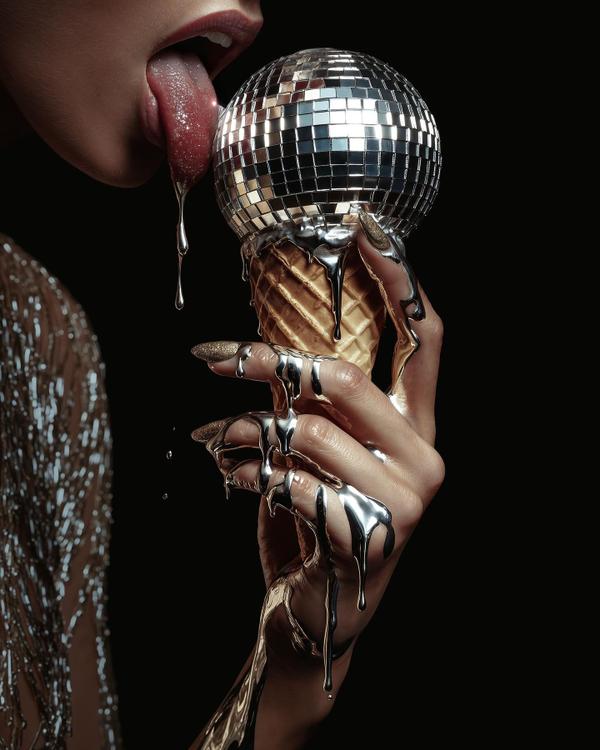
A mirrored disco-ball scoop. Chrome syrup sliding down gold-glitter nails. A glossy tongue catching the drip in a blackout spotlight. Twist: it’s an ice cream cone staged like New Year’s Eve, because apparently the only resolution we’re keeping is “more sparkle, less shame.”
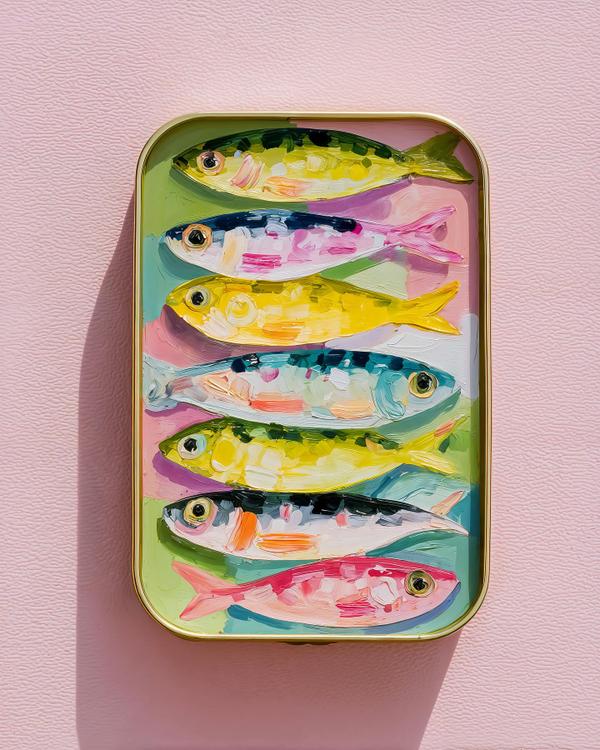
A soft pink, pebbled background. A gold-rimmed tin like a tiny altar. Seven fish stacked neatly, painted in thick candy-bright strokes… lemon yellow, seafoam teal, hot pink.
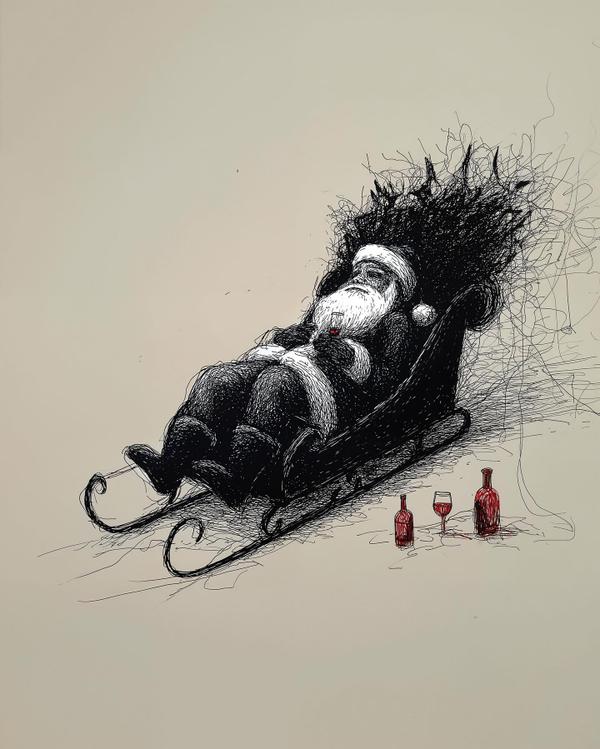
Black ink scribbles like a storm cloud. A slumped Santa melted into his own sled. Three tiny red witnesses: two bottles and a brave little wine glass.
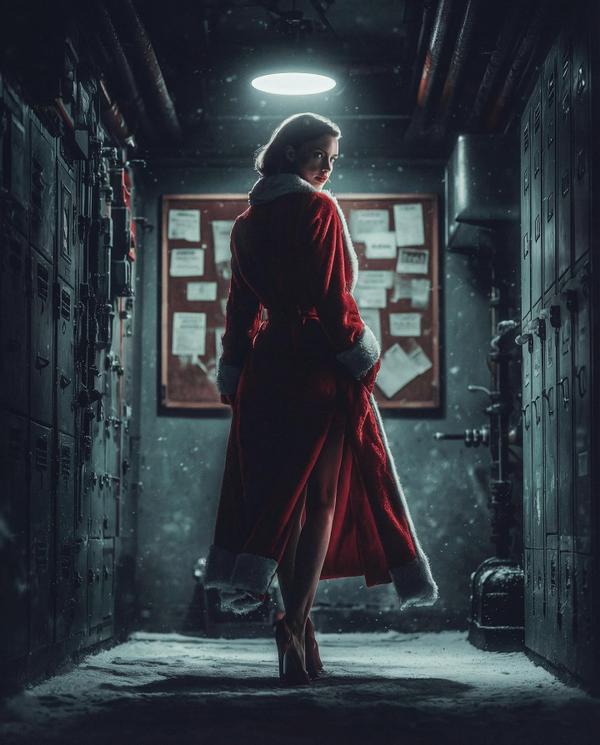
A look over the shoulder that says, “Yeah… about that story you’ve been telling your kids.”
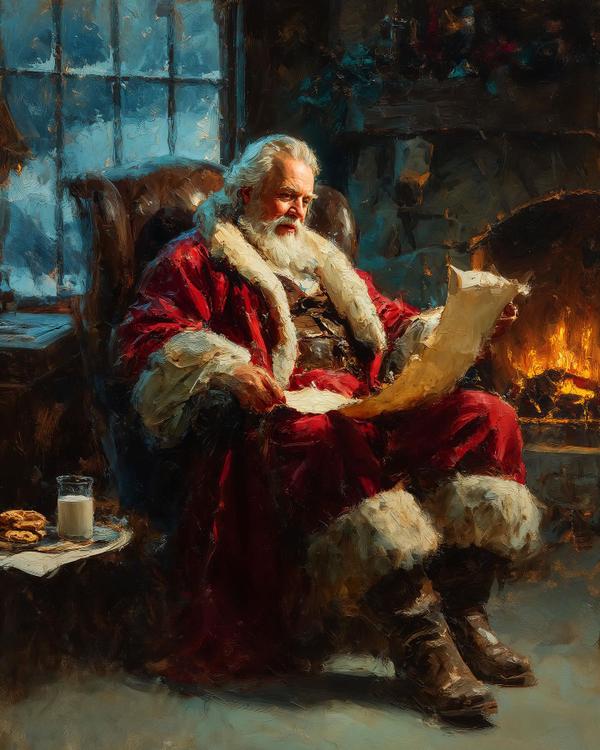
Cobalt window light on the left. A fireplace throwing orange heat on the right. Thick, buttery brushstrokes carving that red coat like velvet you can feel.
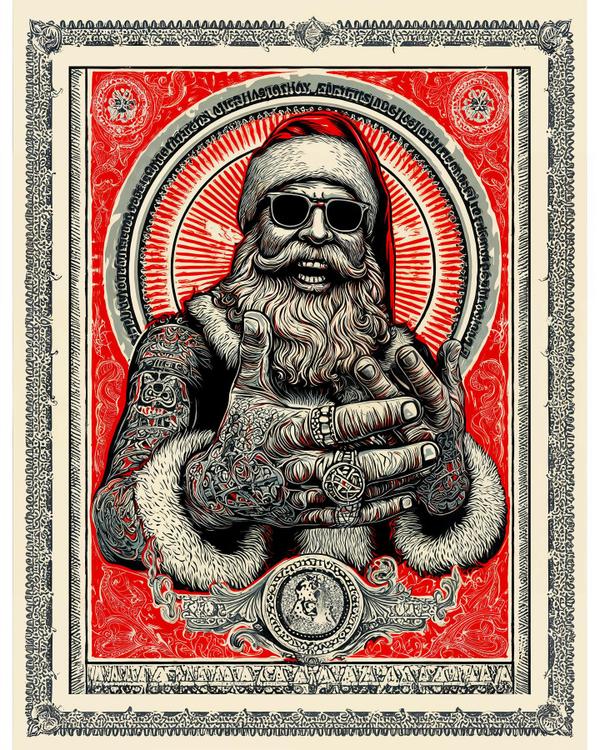
Blood-red halo rays. Black-and-cream linework so sharp it could shave. Santa in sunglasses, stacked rings, and tattoo sleeves that look like an entire cathedral got inked onto his arms.
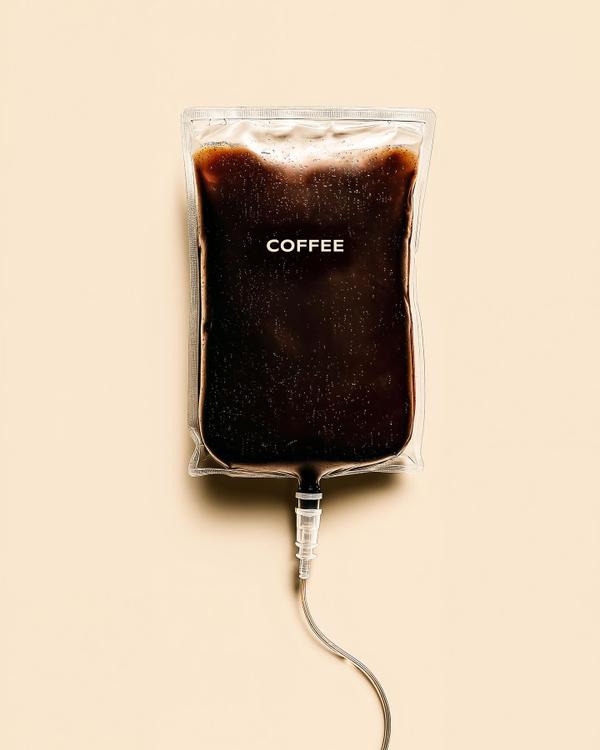
Pale peach background. A medical IV bag swollen with inky brown liquid. Tiny bubbles fizzing like your nervous system at 7:12 a.m.
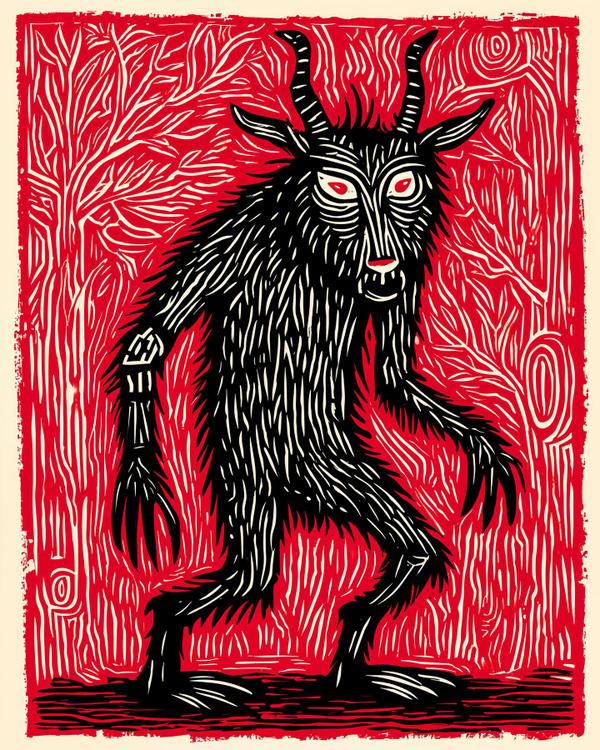
Candy-apple red trees carved into tight little spirals. A shaggy black Krampus with stovepipe horns. Eyes like hot coals that definitely aren’t here to “talk.”
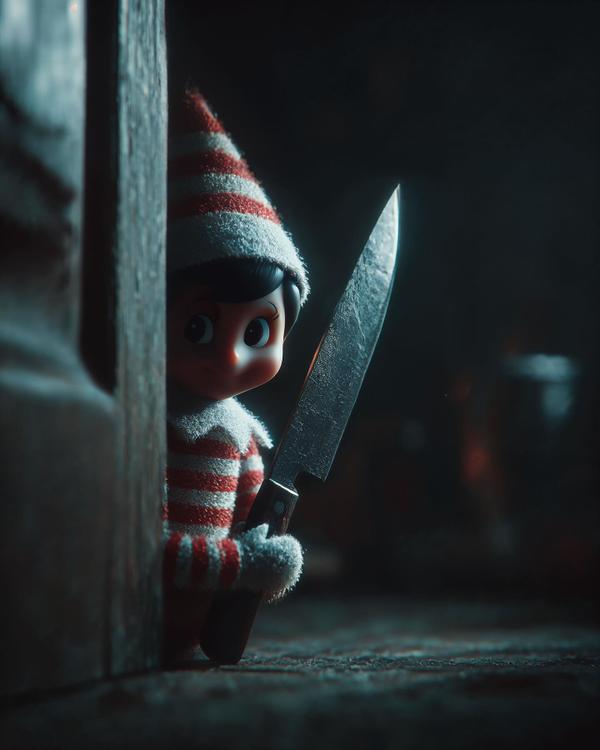
Elf on the Shelf didn’t become a tradition.
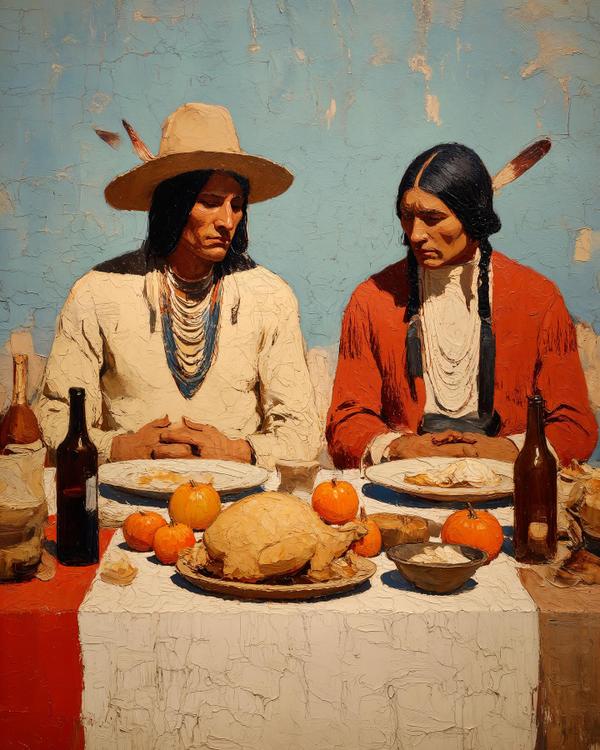
Two men who look like they’ve just realized the turkey is both overcooked and symbolic? Yeah… welcome to Everyday Museum™.
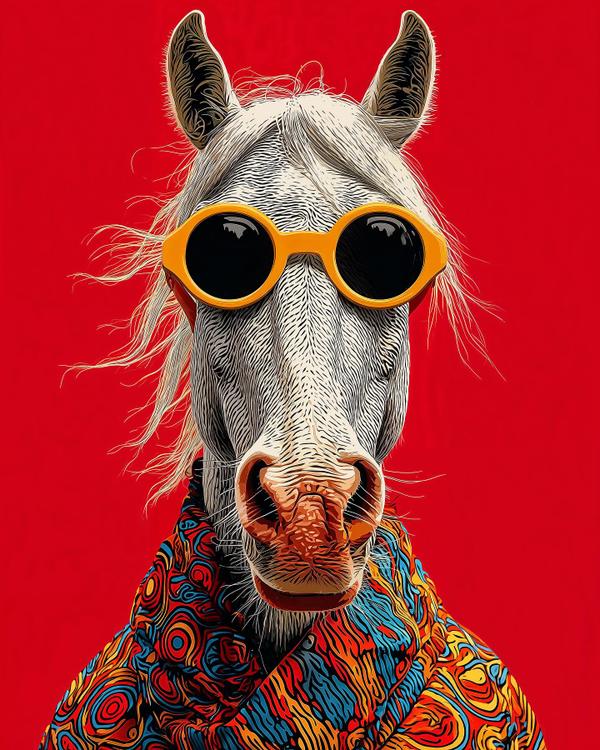
Front and center, we get a white horse in bold yellow sunglasses, staring us down like it’s late for a gallery opening and a pool party. The robe is pure chaos in the best way: swirling reds, blues, and oranges that feel part lava, part vintage comic book, all attitude. Behind it, that flat red background is so intense it practically hums.
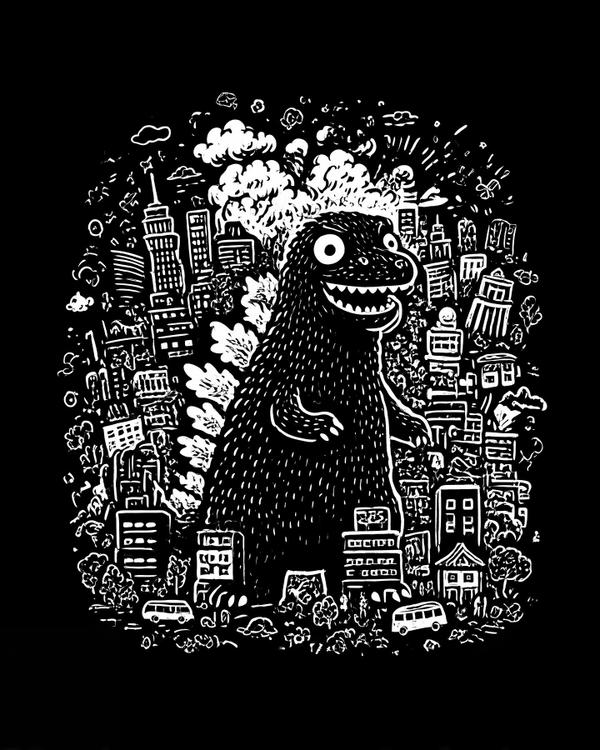
At first glance, this Godzilla looks like he just left a kid’s birthday party, not a city in flames. That goofy grin? Pure Saturday-morning-cartoon energy. But look closer—the skyline’s on fire, buses are overturned, and yet… everyone seems to be in on the joke. It’s destruction as doodle, chaos with charm.
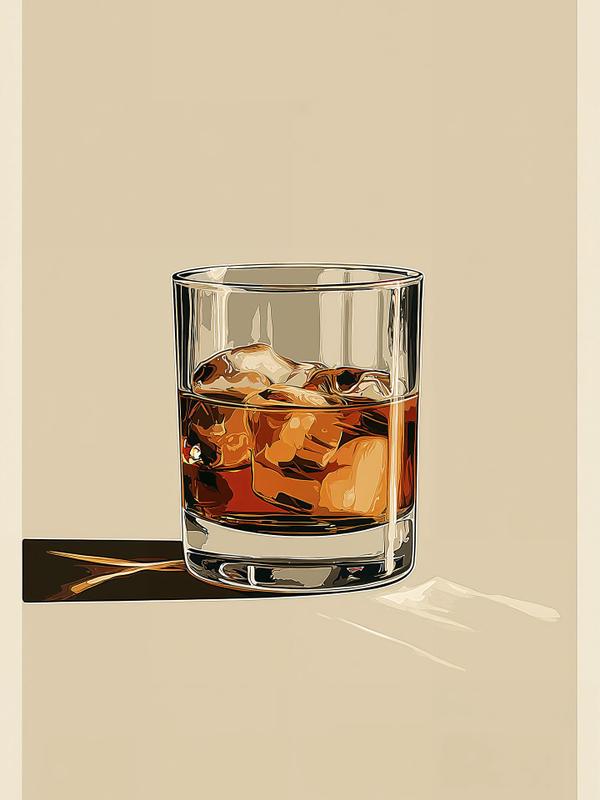
This piece is vintage cool meets modern calm—a zen master disguised as a cocktail poster. The warm amber glow of the bourbon, the crisp geometry of the glass, the minimalist background that whispers instead of shouts—it’s the visual equivalent of smooth jazz at golden hour.
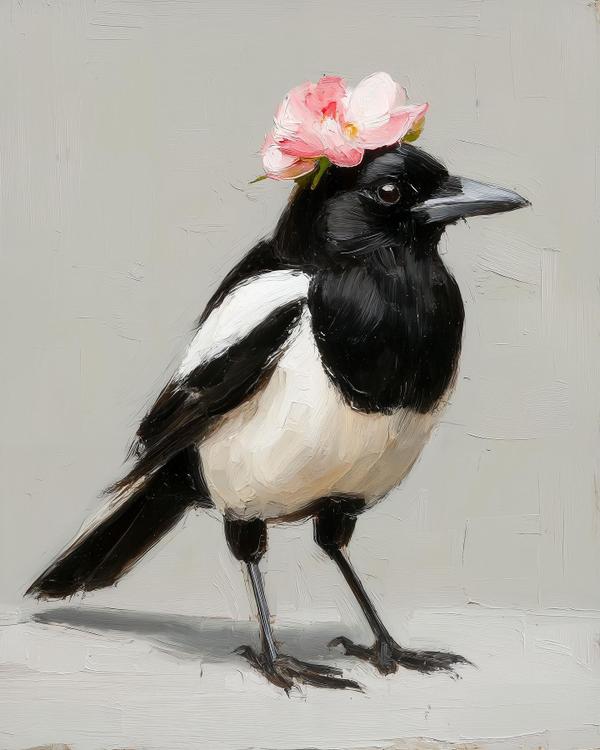
They say confidence is wearing something that makes you forget anyone’s watching. This magpie didn’t just get the memo—it delivered it in cursive on heavy linen paper.
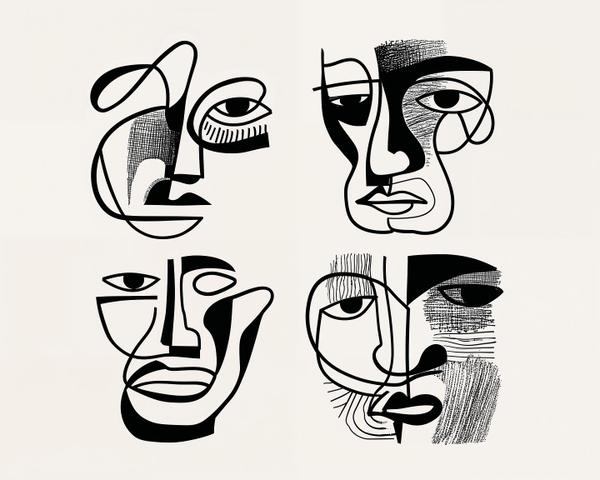
These minimalist mugs look like they were drawn in a single breath—speed-dating for lines.
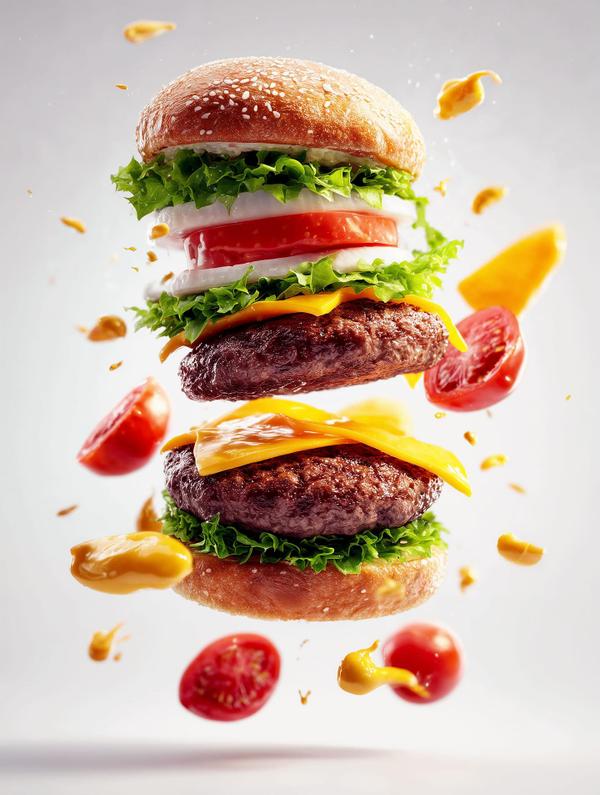
Ever wondered what it looks like when gravity takes a lunch break? This image captures a cheeseburger mid-explosion—like Jackson Pollock went to culinary school and Andy Warhol decided soup cans were too tame, so he launched into sesame buns. The style here sits somewhere between Pop Art’s obsession with everyday icons (think Warhol’s soup, Oldenburg’s giant soft sculptures of cheeseburgers) and the hyper-realistic drama of food photography, dialed up to surrealist levels. It’s both too real and too unreal—a delicious contradiction. Notice how each ingredient levitates in perfect choreography: glossy tomato slices spinning like red satellites, lettuce ruffles crisp as Baroque drapery, cheese mid-melt in golden ribbons of slow-motion glory. Even the mustard looks like it’s auditioning for Cirque du Soleil. This isn’t just about hunger—it’s about spectacle. The floating layers echo Renaissance painters experimenting with perspective, but instead of Madonnas and angels, we get patties and produce. It’s everyday life turned into cosmic theater. Fun fact to drop at your next cookout: the hamburger, as we know it, was popularized at the 1904 St. Louis World’s Fair—the same fair that introduced the ice cream cone. That means the modern burger and cone are basically foodie siblings, born in the same summer of innovation. So next time your sandwich falls apart in your hands, just tell your friends it’s not messy—it’s performance art.
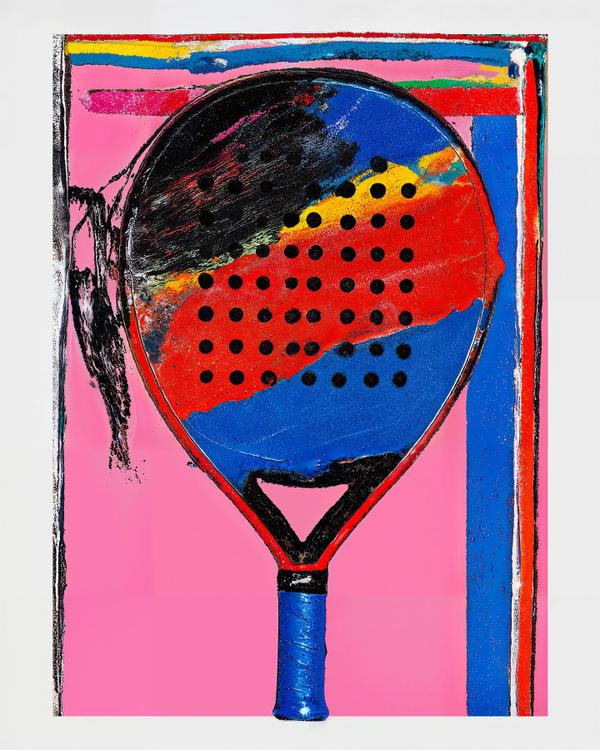
They say art imitates life — and this one looks like Basquiat just won a doubles match against Warhol. This electric paddle portrait practically hums with energy — a mash-up of Pop Art’s bold color blocking and Neo-Expressionist chaos. The hot pink backdrop screams Andy Warhol’s palette, while those jagged paint streaks and unapologetic texture nod to Jean-Michel Basquiat and David Hockney’s recent iPad brush experiments. It’s a Padel paddle reimagined as attitude. Look closer and the geometry’s doing the heavy lifting: circles of paddle holes become rhythm — like Lichtenstein’s Ben-Day dots escaped their comic panels to play a match of their own. The strong verticals and diagonals slice through the composition, echoing the lines of a Padel court — proof that even abstraction can sweat. Color theory lesson time: red + blue here isn’t just patriotic — it’s psychological. Red accelerates your pulse (aggression, speed), while blue cools it (precision, focus). Together, they mirror the sport itself — equal parts chaos and control. Fun fact: Padel is the fastest-growing sport in the world, born in Mexico, raised in Spain, and now invading every country club near you faster than pickleball can protest. The average rally lasts 9–12 seconds, which is about as long as it takes for someone to explain the rules and for you to pretend you get it. Padel: where the court is a canvas and every swing leaves a brushstroke of chaos.
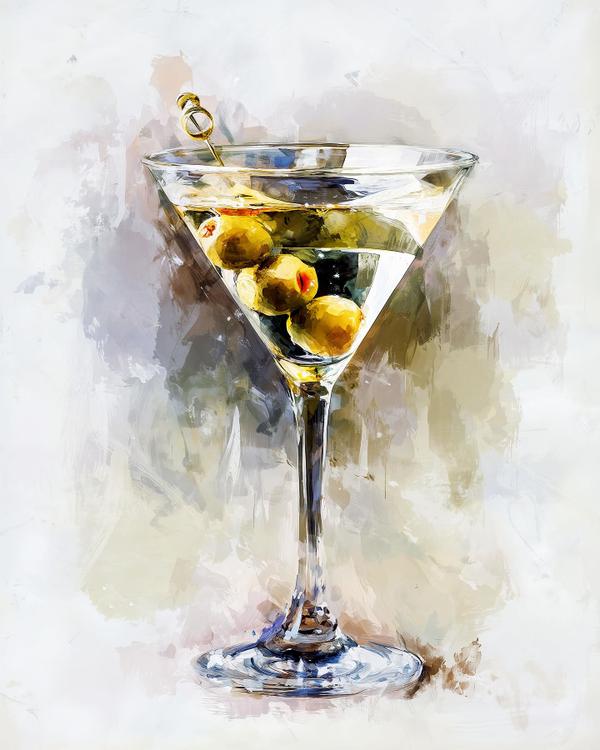
If James Bond ever took an art class, this would’ve been his final project. A martini so elegant it could hang in the Louvre and host happy hour at the same time. Let’s start with the obvious: this isn’t your typical cocktail pic. It’s a digital oil painting that struts somewhere between photorealism and impressionism—like if John Singer Sargent teamed up with David Hockney and said, “Let’s paint something classy enough for a tux, but loose enough for a tipsy brushstroke.” The glass catches light like a Renaissance halo, each reflection a masterclass in chiaroscuro—that centuries-old trick for making things pop off the canvas by playing darks against lights. Even the olives feel like mini-portraits: plump, self-important, and slightly smug, like they know they’re the real stars of this piece. Notice how the background melts into loose, dreamy brushwork—nothing literal, just color and suggestion. That’s straight from the Impressionist playbook: your eye does the work your brain thinks the artist already did. (Claude Monet would’ve totally approved… if he could see through the gin.) Art lesson in a sip: This piece shows how edges and abstraction can make realism more believable. The artist isn’t copying a photo—they’re translating light into emotion. It’s the same reason a slightly messy brushstroke can feel more alive than a perfect line. Fun fact: The martini glass was invented in the early 1900s not for style—but to keep drinks cold longer by minimizing the surface area your hand touches. Basically, it’s functional elegance. Form meeting function, or as artists call it, “composition.” So next time you see a cocktail, think of it as a miniature still life—one that says, cheers to balance, beauty, and a little bit of blur around the edges.
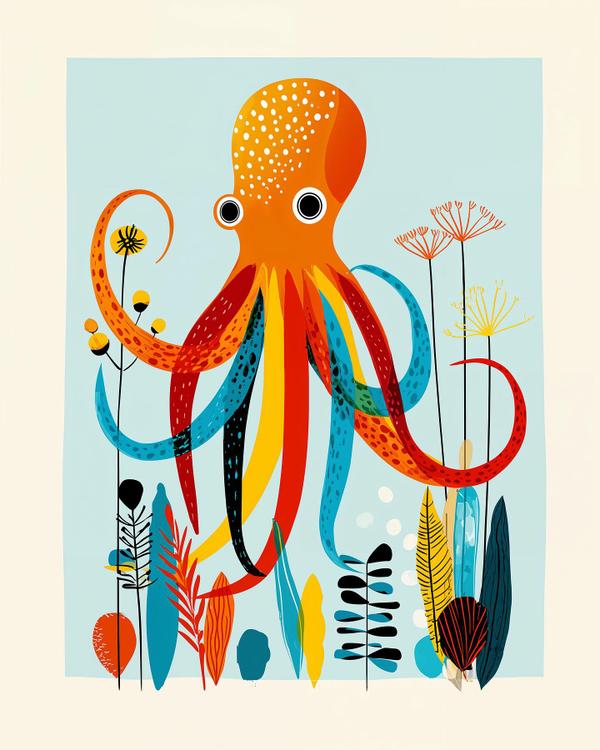
Here we’ve got an octopus with the confidence of a fashion influencer and the color coordination of a mid-century modern design catalog. The bold orange head with white polka-dots? Straight out of Alexander Girard’s textile playbook. The flat planes of teal, red, and golden yellow? Pure Henri Matisse in his late cut-out era, when scissors became his paintbrush. And those oversized cartoon eyes? A wink to the graphic pop sensibility of artists like Keith Haring—where personality and humor leap off the canvas. Notice how the background plants aren’t realistic seaweed at all, but rather botanical doodles reminiscent of Scandinavian modern printmakers. Think Marimekko or mid-century wallpaper. This trick—flattening nature into decorative, stylized motifs—turns biology into pure pattern. Fun fact: Octopuses actually are masters of pattern. Their skin can shift color and texture faster than you can say “camouflage couture.” That means this cheerful fellow could, in real life, go from Marimekko chic to full-on “can’t find me in the kelp” in less than a second. Imagine if your mood ring worked like that. So, what’s the takeaway? This piece isn’t just playful—it’s a mashup of modernist flat color theory, pop art humor, and natural wonder. It proves art doesn’t have to choose between cute and clever.
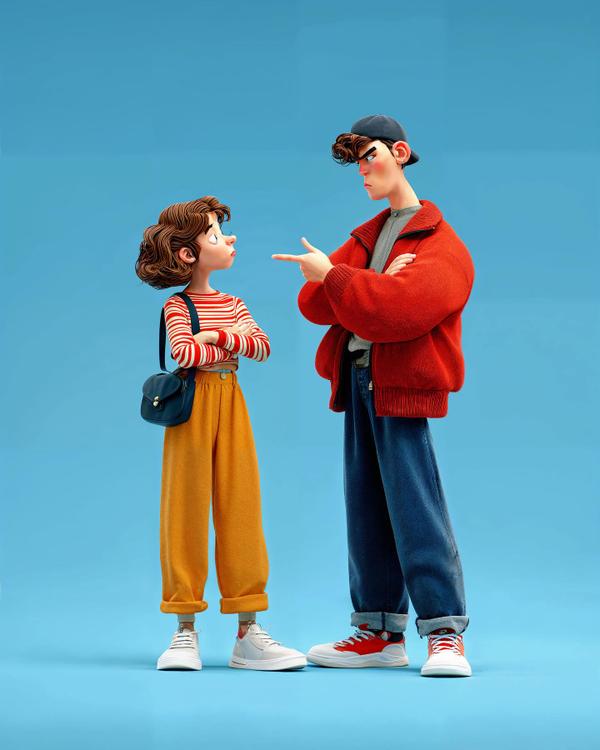
Everyday Museum™ has a fun goal: let’s get a new word into the dictionary. I have a teenager and I’ve observed a very specific phenomenon, so naturally I named it. This is “TEENSPLAINING”. A flat backdrop. A mom in a red-and-white striped top, arms folded, wearing the calm face of someone who has paid bills before. A teen in an oversized red jacket, arms crossed, finger out, delivering “The Explanation” like it’s a court ruling. Not arguing. Not debating. Presenting. With absolute certainty and about 25% knowledge. It’s the confidence-to-information ratio that makes it art. We already have “mansplaining.” Useful word. But this is its younger cousin: same posture, new energy. The teen is running a press conference with faulty information. The mom isn’t confused. She’s just doing silent math on how much peace costs today. Influence-wise, this sits in that clean, animated character lane, but the core move is classic caricature. One exaggerated gesture becomes a whole personality. Finger point. Chin tilt. The “I read half a headline, so I’m basically a professor” stance. Mini art lesson: silhouette tells the story. Blur this image and you still know who’s “in charge” emotionally. Bigger shape, wider stance, forward gesture equals asserted authority. Closed posture, folded arms equals boundary. Artists use body language like a shortcut to plot. Fast. Funny. Uncomfortably accurate. Fun fact for dinner: dictionaries don’t add words because they’re clever. They add them because people keep using them in public life and print, over and over, until the meaning is undeniable. So yes, the goal here is simple: get “teensplaining” into the group chat, the PTA meeting, the workplace Slack, and the holiday table. Widespread adoption first. Dictionary glory second.
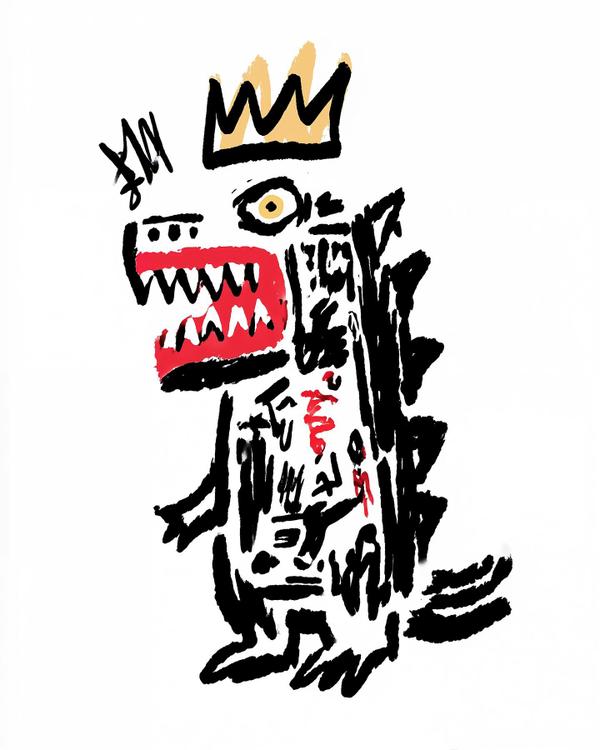
This style is pure Neo-Expressionism—loud, raw, emotional, and messy on purpose. And at its beating heart is Jean-Michel Basquiat, the street-savant-turned-art-world-icon who made chaos look like scripture. His visual language mixed graffiti grit with art history name-drops, anatomy sketches, and social commentary. The crown? Basquiat’s signature move. He used it to knight everyone from jazz musicians to boxers to himself. (Fun fact: he once called his crown “three-point perspective for a king.”) What makes this tick isn’t polish—it’s urgency. The scrawled numbers and letters feel like notes in a hip-hop freestyle: half-coded, half-confessional. The dino silhouette gives it mythic punch, while the crown shouts, “Pay attention. This matters.” And here’s the kicker: Basquiat started selling painted postcards on the streets of New York before his canvases hit seven figures. He turned what the elite dismissed as scribbles into cultural thunder. This monster doesn’t just roar—it rewrites the rules of who gets to wear the crown.
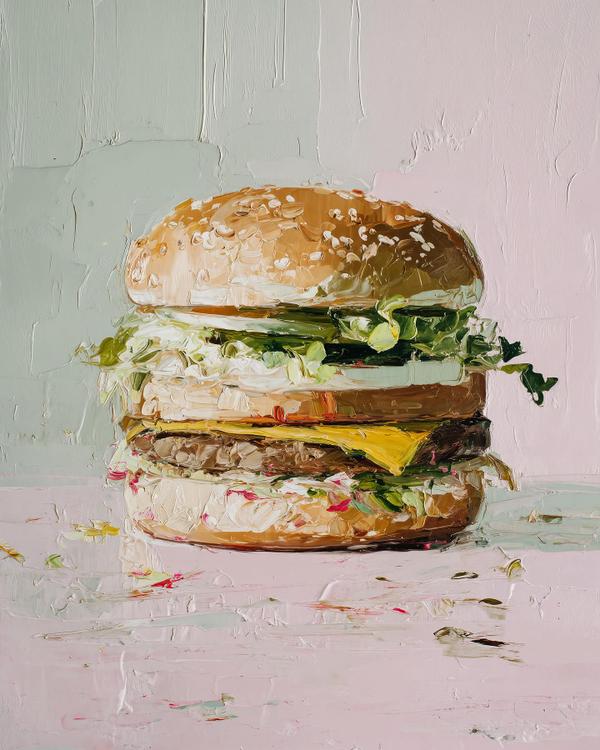
Two days ago it was fries and Coke. Today, we’ve leveled up to the main course: the Big Mac, painted so thick with impasto it looks like you could sink your teeth straight into the canvas. If the fries were the appetizer, this is the cathedral of comfort food — stacked high in sesame-seed glory. Art Style & Influences: This piece channels Impasto Realism — paint so textured it’s practically sculpted. Think Frank Auerbach or Leon Kossoff, artists who layered pigment until their subjects pulsed with life. Conceptually, it nods to Claes Oldenburg, the Pop Art legend who made monumental burgers and fries out of vinyl and foam. Oldenburg’s sculptures turned the ordinary into monuments, and this painting does the same with oil and brush. Concept Breakdown: Still lifes once flaunted oysters, silver goblets, and exotic fruit to show wealth. But what defines us now isn’t rare imports — it’s the global accessibility of the Big Mac. Cheap, familiar, everywhere. It’s not luxury, it’s ubiquity. And ubiquity, in a way, is its own kind of power. Fun Facts to Drop in Conversation: * If you stacked every Big Mac sold annually, they’d wrap around the Earth more than 10 times. * The Big Mac Index, launched by The Economist in 1986, measures currency strength worldwide using this burger as the benchmark. * Claes Oldenburg once said his giant food sculptures were about “making the everyday monumental.” A Big Mac in thick paint? Same vibe, different medium.
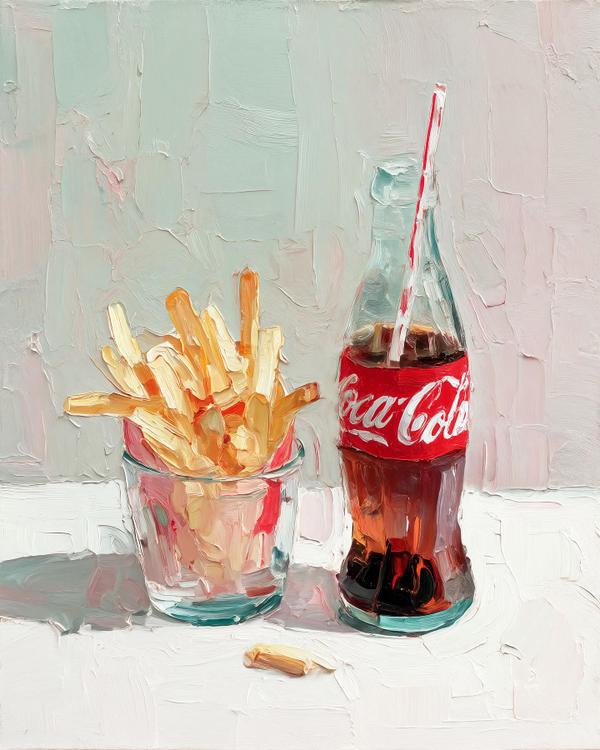
Let’s be honest — if the Old Masters had access to McDonald’s drive-thru, we’d probably have a few Rembrandts of Big Macs by now. What you’re looking at here is a still life that swaps grapes and goblets for fries and Coke, proving once and for all that fast food is the new fruit bowl. Art Style & Influences: This leans into contemporary realism with a pop culture twist. The brushstrokes are thick, painterly, and unapologetically visible — echoing Wayne Thiebaud, the American artist famous for turning cakes, pies, and deli counters into dreamy icons of desire. You can also spot a wink at Pop Art and Andy Warhol, who famously silkscreened Campbell’s soup cans and Coca-Cola bottles into high art. Concept Breakdown: Still lifes have always been about showing off the stuff that defines us. In the 1600s, Dutch painters flexed with oysters, lemons, and fine crystal — symbols of wealth and indulgence. Today? It’s the humble fries and Coke: cheap, universal, instantly recognizable. In other words, the real “taste of the times.” Fun Facts to Drop in Conversation: * Wayne Thiebaud once said he painted desserts not just because they were pretty, but because they represented “the joy and sadness of transience.” Fries, like life, don’t stay crispy forever. * Coca-Cola has been a favorite muse for artists: Warhol declared it “the great equalizer,” since presidents and regular folks drink the same Coke. * The term “vanitas” in still life painting comes from Latin, meaning “emptiness” or “futility.” Swap the skull for a soggy fry at the bottom of the bag, and honestly — it works. So next time you’re judging art history’s obsession with grapes, remember: your French fries might just be tomorrow’s masterpiece.
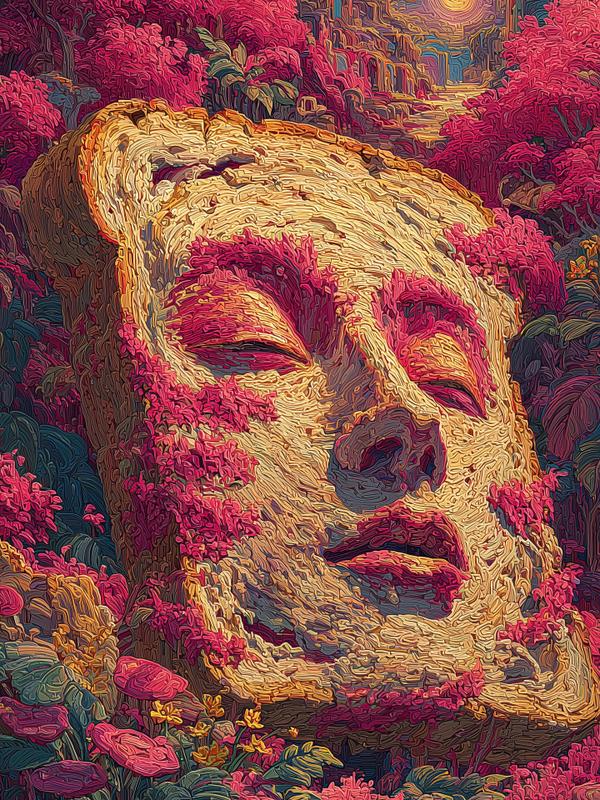
Behold: a slice of bread that has seen things. This isn’t your average sourdough—this is a craggy monument, a serene human face carved into carb form, resting in a dreamscape of magenta blooms under a syrupy golden sun. It’s part surrealism, part post-impressionist fantasy, and part “what if Salvador Dalí and Van Gogh hosted brunch in a parallel universe?”
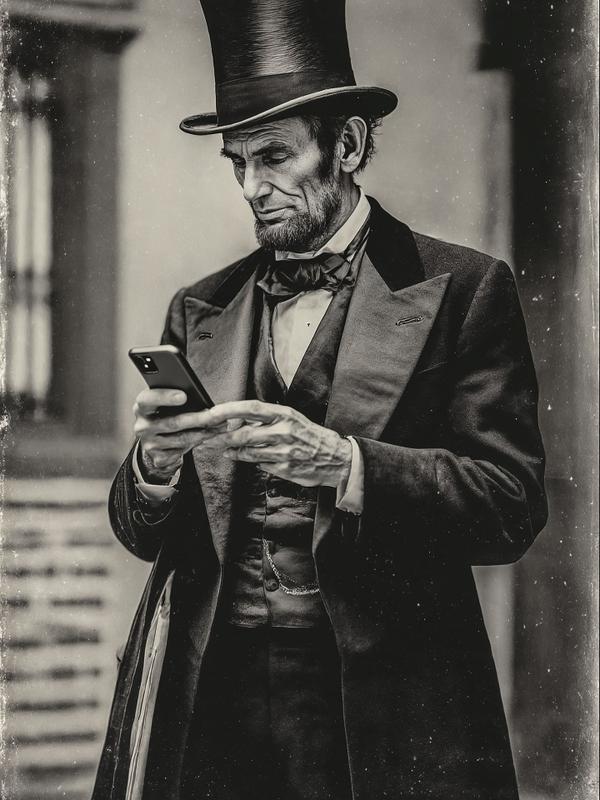
One moment he was freeing the slaves, the next—he’s knee-deep in a text thread titled “Founding Fathers ” with George Washington sending selfies and Ben Franklin overusing the crying-laugh emoji. From the look on his face, Lincoln’s clearly wondering: “Who keeps reacting ‘’ to every message? And why is John Adams sending memes at 3am?” The vintage sepia tone? Presidential. The thumb hover? Pure dad texting energy. The vibe? “I meant to Google train times and now I’m on TikTok watching raccoons bake cakes.” Fun fact: Lincoln loved telling jokes so much, his law partner once said, “If he couldn’t tell a story, he would die.” Safe to say, he’d thrive on Twitter… or get banned for roasting Jefferson.
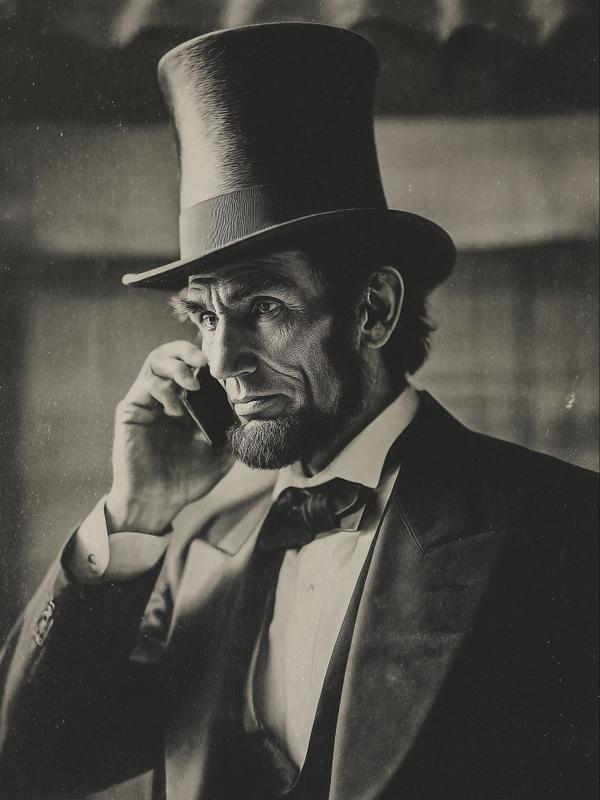
Here we have President Abraham Lincoln, mid-1860s, clearly handling a very important call. Probably something like: “No, Mary, I told you I was freeing the slaves, not freeing up my afternoon. I’ll be home after the Gettysburg thing!” Let’s be honest: even Abe needs a moment to step outside the Oval and take a call. Whether you’re the 16th president or just trying to explain to your mom why your Amazon package isn’t there yet, the struggle is eternal. This satirical piece mashes up historical portrait photography with absurd modern touches—think Ken Burns meets The Onion. It captures a universal truth: No one is safe from the modern inconvenience of being “on hold.” Fun facts to flex: * Lincoln was the first U.S. president to be photographed extensively—he basically walked so your selfie game could run. * He also had a famously high-pitched voice… so imagine this convo with Siri.
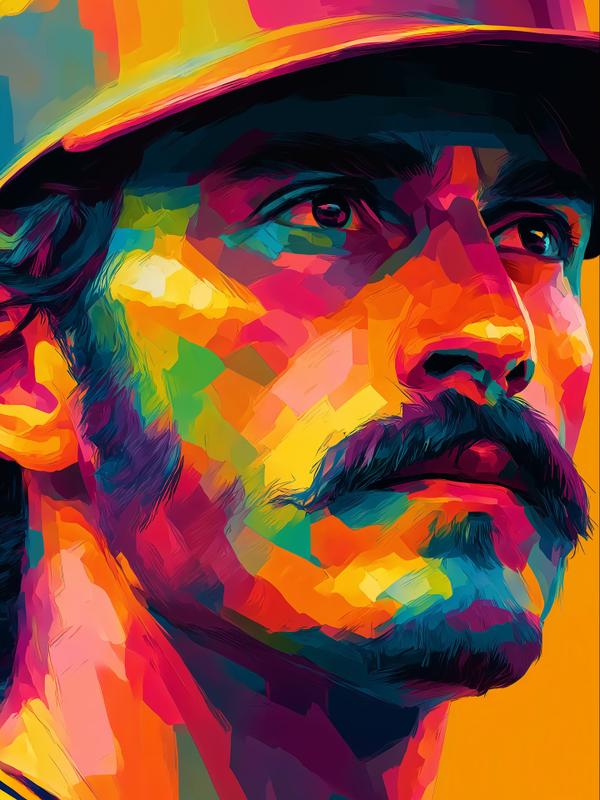
What happens when Peter Max’s psychedelic explosions collide with Kandinsky’s abstract jazz… and they both paint a 6’6” fireballer? You get Paul Skenes—the Pirates’ cheat-code pitcher and MLB’s latest “is this even fair?” moment.
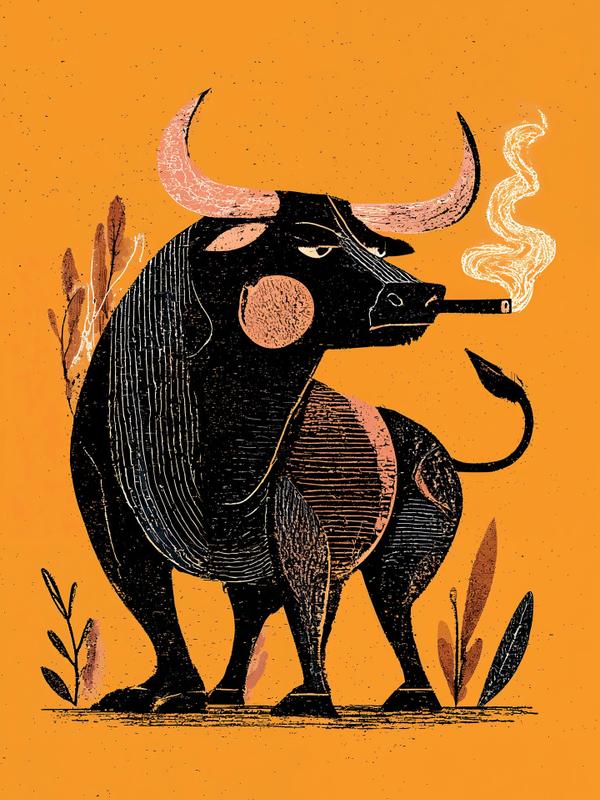
Commissioned by a financial firm where the color orange isn’t just branding—it’s a bold mood, this trio of cigar-chomping bulls isn’t just flexing bovine bravado—they’re visual metaphors for economic optimism. In finance lingo, a “bull market” charges ahead with confidence, just like these suited-up studs. Each bull tells a story: The Naturalist—untamed and smug, surveying his turf like it’s already up 20%. The Wall Street Dandy—pinstriped, polished, and definitely holding crypto. The Power Broker—built like a skyscraper and clearly not here to discuss feelings. Art Lesson in Disguise: This style taps into mid-century modern illustration—bold lines, limited palettes, and exaggerated forms. Think Saul Bass meets Mad Men, with a splash of AI flair. But it’s the orange that steals the show. Color Theory Moment: Orange is the lovechild of red’s passion and yellow’s optimism. It signals energy, enthusiasm, and confidence—which makes it the perfect power color for a bullish outlook. No coincidence it’s the brand hue of a firm that helps people grow wealth. Fun Fact: The term “bull market” comes from how bulls attack—thrusting their horns upward. Bears, on the other hand, swipe down. So Wall Street? Basically a gladiator pit with metaphors. Cigars, horns, and orange power ties—this isn’t barnyard energy. It’s boardroom energy.
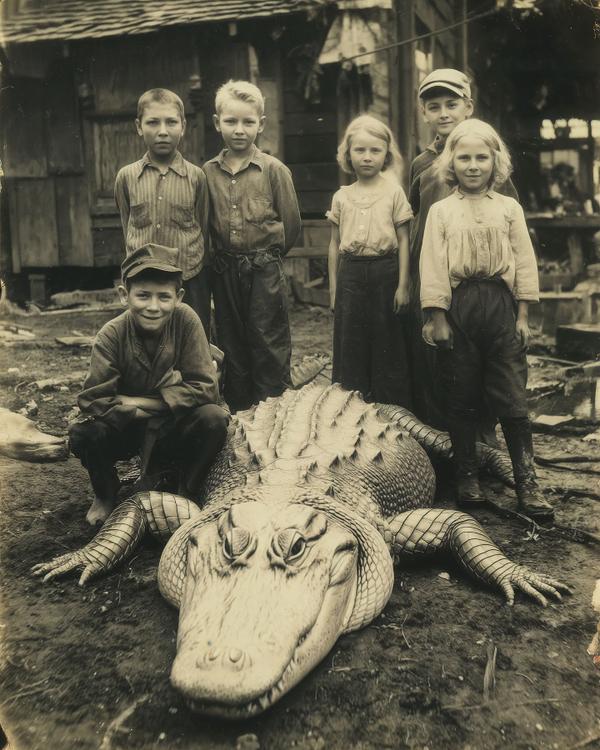
Billy did the luring, Sally handled strategy, and Frank—who’d just read one Wild West novel—insisted on calling it “gator wranglin’.” They posed for a photo and bragged for decades. Moral of the story? Great tales travel fast on the interwebs, especially when they’re completely made up. Epic tale. Totally fake. Just a reminder: not everything online is fact. Sometimes it’s just pixel-powered propaganda with a good backstory. Trust your gut, not your feed.
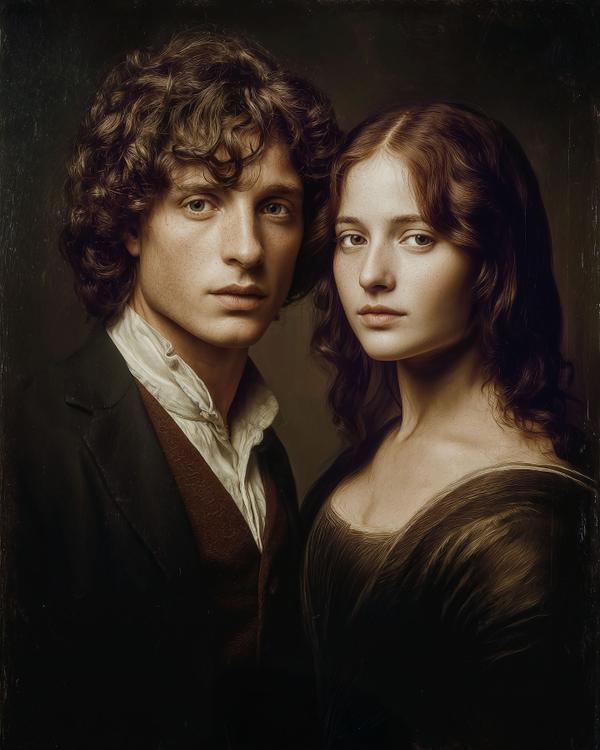
What if Michelangelo’s David and Da Vinci’s Mona Lisa were smokin’ Gen Z art students doing couple’s portraits in 1504? Turns out, with AI, you can absolutely play matchmaker across the centuries. Meet art history’s new power couple: He’s a sculpted Renaissance heartthrob with excellent bone structure and zero chill. She’s the queen of mysterious smiles and subtle side-eye, bringing soft girl energy since 1503. Together? Absolute oil-painted It Couple. Michelangelo (1475–1564): Sculptor, painter, poet, grump. Carved David out of marble with nothing but a hammer, chisels, and unshakable confidence. Preferred sculpting over people. Probably would’ve ghosted after 3 dates. Leonardo da Vinci (1452–1519): Painter, inventor, dreamer, vegan-before-it-was-cool. Painted the Mona Lisa over four years (commitment issues?), and kept her with him till he died. He’d definitely overthink every text message. The Renaissance was basically the original influencer era: intense creativity, high drama, and enough fabric to smother a city-state. And now, thanks to AI, we can imagine their greatest hits swiping right on each other.
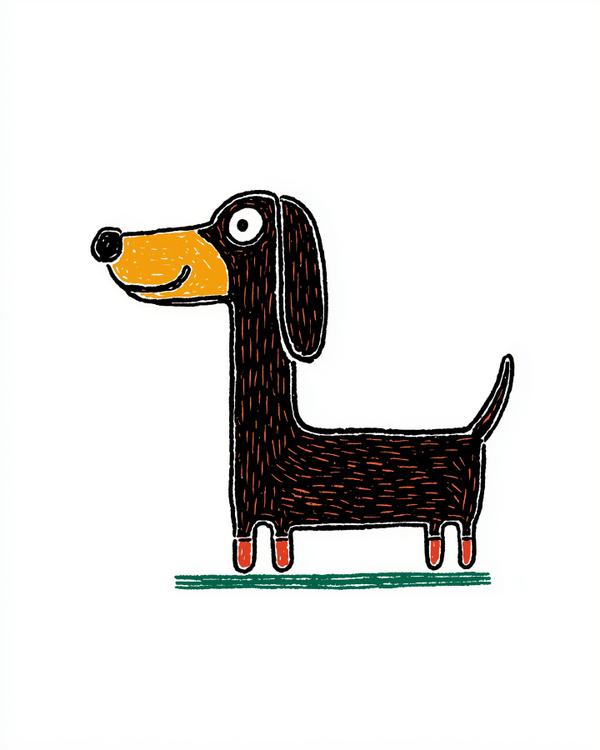
Meet a whimsical, Matisse-inspired dachshund with a touch of Takemasa flair. This delightful pup is a playful blend of two artistic worlds: Henri Matisse, a master of color, shape, and simplicity from the early 20th century, and Ryo Takemasa, a contemporary Japanese artist known for his intricate, yet joyful linework. Though they come from different centuries, both artists share a love for minimalism and bold strokes, and this doggo embraces their styles in one fun package. Matisse was all about simplicity and vibrancy — transforming the world into joyous, colorful shapes. Takemasa, on the other hand, has a knack for playful and detailed lines, often bringing in the spirit of fun and childlike wonder. Here, we’ve got a pup that combines Matisse’s colorful outline with Takemasa’s signature scratchy yet expressive texture. The end result? A doxie that’s ready for its Instagram debut. Fun fact? Dachshunds were originally bred in Germany to hunt small game, so they’re not just cute — they’re tough little adventurers. (Though this one is more into lounging and looking adorable.)
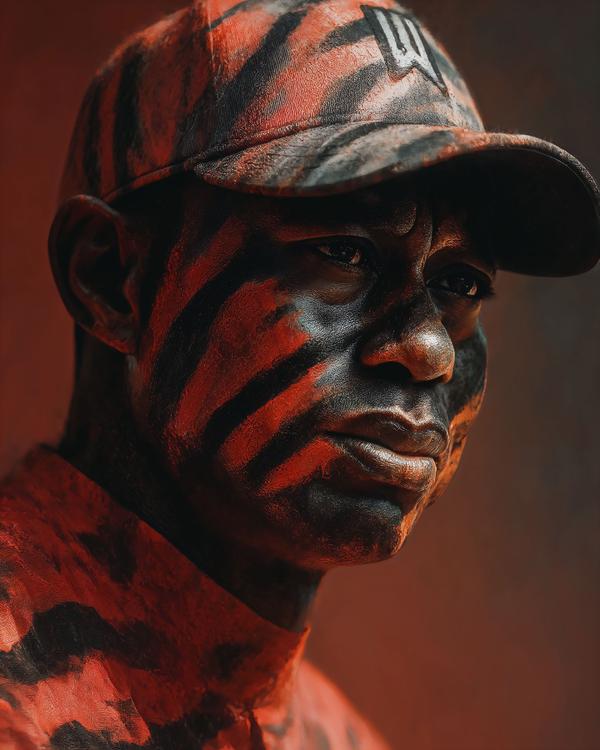
What happens when you take a golf legend and let the jungle paint him? You get this fierce portrait that blends man and myth through the magic of zoomorphism — the art of giving human forms animal traits. Tiger Woods becomes literally Tiger Woods here, his face cloaked in stripes like a jungle ghost. It’s not cosplay — it’s commentary. Power. Focus. Stealth. You don’t just play the game… you become the beast. Zoomorphism isn’t new — ancient Egyptians used it to depict gods, artists used it to show primal instincts. Let them chase birdies. Tigers hunt. Fore? Nah. Roar.
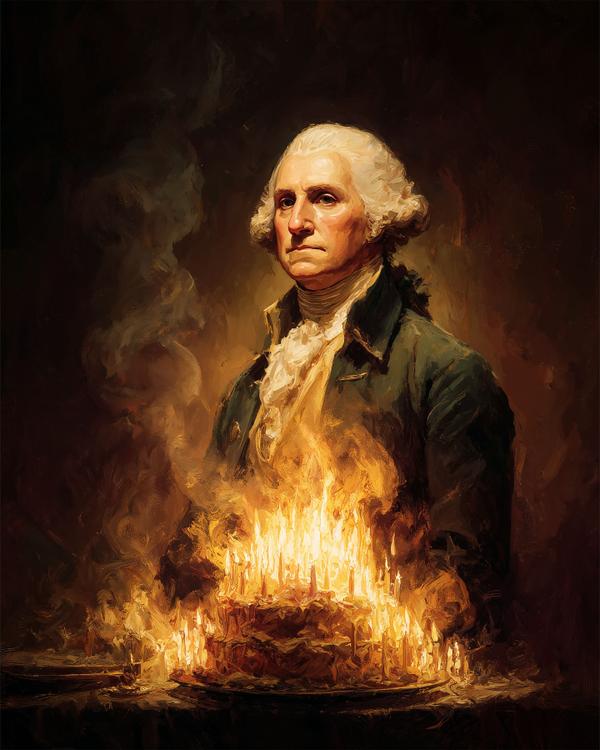
George Washington didn’t fight a monarchy just to watch Congress light the house on fire with deficit-fueled birthday candles. As America turns 249, the cake is heavy, the air is thick, and the founding ideals? Let’s just say they’re somewhere under the frosting, gasping for air. If this is a celebration, why does it smell like a warning?
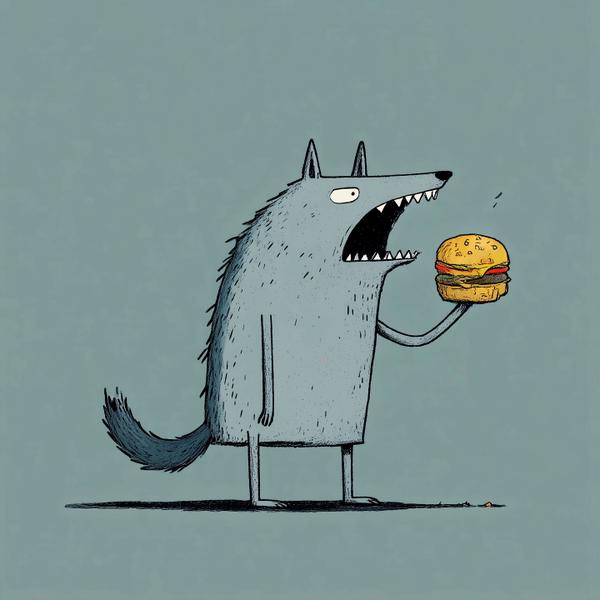
There are wolves in the wild, and then there are wolves who have discovered lunch.
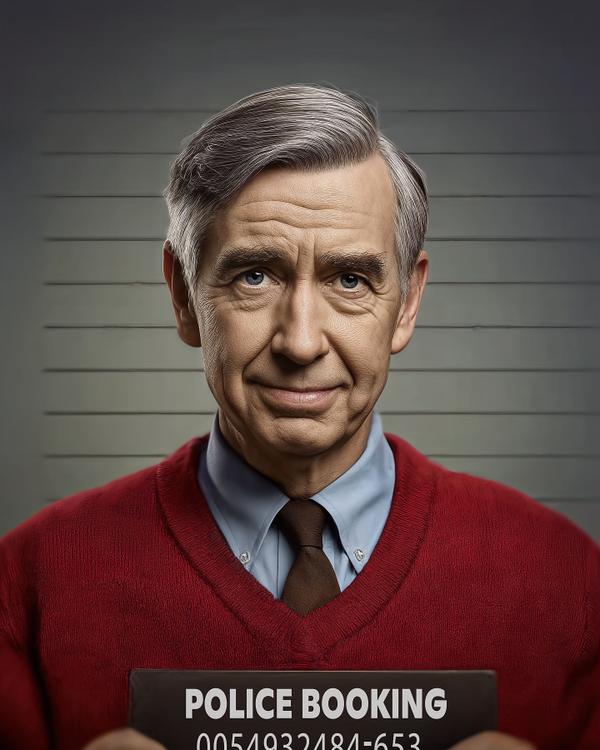
Charge: Excessive kindness in the first degree. Authorities say he was caught in the act of unsolicited sweater distribution, followed by multiple counts of emotional support without a license. This is not a drill. It’s a cardigan crackdown. Let’s be clear: this image is more fake than the Land of Make-Believe’s property taxes. File this under: “Things That Would Absolutely Never Happen” — right next to unicorn tax fraud and Big Bird in a bar fight. Bail was set at five acts of compassion and a juice box. Fred’s statement? “It’s a beautiful day for due process.”
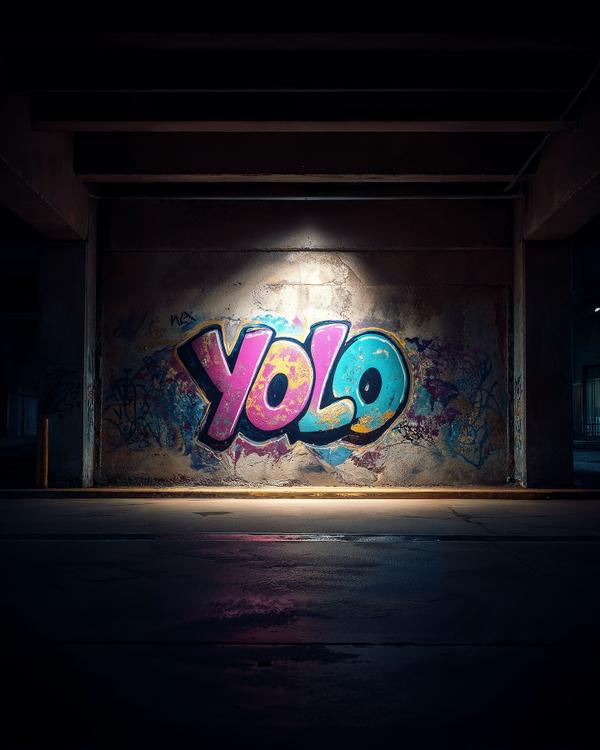
This wall screams YOLO—You Only Live Once—in bold, neon confidence. Because if life’s short, why wouldn’t you shout your truth in spray paint under an overpass? Mini Art History Hit: Graffiti goes way back—like, Ancient Rome back. Turns out, writing on walls is one of humanity’s oldest hobbies. But modern graffiti? Born in 1970s NYC, when subway cars became rebellious art canvases on wheels. Fun Fact:“Graffiti” comes from the Italian graffiare, meaning to scratch. Which makes all street artists... time-traveling truth scratchers. And just like YOLO, graffiti is all about seizing the moment—no gallery invite needed. Just a wall, some paint, and the guts to be seen.
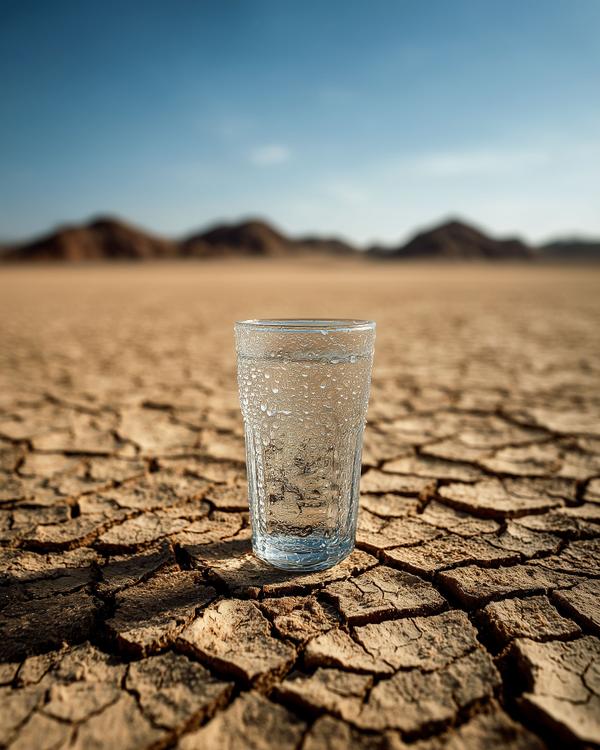
Listen up, humans — it’s gonna be hotter than a jalapeño in a sauna out there for the next few days. We’re talking sidewalk-egg-frying, sweat-in-places-you-didn’t-know-could-sweat levels of heat. This is your official reminder to stay hydrated like your life depends on it. Because, well… it kinda does. Drink water like it’s your full-time job. Ice cubes are your new best friend. Watermelon counts. Margaritas don’t (we checked). Avoid becoming a human raisin. Don’t wait until you’re drier than a stand-up comic in a library — sip, don’t trip.
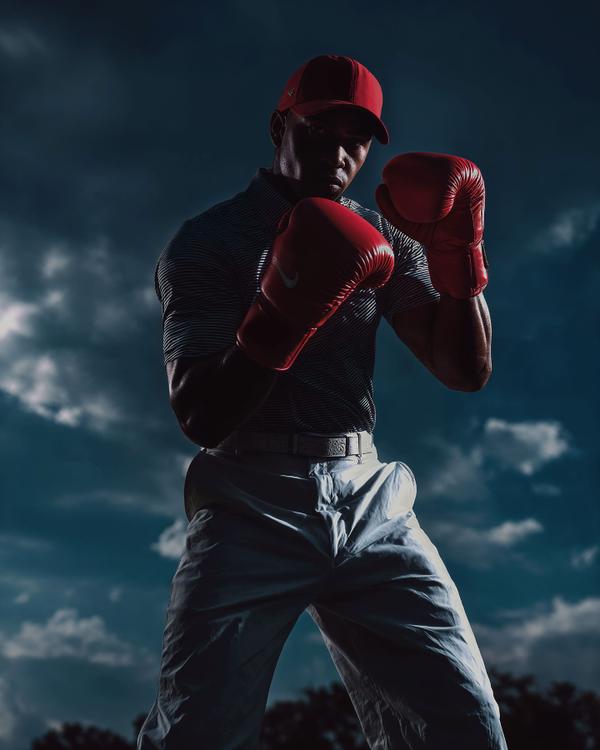
After three rounds at Oakmont, the leaderboard isn’t the only thing taking punches. Players have been jabbed by the greens, body-slammed by the rough, and mentally TKO’d by par-3s. But it’s Sunday now—final round—and they’ve got their gloves on, chins tucked, and eyes locked on the flagstick. Swing hard, fellas. Oakmont hits back.
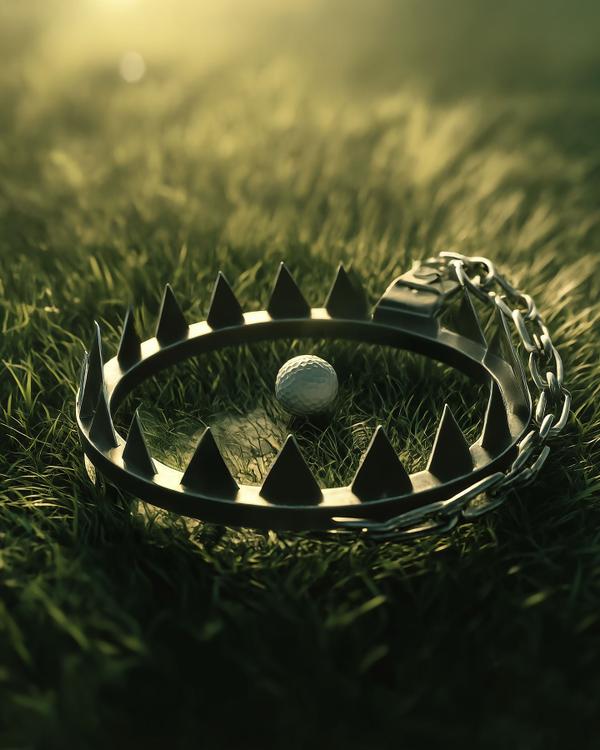
This piece hits deep in the rough — a not-so-subtle metaphor for Oakmont’s brutal setup.
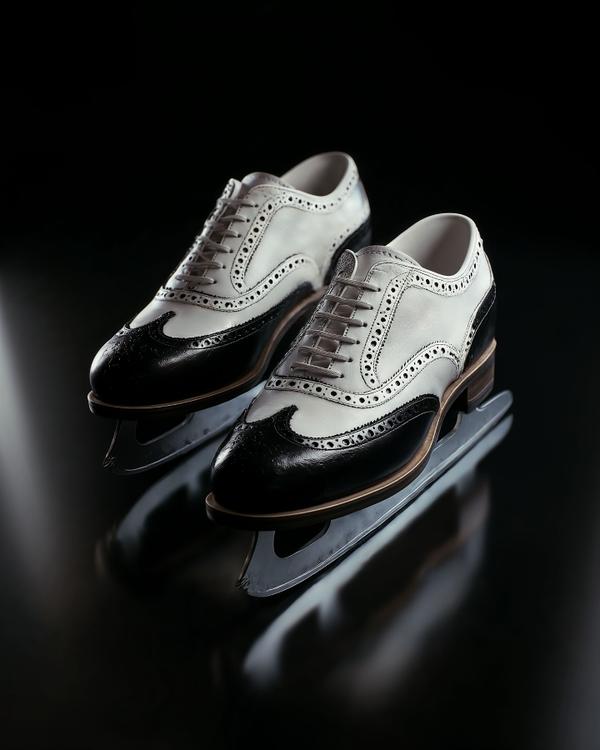
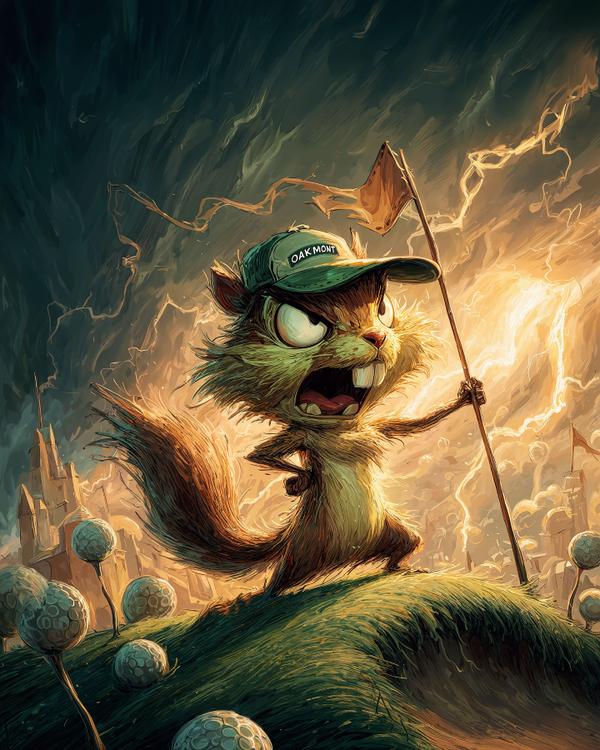
It celebrates the kickoff of U.S. Open week at Oakmont CC… where the bunkers bite, the rough is as thick as a rainforest, the greens roll like glass, and the squirrel has bad intentions. This isn’t just the course mascot — it’s the architect of chaos. He’s got your ProV1s, your swing thoughts, and maybe your soul. Good luck out there, boys. You’ll need it.
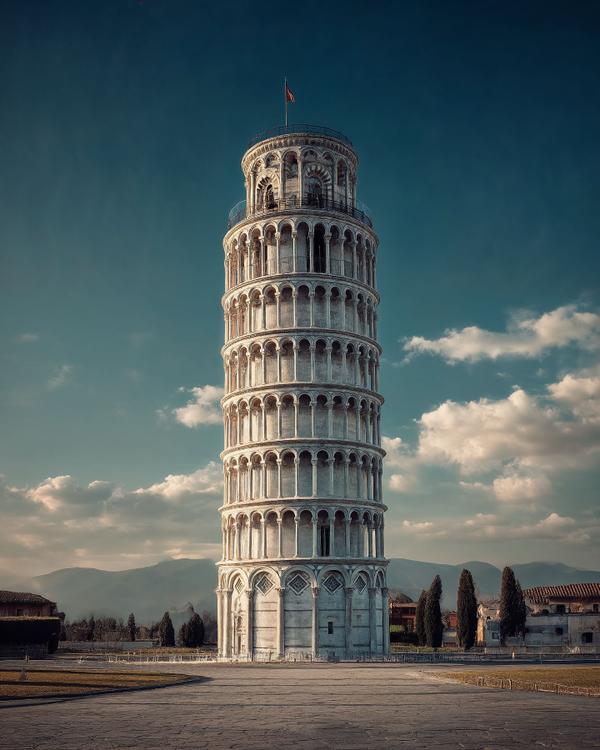
Wait…what? Did we just fix one of the most iconic architectural mistakes in history?! Behold: the Tower of Pisa—straightened.
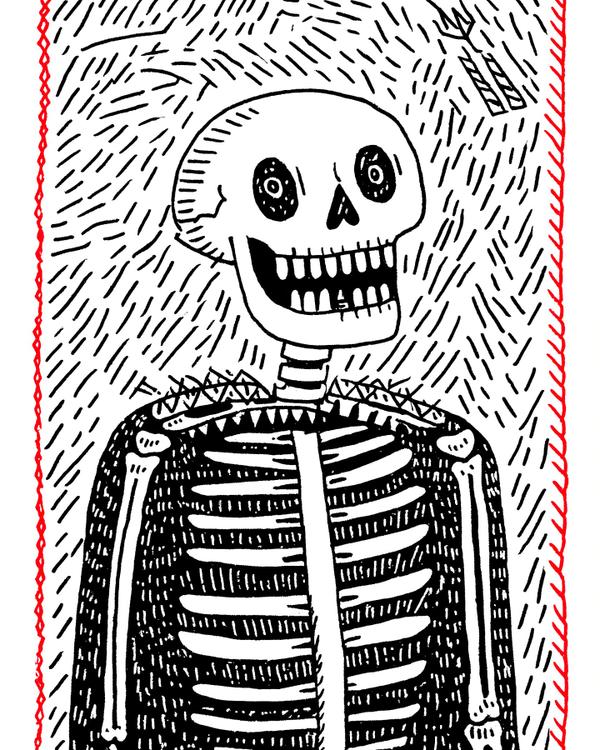
In a world that can feel a little heavy, sometimes the best rebellion is being happy anyway. This bony buddy is here to remind you: No skin? No problem. No worries? Even better. Just vibes? Absolutely
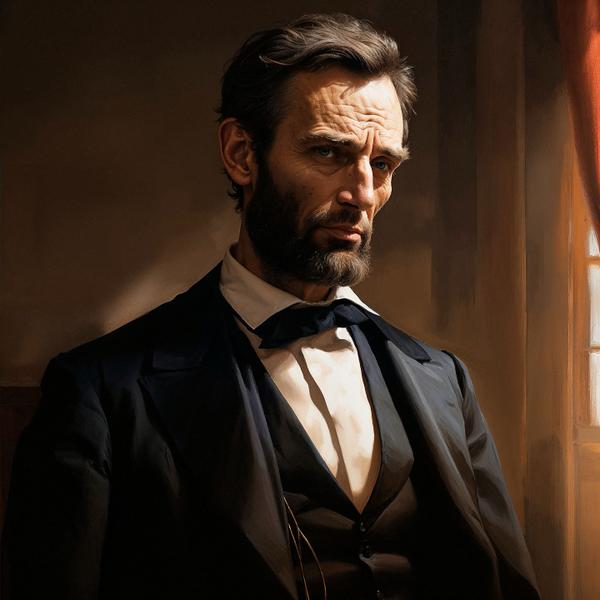
This isn’t just a president — this is a founding fashion icon. “Ask not what your country can do for you — ask where Abe got that lineup.” (Wait… wrong guy, but still.) #AbeGlowUp
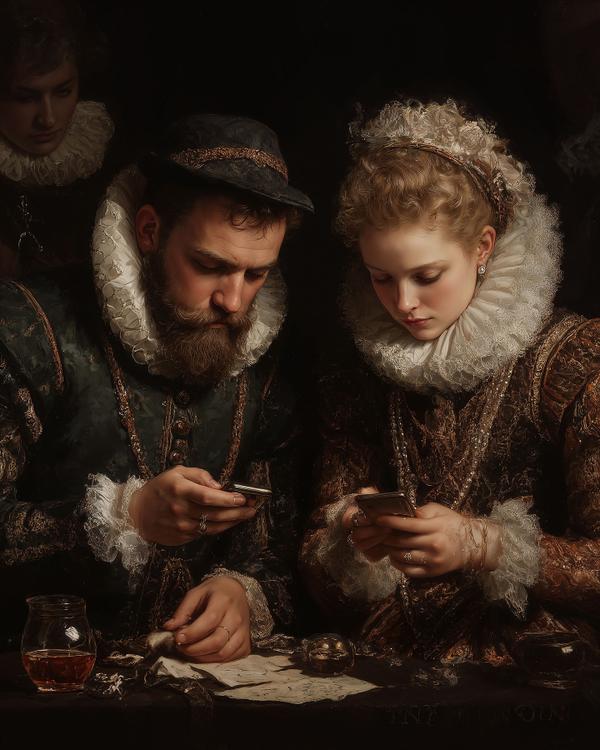
Historians confirm: the group chat was LIT. King Henry VIII: “Swipe left.” Da Vinci: “Painting Mona again. She blinked.” Newton: “Just dropped an apple. Vibes are off.” Galileo: “Stars are cool. Church said delete.” Michelangelo: “Still waiting for Sistine likes to hit 1K.” Botticelli: “Can someone tag me in ‘The Birth of Venus’? I’m literally there.” And the peasants? Still just trying to connect to the Wi-Fi named “Feudal-Lords-Only”
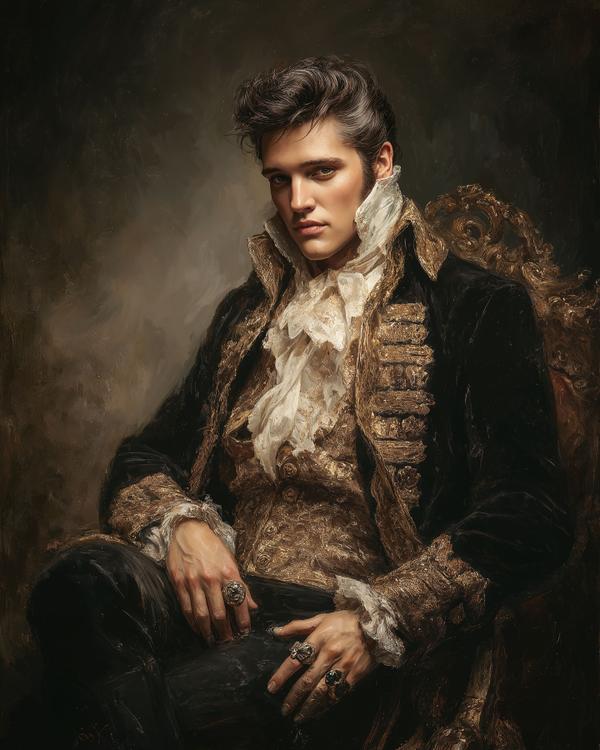
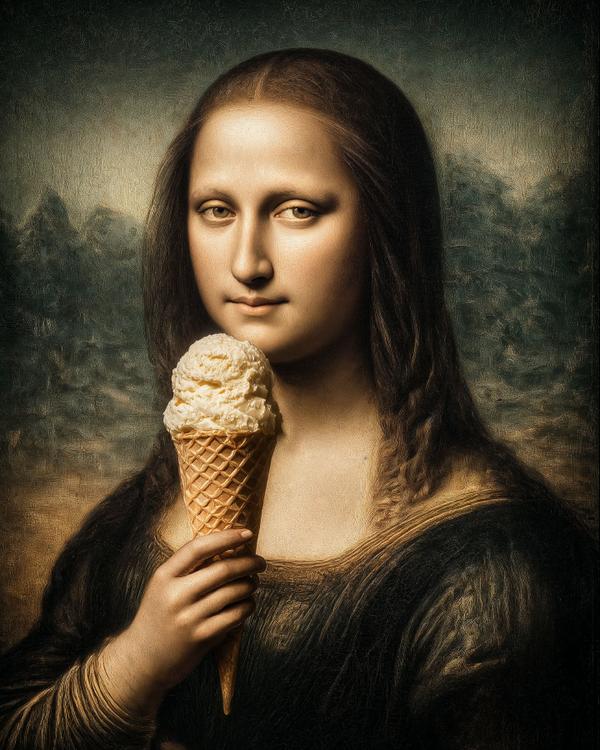
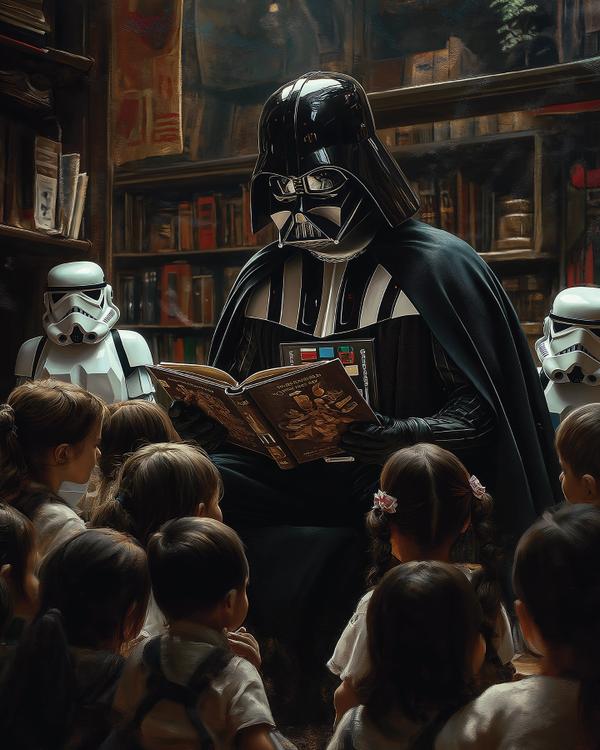
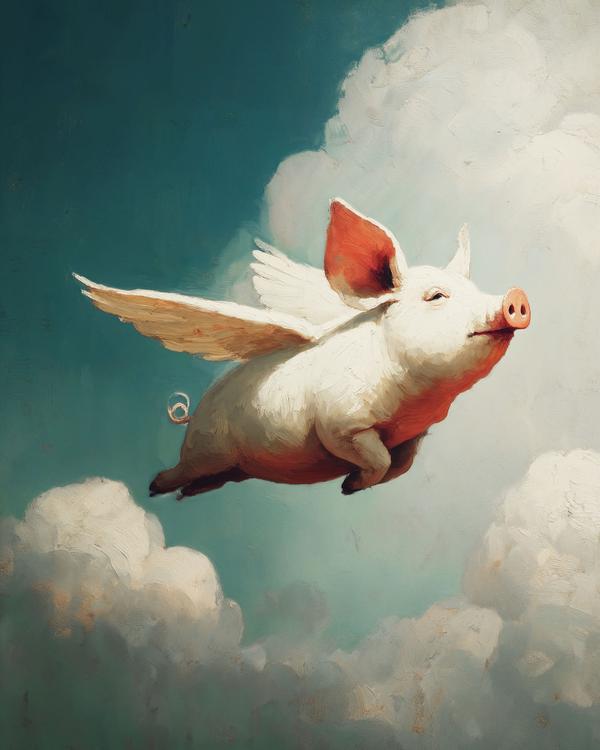
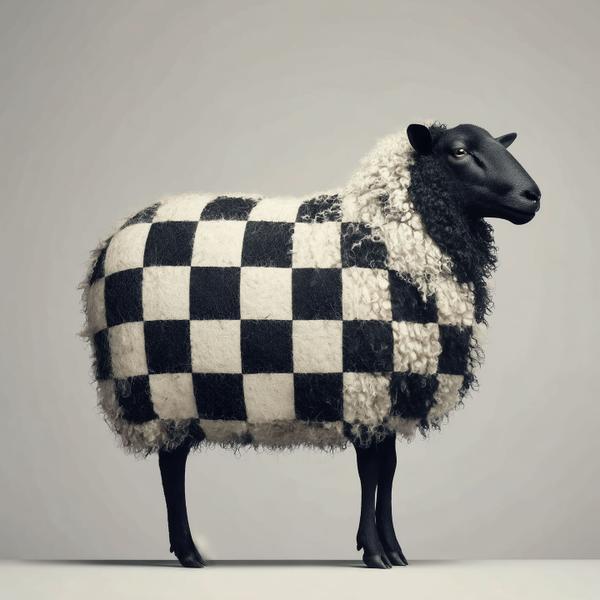
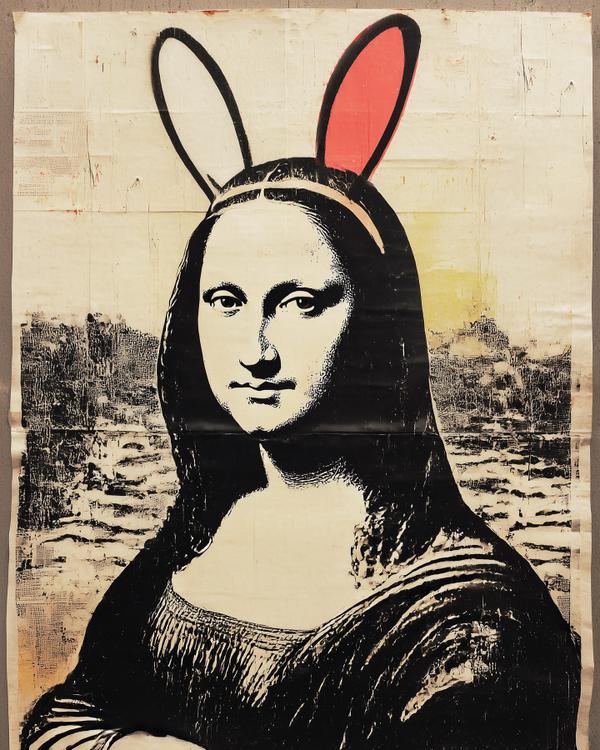
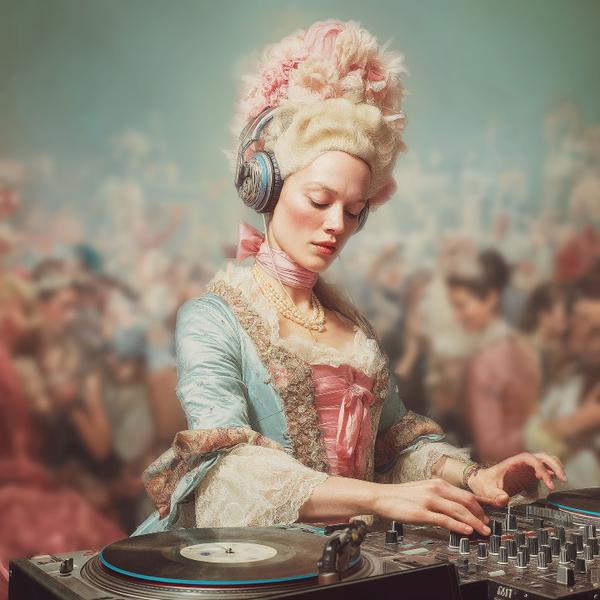
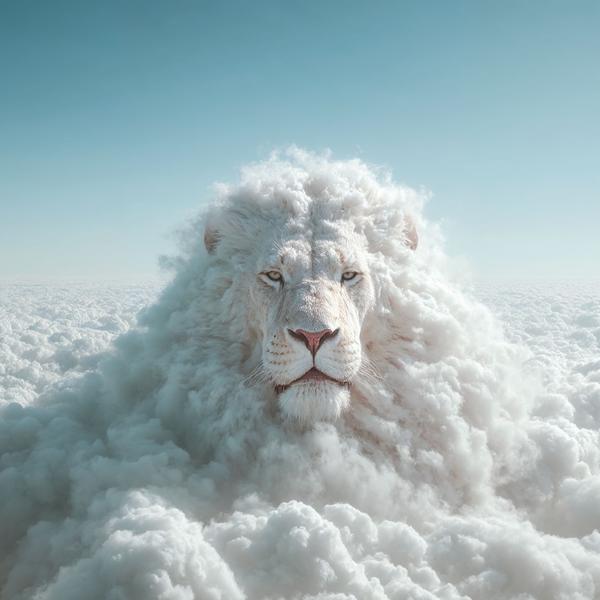
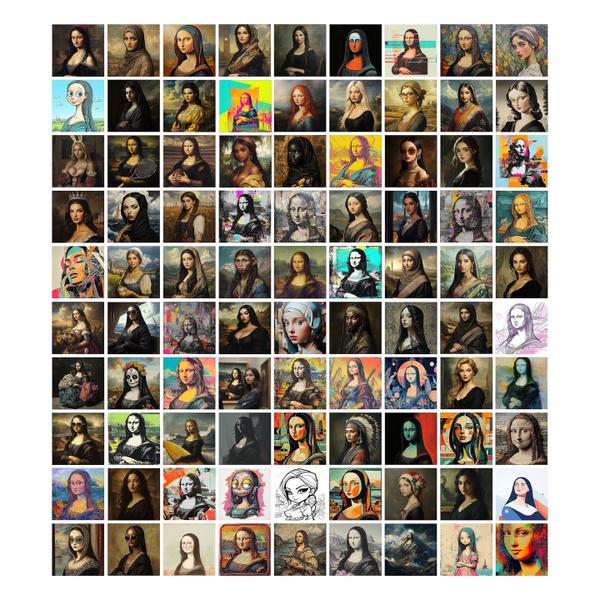
Not to mention the artistic styles, Mona as a comic book character, a surrealist masterpiece, or even a futuristic cyberpunk icon. It's fascinating to see how one iconic image can be endlessly transformed.